The National Water Services Commission (SPAN) has intensified its enforcement efforts in Sungai Petani by issuing 270 compliance notices to property owners who neglected their obligations to empty and maintain septic tanks. The notices were distributed during an operation that ran between August 4 and 6, targeting a total of 341 premises across the town's business district, including both commercial and residential units.
According to Ainal Yusman Mohamad Yusop, director of SPAN's Operations Division Enforcement Section, the enforcement drive—known as Ops Padi 2—revealed widespread non-compliance among businesses and homeowners. Of the 341 premises inspected, 242 were commercial establishments while 99 were domestic properties. All of those receiving notices had previously failed to respond to earlier warnings issued by Indah Water Konsortium Sdn Bhd (IWK), the entity responsible for overseeing septic tank maintenance across the region.
The scale of the problem became apparent during the operation, with enforcement officials discovering that many of the properties were constructed during the 1970s and 1980s. More alarmingly, these older buildings housed septic systems that had suffered from years of neglect, with some showing no maintenance records for over a decade. Ainal Yusman highlighted cases where septic tanks had not been serviced in 15 years or more, with certain premises showing documentation indicating the last maintenance occurred in 1997 or 1999—spanning two decades of non-compliance.
This enforcement action underscores a persistent challenge in Malaysia's sanitation infrastructure management. Despite urbanisation and business growth in secondary cities like Sungai Petani, many property owners remain either unaware of their legal obligations or deliberately ignore requirements under the Water Services Industry Act 2006. The accumulation of sewage in poorly maintained septic systems poses serious public health risks, potentially contaminating groundwater and nearby water sources essential for the broader community.
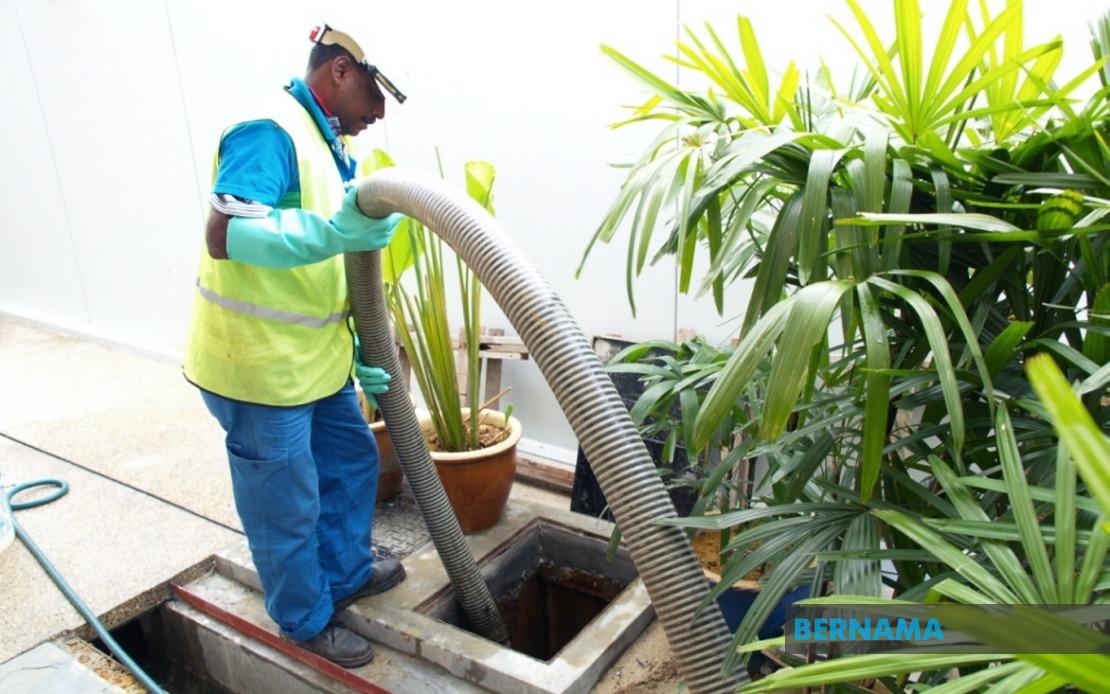
Property owners who received the compliance notices have been given a specific 14-day window to respond and take corrective action. During this period, they must engage a licensed service provider or permit holder to conduct desludging operations on their septic tanks. This requirement, mandated under Section 65(1)(c) of the Water Services Industry Act 2006, represents a minimum standard for maintaining functional sanitation infrastructure at any premise, whether commercial or residential.
Failure to comply within the stipulated timeframe will trigger escalated enforcement measures. SPAN has indicated that non-responsive property owners will face further action, including the issuance of notices of offence or formal investigations. The regulatory framework carries substantial financial penalties designed to incentivise compliance: those convicted of violating Section 65(1)(c) face fines not exceeding RM50,000, a sum sufficiently large to motivate immediate action among most business operators and homeowners.
The Sungai Petani operation reflects broader challenges facing Malaysia's water and sanitation sector. As the country pursues infrastructure modernisation and manages rapid urbanisation in secondary cities, maintaining compliance with sanitation standards requires sustained regulatory pressure and public awareness. Many older commercial districts and residential areas constructed before comprehensive sanitation regulations were enforced now struggle with inherited infrastructure deficits, making targeted enforcement operations like Ops Padi 2 necessary tools for bringing systems back into compliance.
For businesses in Sungai Petani, the compliance notices represent both a regulatory imperative and an operational cost that many may not have anticipated. The requirement to hire licensed service providers for septic tank maintenance adds to overhead expenses, particularly for small and medium enterprises operating in older premises. However, the alternative—facing investigations and substantial fines—makes compliance the economically rational choice for most affected property owners.
SPAN's enforcement action also sends a clear signal to property owners across Malaysia that water services regulators are adopting a more proactive stance in addressing non-compliance. As Malaysia continues developing its water infrastructure and striving for improved environmental management, operations like those conducted in Sungai Petani demonstrate the commitment to enforcing existing regulations and holding stakeholders accountable. The focus on properties constructed decades ago highlights the need for systematic auditing of older business and residential areas where maintenance records may be incomplete or lost.
The human and environmental dimensions of this enforcement effort extend beyond penalties and compliance notices. Improperly maintained septic systems threaten water quality, public health, and environmental sustainability—concerns that resonate increasingly with Malaysian regulators and the public alike. By targeting multiple premises simultaneously through structured operations, SPAN maximises the deterrent effect and signals that non-compliance at scale will not be tolerated.

