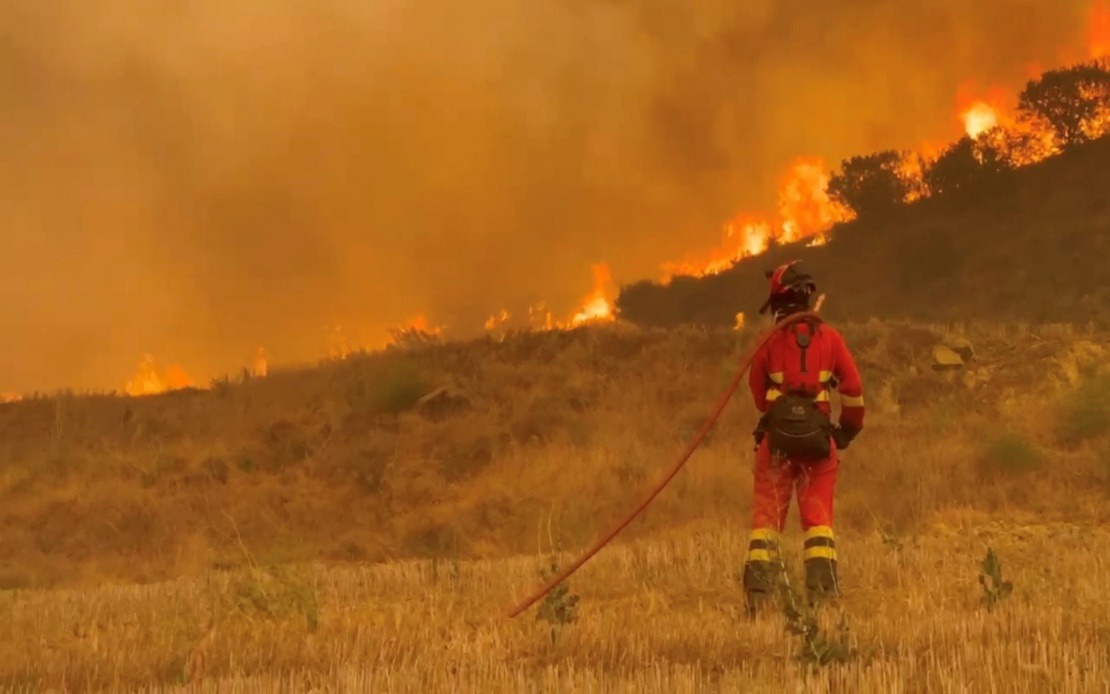
Spain is grappling with an unprecedented wildfire crisis as its largest fire of the year ravaged approximately 12,000 hectares across the northeastern province of Zaragoza, displacing more than 1,100 residents from their homes. The Cinco Villas region, where the fire ignited on Wednesday, has become the focal point of an intensifying emergency response that underscores the mounting challenges Spain faces in managing environmental disasters on an escalating scale.
The conflagration remains dangerously active, with authorities reporting significant overnight expansion as the blaze continued its destructive path through the region. The fire's perimeter has stretched across roughly 60 kilometres, effectively cutting off multiple transport routes and fragmenting communities across a vast territory. Five municipalities in Zaragoza province and an additional municipality in the neighbouring Navarre region have initiated mass evacuations, reflecting the scale of threat posed by the advancing flames and the unpredictability of fire behaviour under current conditions.
Infrastructure damage remains substantial, though authorities have managed to restore electrical supply to all impacted settlements. However, several critical roads serving the region remain cordoned off, hampering both evacuation efforts and the movement of emergency personnel. Parts of the Cinco Villas area remain under lockdown as a precautionary measure, with communities sheltering in place while firefighting operations continue overhead and on the ground.
The Spanish authorities mobilized significant resources in response, deploying approximately 400 ground personnel and 19 aircraft to confront the Zaragoza fire during the initial assault. Firefighting teams shifted their nocturnal strategy to focus on defensive measures, concentrating on protecting residential areas in Uncastillo to prevent casualties and housing losses. The regional government escalated its request for reinforcement by invoking Spain's Military Emergency Unit, which dispatched around 100 additional personnel to reinforce firefighting operations and provide logistical support.
The Zaragoza emergency is not an isolated incident within Spain's current climate context. A secondary wildfire near La Mierla in Guadalajara province has simultaneously consumed approximately 900 hectares and triggered evacuations with lockdown protocols in adjacent communities. A third significant blaze near Lozoyuela, positioned north of Madrid, continues to defy containment efforts, though emergency services report more favourable progression trends compared to the other fires. This multi-front crisis has exposed the limitations of firefighting capacity when multiple large-scale incidents emerge simultaneously across different regions.
Authorities have identified a suspect in connection with the Madrid-region fire, with the Civil Guard making an arrest on suspicion of arson. The regional government has indicated its intention to participate in legal proceedings as a civil party, signalling a determination to pursue accountability for fire causation. This investigative dimension adds a criminal justice component to what otherwise appears as an environmental management failure.
Meteorological and climatic conditions have created a perfect storm for uncontrolled fire spread across Spain's interior regions. Exceptionally high temperatures have dried vegetation to critical levels, while strong winds have accelerated flame propagation across terrain that would normally resist rapid fire movement. Low humidity levels characteristic of Spain's summer months have further compromised any natural moisture-based fire suppression. Paradoxically, abundant vegetation growth stimulated by an unusually rainy spring has provided unprecedented fuel loading across landscapes, transforming what would normally be dormant terrain into a tinderbox primed for rapid combustion.
Expert analysis reveals that these immediate meteorological factors operate within a broader structural context shaped by climate transformation and rural demographic patterns. Climate change has fundamentally altered seasonal fire regimes, extending the duration of high-risk fire seasons and intensifying conditions within those windows. Simultaneously, the progressive abandonment of rural territories across Spain has eliminated traditional land management practices that once naturally suppressed fuel accumulation through grazing and deliberate vegetation clearing. Modern Spain's concentration of population in urban centres has left vast interior landscapes unmanaged and increasingly vulnerable to catastrophic fire events.
For Malaysian observers, Spain's current crisis carries significant implications regarding climate vulnerability and disaster management capacity. Both nations contend with tropical and subtropical fire regimes, yet Spain's crisis demonstrates how wealthy, developed economies can become overwhelmed when multiple large-scale events occur simultaneously. Malaysia's peat lands and plantation landscapes create analogous fire hazards, particularly during El Niño episodes that suppress regional rainfall. The experience of Spanish emergency services mobilizing military units and deploying aircraft across multiple regional fires offers both operational lessons and cautionary warnings about the true resource requirements for adequate emergency response in an era of intensifying climate extremes.

