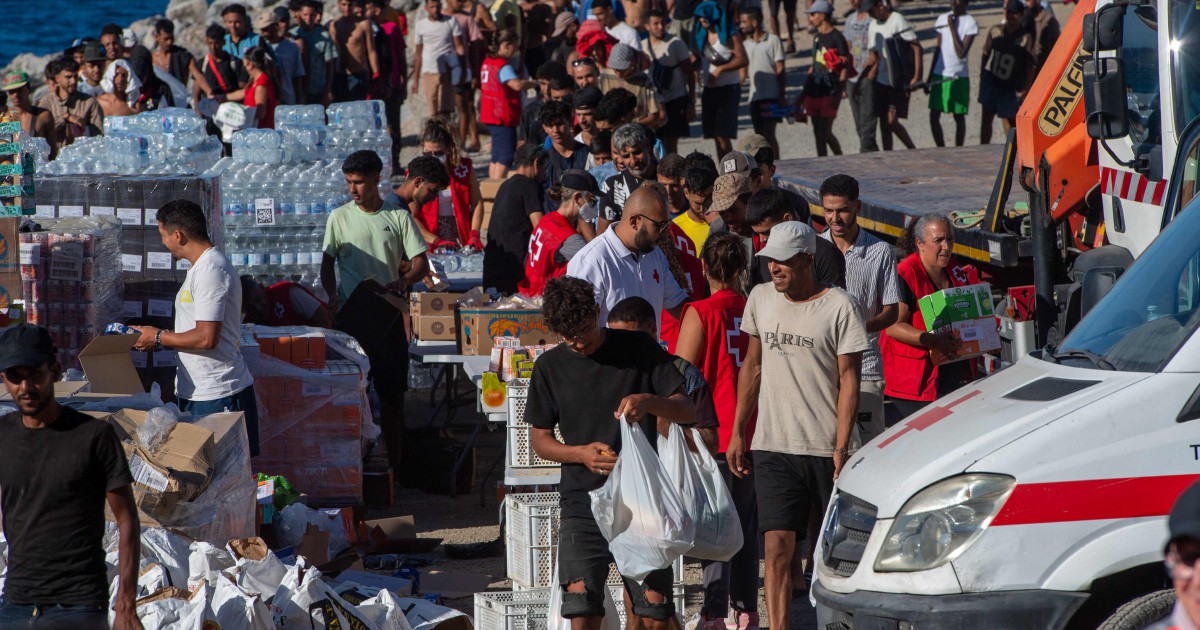
Spain's Prime Minister Pedro Sánchez has levelled accusations at Russia and Israel for orchestrating a disinformation campaign tied to Spain's contentious migration policies, which precipitated a dramatic influx of migrants into the North African enclave of Ceuta last month. Speaking on Monday, Sánchez indicated that intelligence assessments had identified signs pointing to both nations as sources of misleading narratives, though he emphasized that Morocco bore no responsibility for spreading such false information.
The Ceuta migration crisis represents a sensitive flashpoint in Spain's foreign relations and domestic politics. The Spanish enclave, situated on Morocco's Mediterranean coast, has long served as a gateway for migrants seeking entry to Europe. The sudden surge that occurred in recent weeks overwhelmed local infrastructure and reignited heated debates about asylum policy, border control, and Spain's responsibilities toward vulnerable populations. The Prime Minister's attribution of disinformation campaigns adds a complex geopolitical dimension to what appeared initially as a humanitarian and administrative challenge.
Moscow and Jerusalem's alleged involvement in spreading false narratives about Spanish migration policy reflects broader patterns of information warfare observed across Europe and the Mediterranean region. Russia has long been documented by analysts and European security agencies as conducting extensive disinformation operations targeting NATO members and European Union countries, often seeking to amplify social divisions and undermine trust in governmental institutions. Israel's purported role in such campaigns, while less commonly discussed in mainstream discourse, aligns with broader concerns about how various state actors exploit migration and border security issues to advance competing geopolitical interests.
The distinction Sánchez drew regarding Morocco carries particular significance. Morocco shares a maritime border with Spain and maintains complex diplomatic relations with Madrid, particularly over contested territorial claims and bilateral disputes. By explicitly stating that his government found no evidence of Moroccan participation in the disinformation effort, Sánchez appears to have sought to prevent further deterioration in bilateral ties, even as tensions over migration and border management remain high. This measured approach suggests an attempt to separate the migration crisis itself from allegations of coordinated foreign interference.
The timing of Sánchez's statement reflects growing recognition among European leaders that disinformation campaigns often weaponize genuine policy challenges and social anxieties. Migration has emerged as one of Europe's most polarizing political issues, with competing narratives shaping public opinion and electoral outcomes. By identifying external actors as amplifying these narratives, Sánchez positioned his government as a victim of foreign manipulation rather than merely the architect of contested policies. Such framing carries implications for domestic political discourse and the credibility of government communications on sensitive matters.
For Malaysian and Southeast Asian observers, Spain's experience illuminates how geopolitical rivals exploit migration crises as opportunities for information operations. The region itself has witnessed comparable challenges, with irregular maritime migration, refugee resettlement, and asylum policies generating intense domestic debate. The presence of sophisticated state actors seeking to weaponize these issues through coordinated disinformation campaigns represents an emerging security challenge that requires enhanced awareness among national governments and media institutions.
The identification of Russian and Israeli involvement also underscores the increasingly interconnected nature of global disinformation ecosystems. Both actors operate across multiple platforms and jurisdictions, often coordinating efforts with non-state proxies and leveraging social media algorithms to amplify divisive content. Spain's intelligence community's capacity to detect and attribute such operations reflects resources and capabilities that many smaller nations lack, raising questions about how developing countries can effectively counter similar campaigns targeting their own populations.
Sánchez's comments come as European governments grapple more broadly with the threat posed by foreign information operations during periods of social stress. The Ceuta crisis, like other migration emergencies, created conditions ripe for exploitation by bad actors seeking to amplify existing tensions and manufacture new grievances. When citizens lack authoritative, trustworthy sources of information during crises, they become more susceptible to false narratives emanating from foreign sources determined to undermine social cohesion and governmental legitimacy.
The Spanish Prime Minister's attribution of responsibility also raises questions about the adequacy of current countermeasures against disinformation. While identifying the perpetrators represents an important first step, effectively countering false narratives requires sustained effort across multiple domains, including media literacy, platform accountability, and transparent government communication. Spain's experience suggests that reactive responses to disinformation campaigns prove insufficient without proactive strategies designed to build societal resilience against information manipulation.
Looking forward, Sánchez's assertion that Russia and Israel orchestrated a disinformation campaign related to Ceuta migration may reshape how Spain approaches future crises involving sensitive policy issues. Greater government transparency and direct communication with citizens during emergencies could reduce opportunities for foreign actors to exploit information vacuums. Additionally, regional cooperation among Mediterranean nations on both migration policy and coordinated responses to disinformation campaigns may prove essential for protecting national interests and maintaining social stability.

