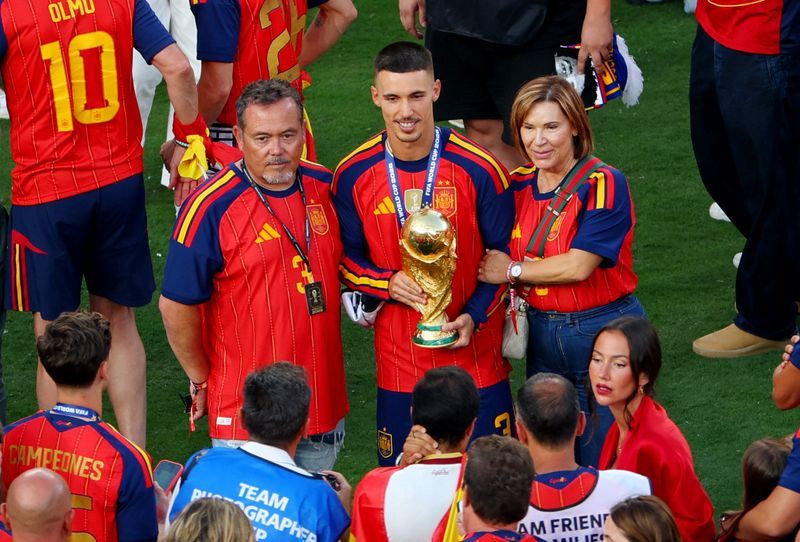
Spain captured the World Cup on Sunday with a methodical 1-0 triumph over Argentina, a result that vindicated the nation's unwavering commitment to a distinctive footballing philosophy centred on technical excellence and collective purpose. The victory in East Rutherford, New Jersey, represented no tactical revolution but rather the culmination of years spent perfecting an approach built on meticulous ball possession, patient probing of opposition defences, and unwavering belief in the supremacy of team coordination. Throughout the final, Spain maintained possession exceeding 65 percent and completed more than double Argentina's passes, methodically controlling the contest whilst their opponents absorbed pressure and waited for opportunities to strike.
The architecture of Spain's success reflected the careful stewardship of Luis de la Fuente, a coach whose appointment was once met with scepticism by Spanish media outlets who questioned his credentials after spending substantial portions of his career developing young talent through the Spanish Football Federation's youth structures. His patient philosophy rejected the temptation to deviate from established principles when Argentina mounted defensive resistance and the match extended into extra time. Instead, Spain persisted in their familiar patterns, trusting in the intelligence and technical ability of their squad to break through determined opposition. The approach ultimately proved correct, though not without requiring sustained effort and discipline across the full duration of the encounter.
The decisive moment arrived through an unexpected source, as substitutes Nico Williams and Ferran Torres combined to produce the winning goal. This outcome held particular significance within the context of Spain's tournament trajectory, marking the third occasion in the knockout rounds where a replacement player had delivered a decisive contribution. The pattern underscored a fundamental characteristic of De la Fuente's squad: the absence of rigid hierarchies based on individual prominence, and instead an orchestra-like structure where each musician, regardless of when they enter the performance, understands the composition with equal clarity. This philosophy of interchangeability and collective responsibility represented something distinctly different from the superstar-dependent models that characterised many competing nations.
Spain's overall tournament performance demonstrated the consistency of their approach across eight matches that yielded fourteen goals distributed among eight different players. This scoring pattern reflected the team's deliberate construction around multiple potential sources of threat rather than dependency on any single striker. The distribution of goals reinforced lessons learned from Spain's recent European Championship success in 2024, when they accumulated a tournament record sixteen goals through ten different players, establishing a template that prioritized balanced attacking contributions. However, this collective strength coexisted with a notable vulnerability: the absence of a classical centre forward proved a persistent liability, with Spain creating numerous opportunities that the absence of a natural finisher prevented from being converted into goals.
Individual accolades distributed throughout the tournament further illustrated Spain's comprehensive excellence beyond the final match. Pau Cubarsi received recognition as the tournament's Best Young Player, whilst goalkeeper Unai Simon claimed the Best Goalkeeper award and midfielder Rodri earned the tournament's Most Valuable Player distinction. These honours underscored the technical quality permeating the squad from back to front. The exclusion of Spain from the Golden Boot award, which went to France's Kylian Mbappe, appeared almost fitting to the narrative: this triumph belonged not to any singular phenomenon but to the collective apparatus that functioned across all eleven positions with coordinated precision.
The victory extended Spain's unbeaten sequence to thirty-eight matches, surpassing the previous benchmark established by Italy and cementing three years of remarkable consistency at international level. This longevity of success transcends individual tournaments and demonstrates the sustainability of the system De la Fuente has constructed. Nations that achieve such records typically possess deep philosophical alignment across their playing squad, institutional commitment to a particular style, and coaching that can evolve within established parameters rather than abandoning them when external pressure intensifies. Spain's run suggests they have achieved precisely this synthesis.
The composition of Spain's squad itself carried significance beyond footballing considerations, reflecting the geographic and cultural diversity of the nation itself. Players originated from across Spain's distinct regions: the Basque Country contributed Mikel Oyarzabal, Simon, and Mikel Merino; Galicia provided Borja Iglesias; Valencia supplied Ferran Torres; Madrid produced Rodri; Andalucia offered Fabian Ruiz and Gavi; the Canary Islands contributed Pedri; whilst Catalonia was represented by Cubarsi and Marc Cucurella alongside other players. Lamine Yamal and Nico Williams exemplified the success of immigration policies and the emergence of a more contemporary Spanish identity. This internal diversity required management and coordination, yet the squad functioned with remarkable synchronicity.
The underlying significance of Spain's triumph extended beyond sporting achievement into the realm of national cohesion. Spanish football has historically navigated complicated relationships between regional identities and national belonging, with Catalonia, the Basque Country, and other territories maintaining distinct cultural and political consciousnesses. The success of a squad drawing talent from these regions, unified in pursuit of a common objective and governed by a shared footballing philosophy, demonstrated that such integration remained possible. Football achieved on Sunday what political processes frequently struggle to accomplish: the creation of a genuinely shared experience that transcended regional boundaries and historical divisions.
De la Fuente's personal journey added another dimension to Spain's achievement. His path through Spanish football's youth development system, far from the spotlight enjoyed by those coaching elite clubs, meant his appointment carried initial scepticism and even ridicule. That a coach derided by sections of the Spanish media as Luis de la "Who" has now claimed football's ultimate prize represents vindication of an alternative pathway through the sport. It suggests that deep knowledge of player development, systematic thinking about team construction, and philosophical consistency can compete successfully against the glamour associated with coaching elite club competition. His triumph validates patience and long-term perspective in football management.
Spain's 1-0 victory represented the triumph of an idea: that football excellence emerges not from the aggregation of individual brilliance but from the coordination of collective intelligence. Argentina presented formidable opposition and created challenges throughout the encounter, yet Spain's ability to remain faithful to established principles whilst maintaining sufficient flexibility to secure the decisive moment demonstrated the robustness of their approach. The result suggests that in modern international football, sustained excellence comes to those nations willing to construct comprehensive systems and trust their implementation, even when alternative paths appear temporarily more attractive. Spain's World Cup victory serves as confirmation that sometimes the oldest ideas, executed with contemporary precision and patience, deliver the newest victories.

