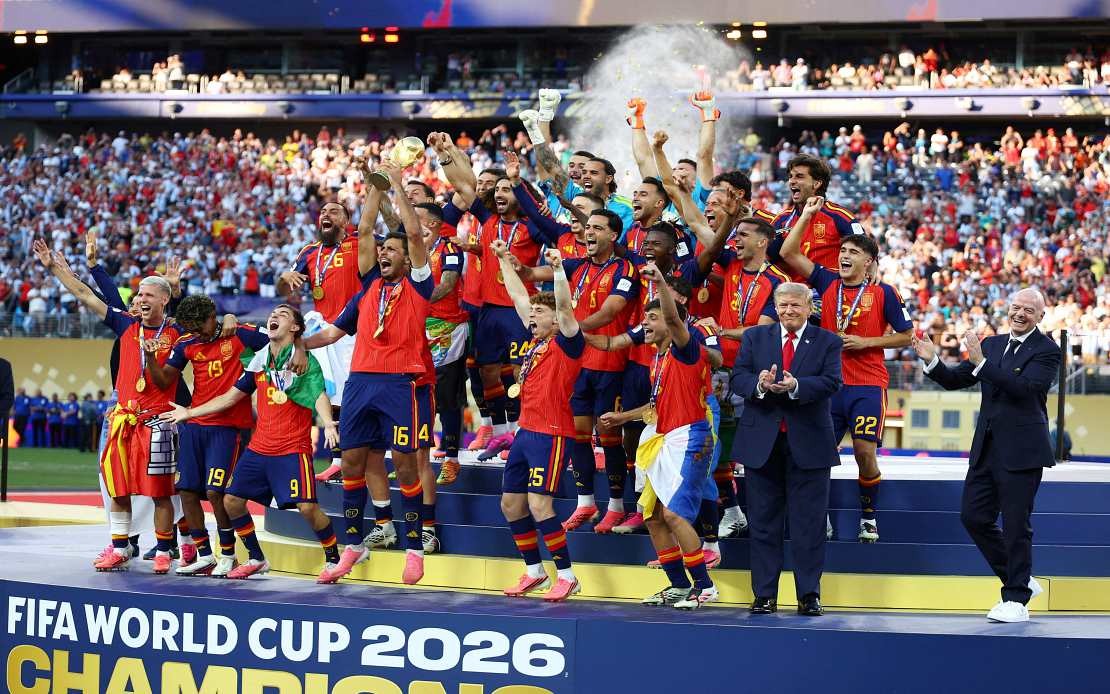
Spain's triumphant World Cup-winning squad is heading home to a hero's welcome, with the nation preparing to fete the players who delivered the country's second men's title in the sport's premier tournament. The team, captained by Rodri, was scheduled to land at Madrid airport at 12.50 pm on Monday, touching down after their historic victory secured in the United States.
The return journey marks the culmination of an extraordinary campaign that captured the imagination of Spanish football fans across the globe. Ferran Torres' extra-time strike against Argentina in Sunday's final proved decisive, cementing Spain's place among the world's elite footballing nations. That dramatic finish ensured the country's return to the summit of international football more than a decade after their previous triumph, a feat that had eluded them through a series of near-misses in major tournaments.
Madrid's streets are bracing for scenes of unprecedented celebration as civic authorities prepare to accommodate what organisers expect could be hundreds of thousands of spectators. An open-top bus parade through the capital's principal thoroughfares will allow fans from across the city and surrounding regions to show their appreciation for the squad. The scale of anticipated participation reflects the emotional investment Spaniards have placed in their national team throughout this competition.
The formal programme begins immediately upon the players' arrival, with King Felipe VI hosting an official reception at the Royal Palace during the afternoon. Such royal recognition underscores the cultural significance of sporting achievement within Spanish society, where national team success resonates across all demographic and political boundaries. The monarch's presence at the final ceremony demonstrates the unity that emerges during moments of national sporting triumph.
Prime Minister Pedro Sánchez witnessed the final at the New Jersey stadium alongside the broader royal entourage, his subsequent message on social media platform X captured the national mood: "We Are World Champions. Our national team is tremendous. Thanks, Team." This political acknowledgment highlights how football victories transcend sport to become moments of national pride and collective celebration, uniting citizens regardless of regional or ideological divisions.
The day's festivities will reach their peak at Cibales Square, where organisers have scheduled a major celebration event commencing at 6 pm. The team's arrival at the venue is anticipated around 9 pm, providing the focal point for what promises to be an unforgettable evening of jubilation. This sequential progression—airport arrival, royal reception, public parade, and culminating square celebration—reflects Spain's customary approach to honouring sporting achievements at the highest level.
Defender Marc Cucurella expressed the squad's eagerness to share the accomplishment with supporters unable to travel to the United States for the tournament. His comments reveal the players' awareness that their success belongs collectively to the nation rather than merely to those fortunate enough to witness events first-hand. The sentiment reflects a deeper understanding within the team that their achievement represents something transcendent for Spanish society as a whole.
For Southeast Asian observers, Spain's victory and homecoming carry interesting parallels to the region's own growing investment in football development and infrastructure. Malaysia, along with other nations in the region, has increasingly focused on building competitive national programmes and modern facilities. While Southeast Asian teams have not yet achieved World Cup-winning status, the aspirational pathway demonstrated by Spain's success provides relevant context for understanding how sustained investment, tactical innovation, and player development culminate in championship moments.
The World Cup triumph also carries economic implications beyond the sporting domain. Major international sports victories typically generate significant tourism revenue, media interest, and commercial opportunities that extend well beyond the tournament period itself. Spain's established position as a global football powerhouse ensures that sustained interest in the national team translates into tangible benefits across sectors including hospitality, broadcasting, sponsorship, and merchandise.
Spain's achievement represents the culmination of a distinctive playing philosophy that has influenced international football significantly over the past two decades. The team's style emphasises technical proficiency, tactical discipline, and coordinated movement—characteristics that have become aspirational models for developing programmes worldwide. The composition of the squad, blending experienced campaigners with emerging talent, demonstrates the importance of generational transition managed thoughtfully rather than abruptly.
Looking forward, Spain's World Cup success establishes expectations for sustained excellence that will shape the team's trajectory through the next Olympic cycle and qualifying campaigns. The players departing the field in New Jersey carry the dual burden and privilege of defending champions—a status that brings intensified scrutiny alongside enhanced opportunities. The Madrid celebrations provide closure to this chapter while simultaneously beginning another.

