Spain has declared it will reintroduce temporary border controls at ports and airports for passengers arriving from Italy, marking a sharp escalation in tensions between two major European Union members over migration management and border sovereignty. The measure, which commenced on Saturday and is scheduled to remain in effect until September 7, represents a direct response to Italy's unilateral decision to maintain checkpoint controls on travellers entering from Spain, a decision Rome took without advance consultation with Madrid.
The decision to reimpose checks reflects the broader fractures emerging within the Schengen Area—the EU's flagship borderless travel framework—as member states grapple with migration pressures originating from North Africa. Spanish authorities characterised Italy's original measures, announced on August 1, as unjustified and discriminatory, claiming they violated the fundamental principles of EU mobility and cooperation. Madrid has formally called upon Rome to withdraw its controls without further delay, yet Italy has shown no inclination to back down, instead doubling down on its security rationale.
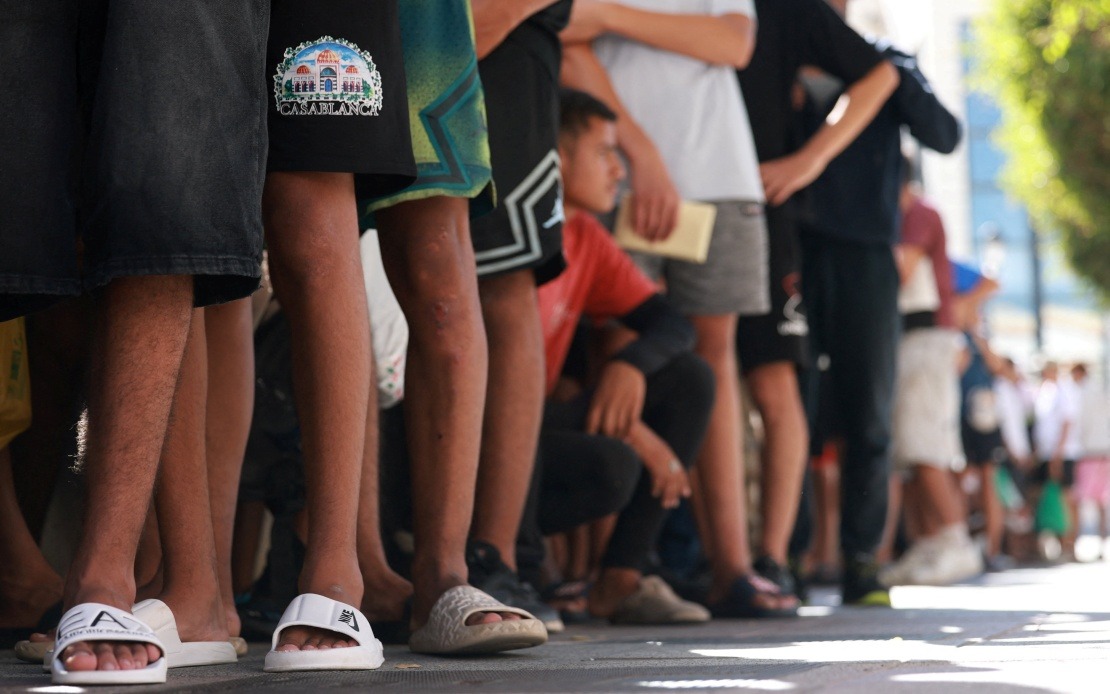
The immediate catalyst for this diplomatic clash was an extraordinary migration event in late July when approximately 80,000 people entered Ceuta, Spain's autonomous city enclave on the North African coast adjacent to Morocco. The scale of arrivals overwhelmed local infrastructure and created what officials described as a severe humanitarian emergency. While nearly 75,000 of these migrants subsequently chose to return voluntarily to Morocco, between 3,000 and 5,000 remained stranded in the enclave, severely straining reception facilities and creating acute pressure on the Spanish authorities managing the crisis.
Italian Prime Minister Giorgia Meloni responded to developments in Ceuta by implementing temporary border controls specifically targeting third-country nationals arriving from Spain, citing legitimate concerns about national security and border management capacity. Rome's position reflects a broader political stance that prioritises national sovereignty over collective EU protocols, a theme that has characterised Meloni's government since taking office. Italian officials stressed that the controls were not blanket measures—Spanish citizens and other EU nationals travelling by air or sea remain exempt from these additional scrutiny procedures—and that border authorities would seek to minimise disruption to genuine cross-border commercial and personal travel.
The Italian government has made clear that it will not capitulate to what it views as external pressure on matters of domestic security, a rhetorical stance designed both to appeal to domestic political constituencies and to assert Rome's independence within the EU framework. Italian border authorities indicated they would maintain the temporary checks until at least August 15, though that timeline now appears likely to extend given the escalating mutual retaliation. This rigid posture has transformed what might have been a routine border management issue into a significant test of EU cohesion and dispute-resolution mechanisms.
Spain's counter-measures include random identity and document checks at entry points, mirroring the type of selective screening that Italy had implemented. The reciprocal nature of these actions demonstrates how quickly European governments can abandon the cooperative frameworks that nominally govern internal EU travel when perceived national interests collide. For Malaysia and other Southeast Asian nations observing European integration dynamics, this episode offers instructive lessons about the fragility of borderless travel agreements even among wealthy democracies with decades of institutional cooperation.
The crisis in Ceuta itself warrants deeper examination, as it represents one of the most dramatic migration incidents at Europe's southern frontier in recent years. The Spanish enclave's location—separated from mainland Spain, surrounded by Moroccan territory—creates unique vulnerabilities that make it susceptible to sudden mass movements of people seeking entry to European territory. The fact that such large numbers converged on Ceuta simultaneously suggests coordination or at minimum knowledge that an opportunity window existed, raising questions about whether smuggling networks or Moroccan authorities played any role in facilitating or enabling the influx.
The broader implications extend beyond bilateral Spanish-Italian relations to encompass fundamental questions about how the EU manages migration in an era of persistent instability in North Africa and the Middle East. The Schengen Area's success depends on member states trusting that their partners maintain adequate external border controls and internal security standards. When one country perceives that others are failing to meet these standards, reciprocal measures become politically attractive, even if they undermine the collective system. Italy's position appears to rest on the assumption that Spain's response to the Ceuta situation was inadequate and that Italian citizens require protection from potential secondary migration movements.
For Southeast Asian policymakers and observers, this dispute offers parallels to regional concerns about migration, border sovereignty, and the tension between open trade frameworks and security protectionism. The Association of Southeast Asian Nations operates on principles of non-interference and consensus, which might weather such disputes more gracefully than the EU's more interventionist approach, yet the underlying dynamics—concerns about uncontrolled migration, questions of burden-sharing, and assertions of national prerogative—remain recognisably similar across continents.
The economic dimensions of these border checks should not be underestimated. The interruption of seamless travel between Spain and Italy affects not merely tourist movements but business people, supply chain operations, and cultural exchanges. Airlines and shipping companies operating between the two countries face additional administrative costs and potential delays. While the measures are technically temporary, the precedent of reinstating internal Schengen borders, even nominally, weakens the psychological commitment to free movement that underpins the zone's legitimacy.
The resolution of this dispute will likely depend on whether circumstances at Ceuta stabilise and whether diplomatic channels can produce a facet-saving compromise. Neither Madrid nor Rome appears positioned to capitulate without extracting concessions, and the language employed by both governments suggests hardened positions rather than a search for exit ramps. The European Commission, the EU's executive arm, has presumably been monitoring the situation, though it has remained notably quiet in public statements, perhaps sensing that heavy-handed intervention might provoke nationalist backlash in either or both countries.
Meanwhile, the migrants themselves—whether those remaining in Ceuta or those who have returned to Morocco—represent the human dimension that political messaging often obscures. The extraordinary numbers involved in this incident suggest that migration pressures on Europe's southern frontier are not subsiding and that similar crises may recur. How Spain and Italy manage not only this immediate dispute but also the underlying migration phenomenon will likely shape EU cohesion and the future viability of the Schengen framework for years to come.

