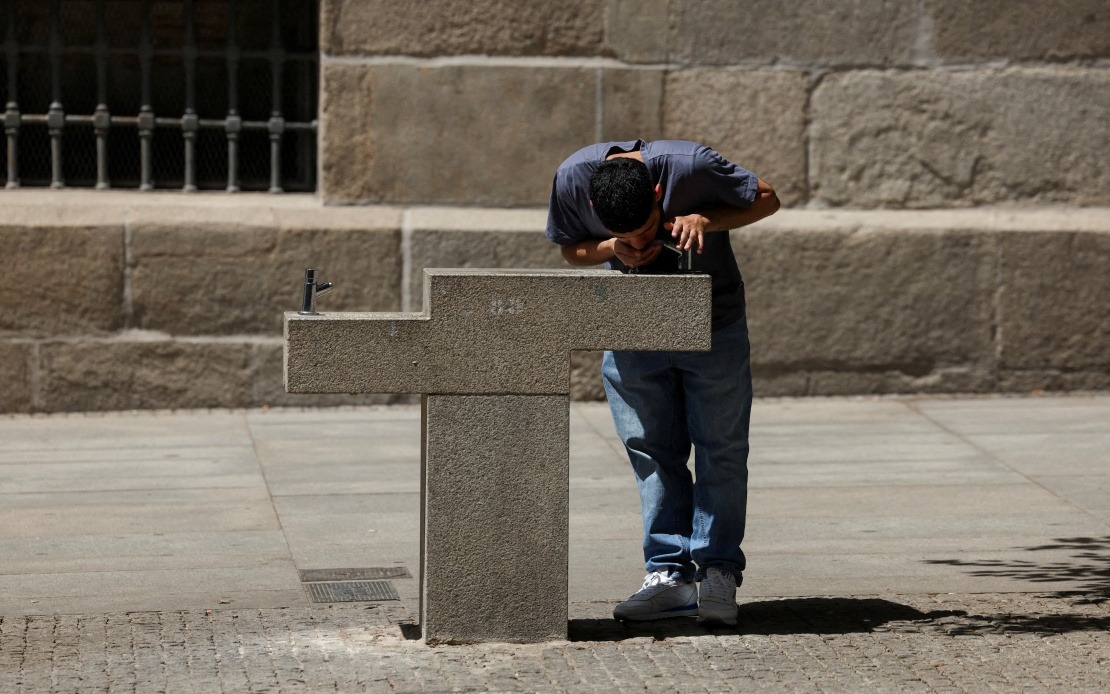
Spain faced a public health emergency in June 2026 as extreme temperatures claimed the lives of at least 1,029 people, according to data released by the country's Daily Mortality Monitoring System, or MoMo. The monitoring system, operated through the National Epidemiology Centre at the Carlos III Health Institute, tracks excess deaths linked to weather conditions and other health factors. This toll encompasses both direct fatalities from heatstroke and deaths among vulnerable individuals whose pre-existing medical conditions deteriorated fatally under the strain of sustained high temperatures.
The June heat wave represents a sobering escalation in Spain's exposure to temperature-related mortality. The country's second-hottest June in recorded history set a new benchmark for heat-related suffering, establishing itself just below the record-setting temperatures experienced in June 2025. Data compiled by the Spanish State Meteorological Agency (AEMET) revealed that the average 24-hour temperature across peninsular Spain reached 24.9 degrees Celsius in June 2026—the second-highest figure since systematic temperature records began in 1961, with only the previous year's average of 25.2 degrees Celsius surpassing it.
What made June 2026 particularly severe was the concentration of extreme conditions during a single week. The most intense period occurred from June 20 to 24, during which meteorological stations across Spain registered 316 provisional local temperature records. Of these extreme readings, 148 represented all-time high maximum temperatures for their respective locations, while 168 marked the highest nighttime minimum temperatures ever recorded. This sustained inability for temperatures to drop significantly at night compounds the physiological stress on the human body, preventing natural cooling during hours typically reserved for recovery.
The peak of the heat wave struck on June 23, when Spain experienced what meteorologists confirmed as the hottest single day in the country's recorded history. On that date, the average 24-hour temperature across the entire nation reached 29.6 degrees Celsius. In peninsular Spain specifically, the average maximum temperature climbed to 38.2 degrees Celsius—a figure that matched the previous record established just a year earlier in June 2025. The fact that 2025's extreme record was equalled rather than surpassed highlights the persistence of dangerous heat patterns in consecutive years, suggesting a shift in Spain's climate baseline toward sustained elevated temperatures.
The geographic reach of the heat wave created an unprecedented public health challenge across Spanish territory. On the peak day of June 23, approximately 35.7 million people—representing roughly 73 percent of Spain's total population—faced some degree of health risk from elevated temperatures. This assessment was calculated using the Health Ministry's Meteosalud alert system, which categorises different temperature thresholds according to health danger levels. The fact that nearly three-quarters of the nation's residents experienced heat-related health warnings simultaneously underscores the scale and intensity of the climatic event.
For Malaysian readers and policymakers across Southeast Asia, Spain's experience offers a cautionary lesson about climate trajectory and health system preparedness. While Malaysia's tropical climate already involves consistently high temperatures and humidity, the continent has largely been spared the extreme heat waves that characterise Mediterranean and continental regions. However, climate scientists warn that tropical nations may experience increasing frequency of heat events combined with humidity that could approach or exceed dangerous wet-bulb thresholds—the point at which human bodies cannot cool through perspiration. Spain's mortality figures demonstrate that even wealthy nations with advanced healthcare systems face mounting challenges from extreme heat.
The Spanish data also illuminates the hidden nature of climate mortality. Many deaths attributed to heat occur not from acute heatstroke but from the exacerbation of chronic conditions—cardiovascular disease, respiratory illness, kidney failure—in individuals already living with health vulnerabilities. This mechanism means that official heatstroke statistics substantially undercount the true mortality burden, since many jurisdictions fail to capture deaths where heat was a contributing rather than primary cause. Spain's MoMo system represents best-practice methodology in detecting these excess deaths, yet even sophisticated monitoring systems may miss cases.
The consecutive years of record-breaking temperatures in 2025 and 2026 signal a concerning pattern for Spain's future summers. Rather than representing isolated anomalies, these sequential extremes may indicate a permanent shift in the distribution of summer temperatures. Climate modelling suggests that Mediterranean regions face particular vulnerability to sustained warming, with some projections indicating that by mid-century, summer temperatures currently considered extreme could become modal conditions. This trajectory presents profound challenges for public health infrastructure, urban planning, energy systems, and labour productivity.
Spain's government and regional authorities have begun implementing heat action plans that include establishing cooling centres, issuing public warnings, and coordinating medical services during peak temperature periods. Yet the scale of the June mortality toll raises questions about the adequacy of current interventions. Many vulnerable populations—elderly individuals living alone, undocumented migrants, homeless persons, and agricultural workers—remain difficult to reach through official alert systems and may lack access to air-conditioned spaces. The 1,029 documented deaths likely represent only a portion of the true heat-related mortality, with marginalised communities bearing disproportionate burdens.
The economic dimensions of this heat wave extend beyond direct health costs. Spanish industries reliant on consistent water availability faced constraints, energy demand for cooling surged, and agricultural productivity declined under heat stress. For a nation dependent on tourism and agriculture, repeated summers of extreme temperatures pose significant economic risks alongside health concerns. Southeast Asian economies similarly dependent on agriculture and natural resource sectors should view Spain's experience as a preview of potential climate impacts on their own sectors.
Looking forward, Spain's experience underscores the urgency of integrated climate adaptation strategies that combine emissions reduction with robust public health infrastructure. Investments in urban green space, improved building insulation standards, electrical grid modernisation to support widespread cooling, and targeted support for vulnerable populations represent essential components of climate resilience. For developing nations in Southeast Asia and beyond, the challenge is particularly acute: how to build climate-resilient societies while simultaneously addressing poverty, improving healthcare access, and managing economic development.
The 1,029 heat-related deaths in Spain during June 2026 represent far more than a statistical tragedy affecting one nation. They signal a global shift in climate conditions that demands urgent policy response at every level—from individual household adaptation through community preparedness to international coordination on emissions reduction. As weather patterns continue evolving, nations worldwide must learn from Spain's experience and prepare populations and institutions for an increasingly hostile thermal environment.

