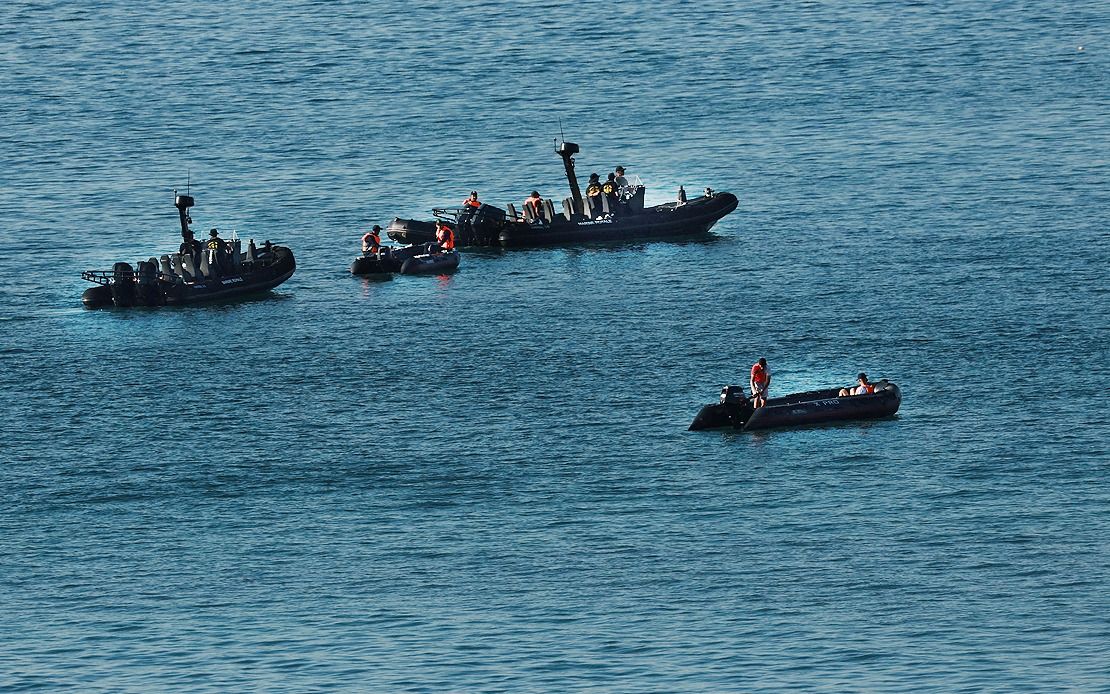
The Spanish exclave of Ceuta has become the focus of an intensifying recovery operation as authorities drag the waters off its coast searching for bodies believed lost during one of the Mediterranean's deadliest migrant surges in recent memory. So far, rescue teams have recovered 67 corpses from people who perished while attempting to reach European Union soil by swimming across the sea from Morocco. The death toll underscores the perilous nature of irregular sea crossings, where migrants risk their lives in treacherous waters with minimal safety provisions.
Local officials have initiated contingency planning on an alarming scale, preparing facilities with the capacity to accommodate as many as 200 bodies. This grim preparation reflects the possibility that the final death toll may climb significantly higher as the search effort continues. The scale of such provisions illuminates the catastrophic scope of what occurred when thousands of desperate migrants attempted to cross into Spanish territory simultaneously, overwhelming both maritime rescue capabilities and emergency response infrastructure across the region.
The crisis unfolded with stunning rapidity. Within merely a few days, approximately 50,000 migrants surged into Ceuta, a Spanish territory with a resident population of roughly 85,000 people. This influx created an unprecedented pressure on housing, food supplies, and administrative services designed for a much smaller transient population. The sheer numbers involved transformed what might have been a manageable immigration challenge into a humanitarian emergency requiring immediate military and civilian response.
While Spanish authorities maintain that the vast majority of these migrants have voluntarily returned to Morocco, the incident has triggered fierce political recriminations across the European continent. Multiple EU leaders have directed sharp criticism toward Spain's centre-left government, questioning both its border security protocols and its overall crisis management strategy. These reproaches reflect broader anxieties about migration control among European capitals, where populist movements have weaponized immigration policy and politicians face intense domestic pressure to demonstrate border firmness.
Visual documentation from Ceuta's coastline over the weekend presented a deceptively peaceful facade. Television broadcasts from the scene showed calm seas and tranquil beach conditions, with construction workers visibly installing maritime buoys to create a physical barrier. This engineering intervention represents more than mere coastal management; it constitutes a deliberate governmental response aimed at closing what Madrid views as a critical legal vulnerability that encouraged the surge.
The Spanish Supreme Court had previously issued a ruling that fundamentally altered the legal landscape for irregular migrants. According to the court's decision, individuals who enter Spain through unauthorised border crossings at unfortified sections—particularly maritime routes—retain full entitlement to individual asylum assessment procedures. This judicial determination inadvertently created perverse incentives, as migrants recognised that sea entry might confer legal advantages compared to land crossings. By installing physical sea barriers, Spanish policymakers now seek to eliminate this loophole entirely, reasoning that preventing maritime access will discourage future surge attempts.
The tragedy reflects enduring tensions between EU member states over immigration management and the burden-sharing responsibilities that accompany receiving migrants. Spain's geographical proximity to North Africa has positioned it as a primary entry point for individuals fleeing poverty, conflict, and persecution across the African continent. This geographical reality, combined with Spain's membership in the borderless Schengen zone, means that migrants reaching Spanish territory can theoretically access the broader European mainland without additional passport controls.
For Southeast Asian observers, the Ceuta crisis carries instructive implications regarding migration governance and regional cooperation. Malaysia, similarly positioned as a gateway for migrants within Asia, faces recurring challenges managing irregular maritime flows, particularly from Rohingya populations and others displaced by regional instability. The Spanish experience demonstrates how inadequately coordinated responses, combined with legal ambiguities, can precipitate humanitarian disasters that overwhelm state capacity and generate international criticism.
The maritime barrier construction signals Spain's pivot toward a hardline containment approach, prioritising physical obstruction over legal or procedural reforms. This strategy reflects frustration with judicial limitations on executive authority and represents an attempt to recapture control over border definition and enforcement. However, observers note that barriers alone cannot address underlying migration drivers—poverty, violence, and persecution in origin countries continue propelling individuals toward dangerous sea crossings regardless of obstacles.
The 67 confirmed deaths constitute a stark reminder that migration policy inherently involves life-and-death consequences. Each recovered body represents an individual whose desperation overcame rational assessment of maritime risks. As recovery operations persist and victim counts potentially rise, the incident will likely intensify European debates regarding burden-sharing, responsibility, and the adequacy of legal frameworks governing irregular migration across contested waters.
Spain's response—simultaneously completing a recovery operation while installing barriers and facing international censure—encapsulates the complexity confronting states managing migration pressures. Neither purely humanitarian nor exclusively restrictive approaches appear adequate to prevent tragedies of this magnitude. Future discussions regarding Ceuta and similar incidents will necessarily grapple with whether engineering solutions addressing symptoms rather than underlying causes represent genuine policy progress or merely postpone inevitable subsequent crises.

