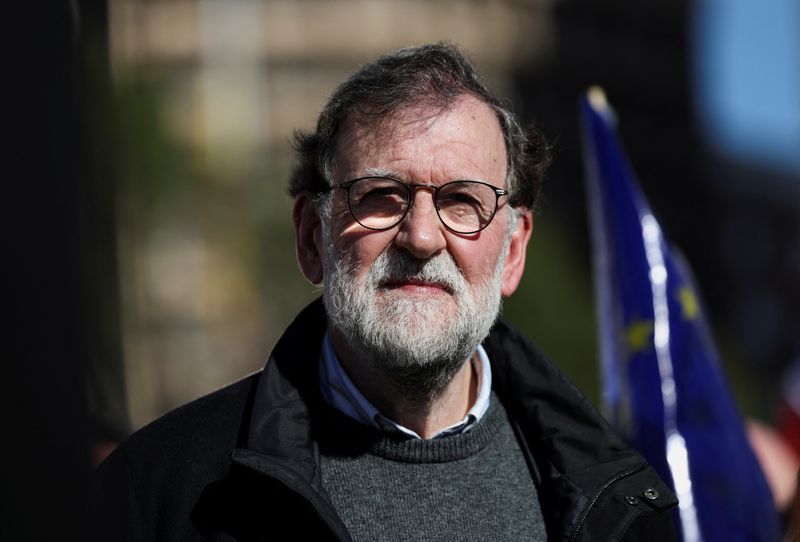
Spain's government has issued an official apology following a column by former Prime Minister Mariano Rajoy that cast doubt on the national identity of France's men's soccer team, with Foreign Minister Jose Manuel Albares condemning the remarks as xenophobic and racist in nature. The diplomatic intervention came just hours before Spain faced France in the World Cup semi-finals, underlining the gravity with which Madrid treated the controversy.
Albares made clear that Spain's leadership firmly rejected Rajoy's assertions, speaking directly to his French counterpart to emphasise that the views expressed did not represent mainstream Spanish sentiment. In a radio interview with Cadena SER, the Foreign Minister characterised the column as containing "the poison of racism and xenophobia," and pointed out the fundamental problem with using physical appearance as a metric for determining national belonging. His statement reflected a broader diplomatic concern that such rhetoric, regardless of intent, carries serious implications for relations between neighbouring EU nations.
The controversy originated from a Friday piece published on El Debate, an online conservative publication, in which Rajoy acknowledged France's formidable squad composition before making a provocative observation. The former premier, who led Spain from 2011 to 2018, wrote that "France has a squad of the very highest calibre. Mind you, there are no French players in it," an apparent reference to the multicultural heritage of several team members with roots in African and Afro-Caribbean nations. The comment appeared designed to question the authenticity of the French team's national character based on the ethnic or ancestral backgrounds of its players.
The People's Party spokesperson Borja Semper attempted to reframe the narrative, arguing that Rajoy's words should be understood as sarcasm rather than a serious assertion, and that no prejudicial intent lay behind them. This defensive positioning, however, found little traction given the straightforward nature of the original statement and the international context in which it circulated. The suggestion that the column represented mere humour rather than genuine commentary rang hollow to those already sensitised to similar rhetoric in European political discourse.
Spanish Prime Minister Pedro Sanchez took a notably different approach, delivering a pointed rebuke during his presence in Paris for France's National Day celebrations on Tuesday. Through a post on X, Sanchez criticised "those who measure nationality by a person's surname, birthplace or skin colour," directly targeting the philosophical underpinning of Rajoy's argument. His intervention signalled that Spain's government recognised the need to distance itself clearly from what many viewed as xenophobic commentary, particularly given the diplomatic proximity of the two nations and their shared European values.
The timing of Rajoy's column appeared especially problematic given recent events in the tournament. Days earlier, Paraguayan Senator Celeste Amarilla had published remarks attacking France captain Kylian Mbappe after Paraguay's elimination, describing him in terms that invoked colonial imagery and questioning his right to represent France. That incident had already brought international condemnation and sparked discussion about racism in football discourse, making Rajoy's comments appear part of a broader pattern rather than an isolated occurrence.
France itself responded to Rajoy's words with unusual political unanimity, a rare occurrence in its domestic landscape. Foreign Minister Jean-Noël Barrot delivered a characteristically blunt assessment on BFM Television, declaring that "France has no skin colour" and that any suggestion otherwise represented "idiocy, racism, or both combined." The National Rally, France's far-right opposition party, also condemned the remarks, with spokesman Julien Odoul going further by directly labelling Rajoy a racist, describing his comments as "scandalous, shameful, deplorable."
Mbappe's own response to Amarilla's earlier attack had set a tone of principled pushback, with the forward defending not only himself but also the dignity of the Paraguayan players. His intervention elevated the discourse beyond mere athletic competition, emphasising the human dimension of such remarks and the responsibility of public figures to maintain civilised standards. Paraguay's government subsequently distanced itself from Amarilla's statement, dismissing it as contrary to national values, and the French Football Federation initiated criminal proceedings.
The episode highlights ongoing tensions within European political discourse regarding immigration, national identity, and belonging. Rajoy's comments, whether intended as humour or serious critique, touched on deeply sensitive debates about what constitutes authentic national membership in increasingly diverse societies. For Southeast Asian observers, the incident provides insight into how European nations, despite their commitment to liberal democracy and multiculturalism, continue to grapple with questions of identity and inclusion that resonate globally.
The swift diplomatic response from Spain's government and the widespread condemnation across the political spectrum suggest that such rhetoric, while not uncommon in certain political circles, faces growing costs. Yet the very need for formal apologies and government interventions underscores the persistence of these attitudes and their capacity to damage international relations. The incident serves as a reminder that prejudice manifests not only in overt hate but also in ostensibly lighthearted commentary that questions the legitimacy of individuals' national identities based on appearance or heritage.

