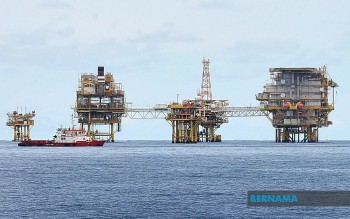
Southeast Asia's offshore energy sector is positioned for robust expansion even as Middle Eastern geopolitical tensions persist, with greenfield capital expenditure forecast to climb beyond US$100 billion—a 12 per cent increase that underscores deepening confidence in new development projects across the region. This momentum reflects strategic industry reorientation towards establishing fresh production capacity rather than simply maintaining existing operations, signalling long-term commitment from international and regional energy players to Southeast Asian operations despite ongoing uncertainty in traditionally volatile supply corridors.
Hong Leong Investment Bank's latest assessment reveals a more nuanced investment picture than surface-level geopolitical headlines might suggest. While brownfield capital spending—improvements and modifications to operating facilities—will remain significant, the pronounced shift toward greenfield projects indicates that operators believe regional assets offer sufficient geological and political stability to justify substantial new commitments. South Asia is expected to lead brownfield investment with a 23 per cent increase, whilst Southeast Asia's 3 per cent growth in this category demonstrates continued maintenance spending to preserve near-term production reliability amid potential supply chain disruptions.
The fragile United States-Iran ceasefire agreement, formalized through a 14-point memorandum of understanding, represents a potential inflection point that has begun reshaping market sentiment and capital allocation decisions across Asia Pacific. Although tensions remain volatile and could rapidly reignite, the initial de-escalation has triggered visible improvements in shipping patterns through the Strait of Hormuz, a critical chokepoint through which roughly one-third of global maritime oil trade flows. However, satellite data reveals a curious paradox: many vessels transit with Automatic Identification System transponders deliberately disabled, suggesting that actual traffic flows may be substantially higher than official tallies indicate, as shipping operators balance cautious optimism against residual risk aversion.
The investment bank has anchored its sectoral outlook on two interconnected themes that will shape Southeast Asian energy development over the coming years. The first centres on whether international diplomacy ultimately produces a durable resolution to West Asian tensions, potentially allowing global energy inventories to reach elevated levels that would enhance supply resilience and support downstream infrastructure including pipeline networks and storage facilities—sectors where regional companies maintain significant exposure. Such an outcome would lower physical energy security premiums embedded in commodity prices, creating more stable long-term planning environments for capital-intensive projects.
The second pillar involves anticipation of a capital expenditure upcycle at Petronas beginning around 2027, a trajectory that would generate substantial contractual opportunities for Malaysia's domestic oil and gas services and equipment sector. Companies specializing in upstream development, hook-up and commissioning work, maintenance services, marine support operations, fabrication, and pipeline-related infrastructure would likely capture proportionate shares of this projected spending wave. For Malaysian energy services firms, the 2027 window represents a critical juncture where strategic positioning and capability development must occur during the current period of relative uncertainty to capture emerging opportunities.
Price forecasts have been tempered since earlier projections, with Brent crude expected to average US$80 per barrel in 2026, down from previous US$90 estimates, though the investment bank maintains a US$75 per barrel floor for 2027. This moderation reflects acknowledgment that the West Asian disruptions, while significant, have not fundamentally altered the global energy balance to the extent that some earlier forecasts suggested. The US Energy Information Administration's June outlook projects OECD commercial crude inventories will decline to approximately 50 days of supply by late 2026, substantially below the pre-conflict benchmark of 60 days or higher, indicating that inventory depletion will remain a price-supportive factor even if geopolitical tensions ease.
The investment bank anticipates that elevated crude prices will persist around the US$80 per barrel level until global supply flows normalize and inventory buffers rebuild to pre-conflict comfort levels. Should the replenishment process extend beyond 60 days of supply—a timeline increasingly plausible given heightened energy security consciousness among consuming nations and strategic reserve accumulation strategies—Brent could remain supported above US$75 per barrel through early 2027. Production recovery timelines in Middle Eastern offshore fields may extend substantially given that shut-in volumes in the Strait of Hormuz region peaked at 45 per cent of normal capacity in May 2026, up sharply from 35 per cent just two months earlier, creating significant supply-side headwinds that would persist even amid diplomatic progress.
Economists observing from alternative vantage points note that crude prices have already retreated substantially from recent peaks, stabilizing within a US$70 to US$75 per barrel band that represents a meaningful decline from earlier highs yet remains elevated relative to pre-conflict trajectories. This price stabilization creates emerging opportunities for energy-intensive Malaysian industries and manufacturers, as downstream businesses can begin locking in fuel costs within more predictable ranges, thereby reducing the paralyzing uncertainty that characterized earlier phases of the conflict. Such cost certainty becomes critical for production planning and investment decisions across the economy.
Sustained crude prices within the moderate US$70 to US$75 range would deliver measurable economic benefits that extend well beyond the energy sector itself. Lower energy input costs would help counter global inflationary pressures by reducing cost-push inflation that has constrained business investment appetite throughout Southeast Asia and beyond. Improved input cost visibility would strengthen consumer purchasing power by reducing transportation and production costs throughout supply chains, ultimately lowering retail prices for goods and services. Central banks across the region would gain enhanced policy flexibility, potentially enabling maintenance of more accommodative monetary stances that support continued economic recovery and business expansion without reigniting inflation concerns.
At current market levels, Brent crude was trading at US$69.17 per barrel—up 0.90 per cent on the day—whilst West Texas Intermediate stood at US$72.67 per barrel, reflecting a 0.94 per cent gain. These modest daily movements mask the broader consolidation pattern within a range that increasingly appears sustainable for the medium term. For Malaysian policymakers and business planners, this emerging price stability offers a window to recalibrate long-term energy strategy, invest in regional capacity, and position domestic enterprises to capture the anticipated opportunities embedded in coming years' capital spending cycles. The question confronting regional stakeholders now centres less on whether geopolitical tensions will persist than on how quickly supply chains and investment patterns can normalize around a new equilibrium that acknowledges elevated but manageable energy security considerations.
The interplay between resilient Southeast Asian offshore investment momentum and fragile but improving geopolitical conditions suggests that regional energy security is gradually transitioning from acute crisis mode toward chronic management of elevated risks. For Malaysia specifically, the implications extend beyond petroleum sectors into manufacturing competitiveness, monetary policy latitude, and consumer welfare. Industry participants who recognize this transition as opportunity rather than obstacle will position themselves advantageously as the anticipated 2027 Petronas capex cycle approaches and regional energy infrastructure undergoes significant modernization and expansion.

