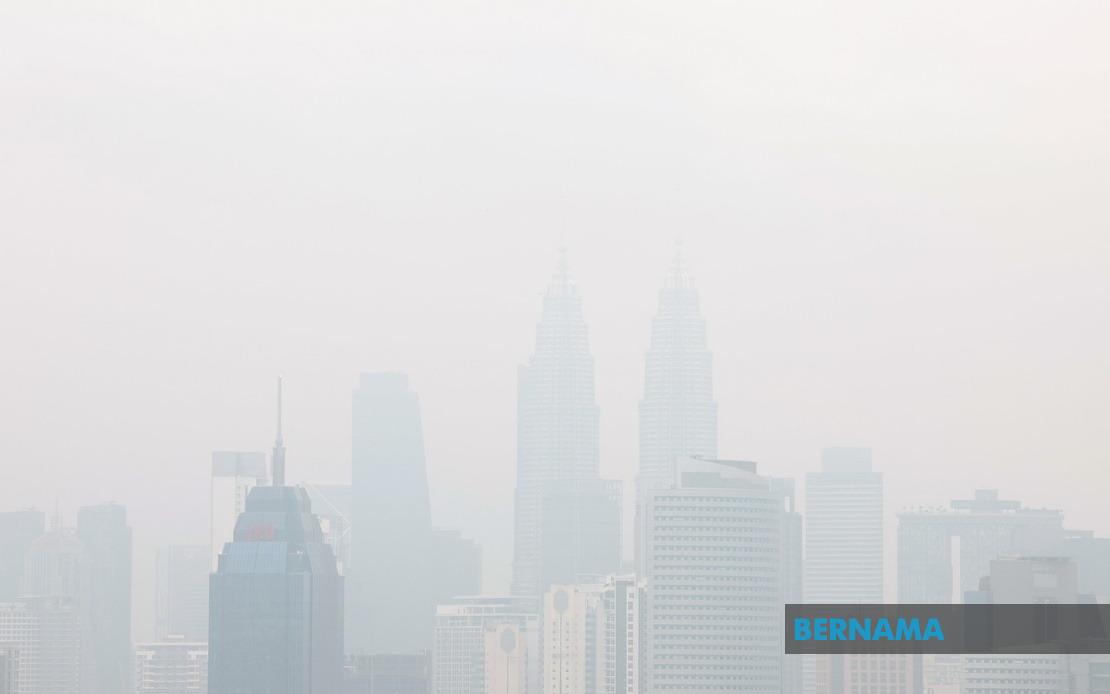
The ASEAN Specialised Meteorological Centre has issued a cautionary assessment regarding the escalating haze situation gripping parts of southern ASEAN, warning that the crisis may intensify significantly in coming days if current meteorological patterns persist. Already, unhealthy to very unhealthy air quality readings have been registered across multiple locations, spanning from western Peninsular Malaysia to Sarawak, indicating that the transboundary pollution phenomenon has reached critical levels in several population centres.
Meteorological conditions remain the primary driver of the deteriorating air quality. The ASMC's latest analysis identifies prolonged dry conditions as the principal factor exacerbating the haze phenomenon, as moisture-depleted air masses are unable to disperse smoke particles effectively. This atmospheric stagnation allows contaminants to accumulate at ground level, transforming what might otherwise dissipate into lingering health hazards for residents across the region. The Centre's technical assessment suggests that without significant precipitation or atmospheric circulation changes, residents should expect conditions to deteriorate rather than stabilise in the near term.
Indonesian hotspots and smoke production constitute the origin point for the transboundary haze affecting the broader region. Field observations from the ASMC document moderate to dense smoke plumes originating from West, Central, and South Kalimantan, with additional significant emissions recorded across central and southern Sumatra. These two Indonesian regions are known agricultural areas where land-clearing fires, both controlled and uncontrolled, occur particularly during dry seasons. The scattered hotspot clusters detected throughout Indonesia suggest that the combustion activities driving current haze levels are not concentrated in isolated zones but rather dispersed across multiple districts, complicating mitigation efforts.
Wind patterns will determine whether the haze remains regionally contained or disperses further northward. The ASMC projects that prevailing winds over southern ASEAN will continue blowing from the southeast to southwest, a directional pattern that naturally channels smoke plumes toward Malaysia's western coastal states and the Sarawak region. This geographical reality means that Malaysia and Sarawak, rather than the immediate source regions in Indonesia, bear the health burden of the transboundary pollution despite having minimal responsibility for generating the emissions themselves. The sustainability of these wind patterns over multiple days amplifies the risk that current unhealthy conditions will persist or intensify rather than clearing quickly.
Malaysia's air quality situation has reached concerning levels across a broad geographical area. According to the Air Pollutant Index Management System, seventeen distinct monitoring locations across six states and two Federal Territories recorded unhealthy API readings as of Wednesday morning. This spatial distribution across six different state jurisdictions indicates that the haze phenomenon is not localised to specific industrial zones or urban centres but represents a region-wide environmental challenge. The affected areas span from Peninsular Malaysia's western corridor, the seat of the nation's economic and population centre, through to Sarawak in East Malaysia, demonstrating the remarkably extensive geographic reach of transboundary air pollution.
Sarawak has emerged as the most severely affected Malaysian jurisdiction based on available air quality data. Three distinct locations in the state registered unhealthy classifications, with Sri Aman recording the highest documented API reading at 167, representing air quality that health authorities classify as posing risks even to individuals without respiratory conditions. The Serian district police headquarters followed closely at 166, while Samarahan registered 162. These API values, ranging between 150 and 200, indicate an air quality category that prompts authorities to recommend that members of the general public restrict outdoor activities and consider remaining indoors with air filtration. For vulnerable populations including children, the elderly, and individuals with pre-existing respiratory or cardiovascular conditions, such readings pose genuine health risks.
Peninsula Malaysia's western region, encompassing Selangor, Kuala Lumpur, Negeri Sembilan, Johor, Melaka, and Perak, has simultaneously recorded unhealthy air quality readings across multiple monitoring stations. While specific API values for these Peninsular locations were not detailed in the latest report, their classification as unhealthy indicates readings exceeding 100 on the API scale. The concentration of affected areas in Peninsular Malaysia's western half, where population density significantly exceeds other regions, means that tens of millions of Malaysian residents inhabit areas experiencing air quality that health authorities deem problematic. Putrajaya, the administrative capital housing government offices and civil service workers, also registered unhealthy readings, potentially affecting government operations and workforce productivity.
Singapore, positioned at the southern extremity of the Malay Peninsula and consequently downwind from Malaysian and Indonesian pollution sources during typical monsoon patterns, has thus far experienced relatively moderate air quality conditions. The National Environment Agency reported a 24-hour Pollutant Standards Index ranging from 59 to 78 as of Wednesday afternoon, with the central region registering the highest measurement. These readings remain classified as moderate, indicating air quality acceptable for most populations without requiring significant behavioural modifications, though the upward trajectory of readings suggests that conditions may deteriorate if haze production in source regions continues unchanged. The fact that Singapore's central region recorded higher readings than outlying areas suggests that the haze plume's southern progression is ongoing.
The convergence of multiple meteorological and geographical factors creates conditions for potential deterioration beyond current levels. Dry conditions limit atmospheric mixing and precipitation that might otherwise clear existing contaminants, while steady winds provide a mechanism for sustained transport of new emissions from source regions toward Malaysia and potentially beyond. The scattered distribution of hotspots across Indonesia suggests that emissions will continue flowing from multiple centres rather than being concentrated in single zones. Unless precipitation occurs across Indonesian source regions or atmospheric circulation patterns shift dramatically, the transboundary pollution event appears poised to persist as a significant regional challenge for the immediate future.
This haze situation carries significant policy implications for ASEAN cooperation frameworks and bilateral air quality management. The region has periodically confronted transboundary haze crises, establishing various monitoring and coordination mechanisms, yet the persistence of such events suggests that existing preventative frameworks have proven insufficient to eliminate land-clearing practices that generate smoke during dry seasons. Malaysia and Singapore have experienced repeated cycles of unhealthy air quality emanating from Indonesian sources, creating diplomatic friction despite ASEAN's stated commitment to managing environmental challenges collectively. The current deterioration underscores ongoing tensions between agricultural development policies in source countries and air quality protection in downwind nations.
Public health guidance for affected populations emphasises reducing outdoor exposure during periods of unhealthy air quality. Health authorities typically recommend that individuals in unhealthy air quality zones limit strenuous outdoor activities, keep windows and doors closed, and consider using air purifiers or N95-equivalent masks if outdoor activity becomes necessary. Individuals with respiratory conditions such as asthma or chronic obstructive pulmonary disease face elevated risks of symptom exacerbation and should remain especially vigilant regarding air quality measurements. Schools and workplaces in the most severely affected areas may need to consider operational modifications if readings approach hazardous classifications, potentially disrupting educational and economic activities across the affected regions.
Monitoring of this situation will remain critical in coming days as meteorological conditions determine whether current unhealthy air quality readings represent a transient episode or the beginning of an extended regional pollution event. The ASMC's projection that conditions may worsen suggests that authorities across Malaysia, Sarawak, and elsewhere should prepare for potential escalation, including public health messaging campaigns and coordination of air quality management resources. The spatial extent of current unhealthy readings—spanning multiple states and involving tens of millions of residents—demonstrates that this has evolved from a localised air quality issue into a significant regional environmental and public health challenge requiring coordinated response mechanisms.

