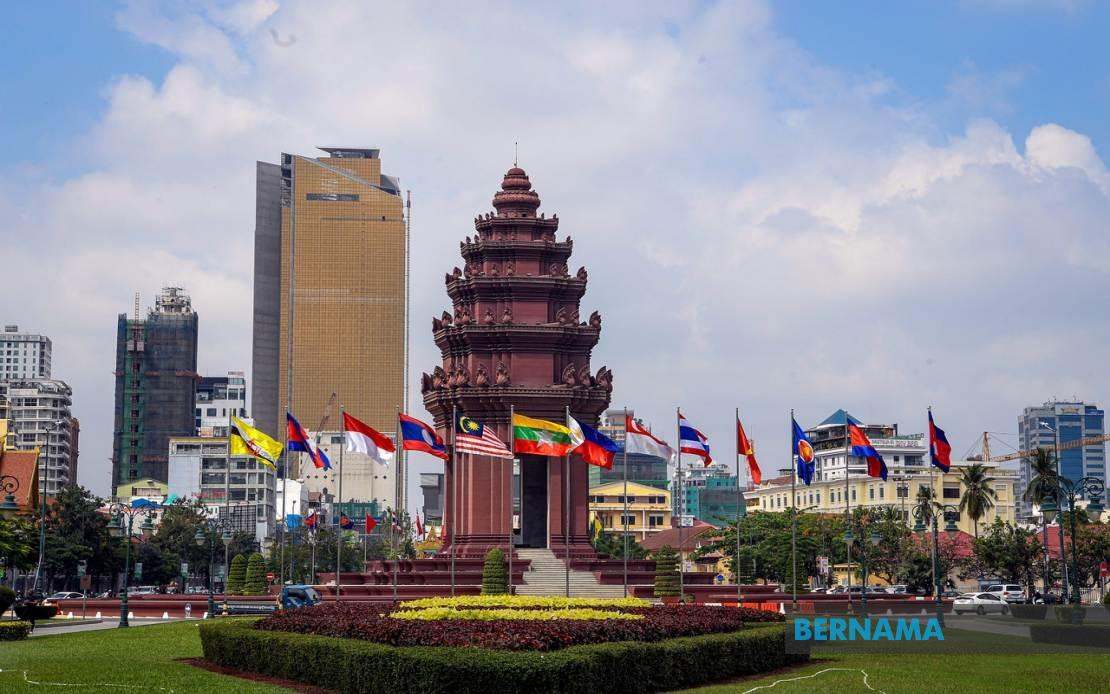
A wave of regional infrastructure and development projects is reshaping Southeast Asia's economic landscape, with Cambodia, Indonesia, Myanmar, the Philippines, Singapore, and Thailand pursuing ambitious plans to enhance rural connectivity, energy capacity, and governance efficiency. The initiatives reflect a broader regional commitment to economic growth and modernisation, even as individual countries navigate distinct development priorities and regulatory pressures.
India and Cambodia have formalised cooperation on rural development through memoranda of understanding signed under the Mekong-Ganga Cooperation framework, with two projects specifically targeting Kratie Province. The arrangement underscores how regional powers beyond Southeast Asia itself view the region as critical to broader strategic partnerships, and how Cambodia continues to leverage multiple international partnerships to advance rural prosperity. This engagement is particularly significant given Cambodia's focus on expanding development benefits beyond Phnom Penh, where infrastructure gaps and limited economic opportunities have historically constrained rural progress.
Cambodia's Civil Service Ministry is simultaneously undertaking a comprehensive modernisation programme aimed at building professional public administration through human capital development and digitalisation adoption. The initiative addresses a fundamental governance challenge across much of Southeast Asia: creating efficient, transparent public institutions capable of delivering responsive services. Such administrative reforms are prerequisites for sustainable development, as they enable governments to implement development policies more effectively and restore public confidence in state institutions.
Indonesia is pursuing infrastructure expansion to manage transport demand concentration, with Transportation Minister Dudy Purwagandhi backing the expansion of Lt. Col. Wisnu Airfield in Bali's Buleleng District. The facility is envisioned as a secondary air transport hub for northern Bali, designed to alleviate congestion at Ngurah Rai International Airport, which has struggled to absorb Indonesia's surging air traffic. This decentralised infrastructure approach could enhance regional connectivity and stimulate economic development in traditionally secondary tourism areas, distributing economic benefits more widely across the island.
Meanwhile, Indonesia's law enforcement agencies are tackling high-level corruption, with the National Police officially naming Febrie Adriansyah, former Junior Attorney General for Special Crimes, as a suspect in alleged corruption and money laundering investigations. The case reflects ongoing efforts to address institutional graft, though such prosecutions often struggle with lengthy proceedings and political pressures within Indonesia's complex judiciary system. High-profile cases targeting former prosecutors are particularly sensitive, as they potentially expose systemic vulnerabilities in institutions responsible for prosecuting corruption.
Myanmar's infrastructure development trajectory includes transportation and energy advances amid the nation's ongoing political instability. The inauguration of Anisakan Airport in Mandalay Region signals attempts to strengthen domestic connectivity and facilitate agricultural commerce, while potentially offering investors improved access to Myanmar's interior. Simultaneously, the 15-megawatt Shwemyoh solar power plant in Naypyidaw represents Myanmar's renewable energy ambitions, with planned expansions to 25 megawatts and 30 megawatts in subsequent phases. These projects are critical given Myanmar's ongoing power deficits and the country's need to modernise energy infrastructure amid political uncertainty.
The Philippines faces distinct governance challenges centred on high-level political accountability, with the impeachment trial of Vice President Sara Z. Duterte underway in the Senate. House prosecution panel members indicated that foundational testimony had been presented during the trial's opening week, suggesting proceedings could extend for months. This high-profile trial reflects deepening political divisions and illustrates how presidential-system democracies in Southeast Asia increasingly weaponise impeachment mechanisms for political purposes, potentially undermining institutions intended for serious misconduct accountability. The trial will likely consume significant legislative attention and political energy throughout the remainder of 2026.
Weather patterns continue affecting regional populations, with the Philippine Atmospheric, Geophysical and Astronomical Services Administration confirming that the southwest monsoon will persist over Luzon and the Visayas even after Tropical Storm Inday exits Philippine territory. Such seasonal weather phenomena affect agriculture, fishing, and transportation sectors across the archipelago, requiring coordinated disaster preparedness and response mechanisms.
Singapore, meanwhile, is addressing digital privacy and economic policy dimensions distinct from broader regional infrastructure development. Meta's WhatsApp is reserving high-profile usernames including those of Singaporean government officials and public figures ahead of launching a new privacy feature allowing users to communicate without sharing phone numbers. This technical innovation reflects global tech platforms' evolving approach to user privacy, though it requires government entities to actively reserve digital identities for security purposes.
On housing policy, Singapore's Housing and Development Board reported that 845 income ceiling waiver appeals for executive condominium applicants were approved over the past five years, representing part of the nation's ongoing effort to manage property access amid rising costs. The relatively modest approval rate from over 2,500 appeals suggests strict income thresholds remain barriers for middle-income Singaporeans seeking homeownership in the subsidised EC programme.
Thailand confronts cross-border drug trafficking, with national police issuing an arrest warrant for a woman accused of directing a transnational heroin network that ingeniously concealed narcotics in elephant-print bags and recruited airline personnel to transport contraband. The sophistication of trafficking networks demonstrates how drug operations increasingly exploit legitimate commerce and transport infrastructure for criminal purposes, requiring enhanced international cooperation and intelligence sharing among regional law enforcement.
The Department of Special Investigation is simultaneously expanding a financial investigation into nominee networks linked to foreign-owned property and tourism businesses in southern Thailand. Searches on Koh Samui and Koh Phangan uncovered one registered address associated with over 100 companies, suggesting potential shell company schemes facilitating money laundering or regulatory evasion. Thailand's tourism sector, while economically vital, has become entangled in complex financial schemes that regulators struggle to adequately monitor and control.
These developments across Southeast Asia demonstrate that regional nations are concurrently pursuing modernisation and development objectives whilst contending with governance challenges, infrastructure constraints, and cross-border security threats. Success in balancing these competing demands will significantly influence regional stability and prosperity throughout the remainder of 2026 and beyond.

