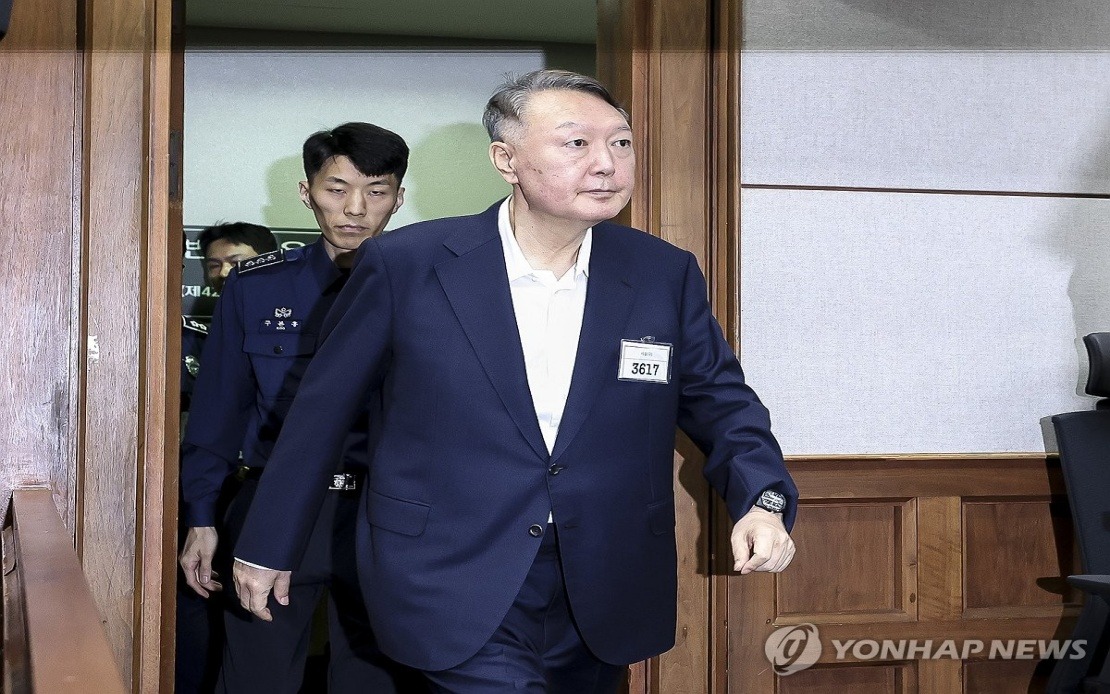
South Korea's Supreme Court has cleared the way for a televised ruling on charges of obstruction of justice brought against former President Yoon Suk Yeol, marking a significant moment of transparency in one of the nation's most consequential legal proceedings. The court announced on Tuesday that it will permit broadcasters to transmit live footage of its verdict, which is scheduled for delivery at 2 pm on Thursday, using camera equipment provided by the court itself. This forthcoming decision represents the top court's initial ruling specifically addressing allegations stemming from Yoon's dramatic and ultimately failed attempt to impose martial law on December 3, 2024.
The request for public broadcast originated from Special Counsel Cho Eun-suk's team, who filed their petition last Friday as a means of ensuring public access to proceedings of considerable national importance. However, Yoon's defense counsel vigorously resisted the proposal, contending that permitting live transmission would inflict lasting prejudice to their client's entitlements to judicial fairness, personal privacy, and protection of reputation. Despite these arguments, the court determined that the public interest in witnessing the judicial process outweighed such concerns, establishing a precedent that underscores the judiciary's commitment to openness in high-profile cases involving former heads of state.
At the centre of this obstruction charge lies an alleged episode from January 2025, when investigators sought to execute an arrest warrant against Yoon. The former president stands accused of having instructed his security detail to physically prevent investigators from apprehending him, thereby obstructing the lawful execution of judicial authority. This particular charge carries symbolic weight beyond the specific incident, as it touches on fundamental questions about the rule of law and the principle that no individual, regardless of former station, stands above legal processes.
The indictment encompasses a broader constellation of allegations that paint a picture of systemic circumvention of constitutional norms. Yoon is charged with violating the constitutional rights of nine cabinet members by excluding them from any advance consultation before implementing his martial law decree. Additionally, prosecutors allege that Yoon engaged in document falsification by subsequently amending the martial law proclamation after the decree had already been rescinded, purportedly to obscure procedural irregularities embedded within the original order. The prosecution further contends that Yoon later destroyed this altered document, compounding the obstruction allegations.
The judicial proceedings against Yoon have already produced a conviction at the appellate level, with a court in April sentencing him to seven years imprisonment on these obstruction charges. Significantly, this judgment represented an escalation from the lower court's initial verdict, which had imposed a five-year sentence, yet it remained substantially less severe than the ten-year prison term the special counsel team had recommended to the court. This intermediate sentence reflected the appellate bench's attempt to balance the seriousness of the offences against considerations of proportionality.
Parallel to these obstruction proceedings, Yoon confronts far graver accusations related to his martial law declaration itself. A separate appellate court is currently adjudicating charges that Yoon orchestrated an insurrection through his power grab, and in an initial ruling, that court sentenced him to life imprisonment. The outcome of that ongoing case could ultimately supersede or complicate the verdict scheduled for Thursday. The combination of these two major cases has created an extraordinary legal and political situation without clear precedent in modern South Korean history.
The decision to permit live broadcast reflects evolving attitudes within South Korean judicial institutions regarding transparency and public participation in democratic accountability. By allowing citizens to witness the highest court's reasoning and judgment in real time, the court facilitates informed public discourse about the rule of law and the consequences of executive overreach. For a nation that has witnessed multiple prosecutions of former presidents throughout its democratic history, this moment encapsulates ongoing tensions between demands for accountability and questions about whether the judiciary can maintain impartiality when processing cases of such extraordinary political consequence.
From a regional perspective, South Korea's handling of its former president's legal troubles demonstrates both the resilience of institutional checks on executive power and the complexities that arise when judicial systems must simultaneously uphold rule of law principles while navigating deeply polarized political environments. The decision to broadcast proceedings publicly, despite defense objections, sends a signal that transparency and democratic accountability remain prioritized values even when applied to the nation's highest former office holders. This contrasts with approaches in some neighbouring jurisdictions where former leaders have avoided prosecution or received protection from legal consequences.
The implications extend beyond South Korea's borders. Observers throughout Southeast Asia and beyond continue to monitor how democracies manage the prosecution of former chief executives without allowing justice systems to become instruments of political vendetta. Thailand's military-dominated courts, the Philippines' complex political landscape, and Indonesia's evolving institutions all face comparable questions about balancing accountability with institutional legitimacy. South Korea's determination to proceed with public proceedings, despite political sensitivities, reinforces the notion that durable democracies require visible, transparent legal processes capable of constraining even the most powerful former officials.
Thursday's verdict will provide clarity on one dimension of Yoon's legal crisis, but it arrives amid broader uncertainty about his ultimate legal fate. The obstruction conviction is serious, yet the life sentence for insurrection carries far more consequential implications for his future. Whether the Supreme Court will uphold, reduce, or overturn the appellate court's seven-year sentence remains uncertain, as does the broader question of how South Korea will ultimately resolve this extraordinary chapter in its democratic development. The permission to broadcast ensures that whatever judgment emerges will be delivered transparently to the watching nation and world.

