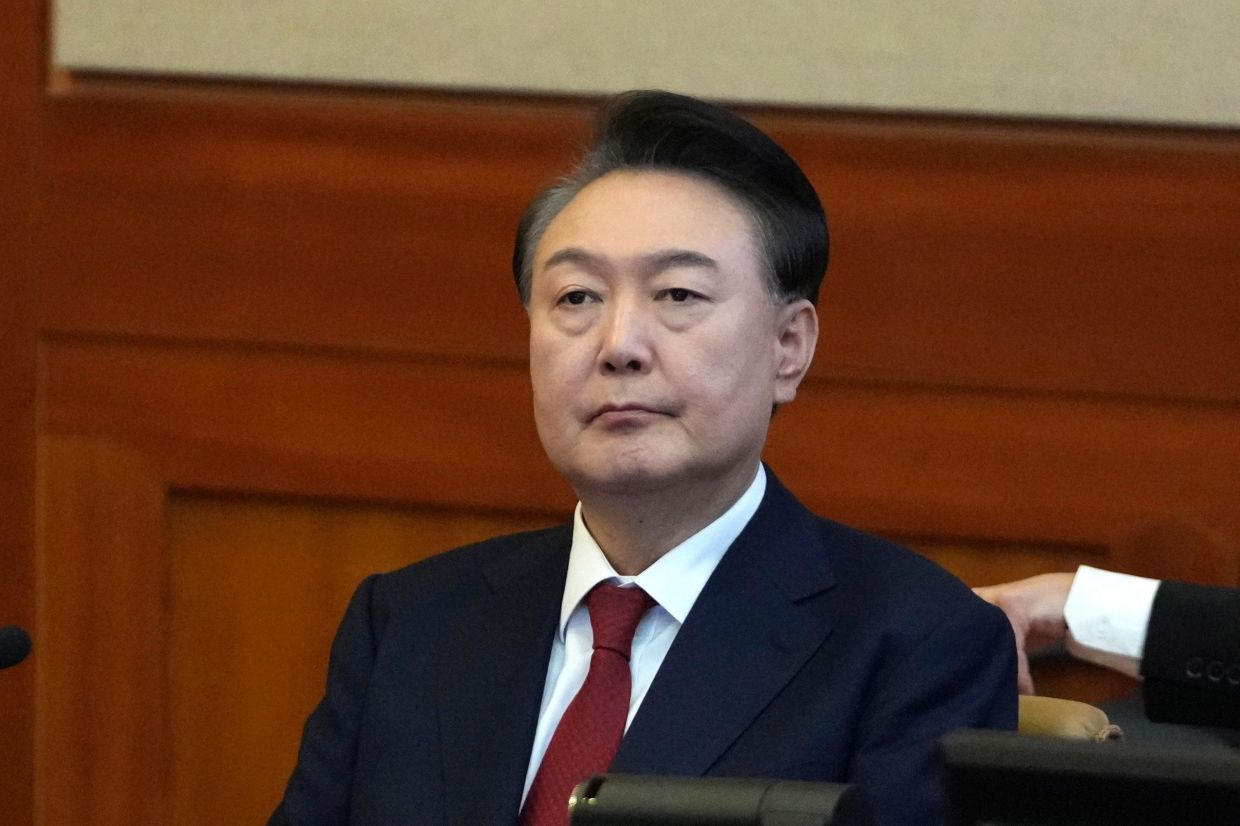
South Korea's Supreme Court has delivered its final judgment on former president Yoon Suk Yeol, confirming a seven-year prison sentence for crimes linked to his abortive martial law declaration in December 2024. The court's affirmation of the lower courts' verdicts marks the conclusion of a major legal proceeding and underscores the serious consequences facing one of Asia's most significant political figures in recent years. The decision came through a televised ruling where the Supreme Court judge rejected all appeals from both prosecutors and Yoon's legal team, declaring that the previous judgment "contained no errors".
The charges against Yoon encompassed multiple dimensions of alleged misconduct surrounding the martial law episode. He faced accusations of obstructing cabinet deliberations by convening only select ministers before announcing the decree, as well as creating and destroying a false martial law document bearing forged signatures of the prime minister. Prosecutors had initially sought a harsher 10-year sentence, indicating the seriousness with which authorities viewed his conduct. The journey through South Korea's judicial system involved a lower court conviction in January that resulted in a five-year term, which an appeals court then increased to seven years in April after adding a guilty verdict related to a misleading press release distributed to foreign media.
Yoon's conduct extended beyond the declaration itself. He is accused of directing army commanders to delete records from secure military phones and instructing officials to distribute misinformation to international media outlets, suggesting a deliberate attempt to control the narrative around his actions. Additionally, after lawmakers voted to nullify the martial law declaration, Yoon allegedly deployed presidential security agents to obstruct his own arrest, demonstrating resistance to the constitutional process even after the measure had been formally rescinded. These details paint a picture of sustained efforts to shield himself from accountability.
The December 2024 announcement shocked South Korea's political establishment and international observers. Yoon delivered a late-night televised address declaring martial law, an extraordinary constitutional measure that effectively suspended civilian rule and alarmed the nation and its allies. The practical duration of this extraordinary assertion of presidential power was remarkably brief—approximately six hours—before opposition lawmakers convened in emergency session and voted to rescind it. Nevertheless, the mere attempt triggered significant disruption: stock markets declined sharply, public protests erupted, and key international partners including the United States found themselves caught off-guard by the declaration.
Yoon's legal defence throughout the proceedings has rested on claims of legitimate governance and national necessity. He has consistently maintained that his martial law declaration was motivated purely by consideration for the nation's welfare and that it represented a necessary response to what he characterised as threats from North Korea and internal anti-state activities. His lawyers have expressed "deep regret" regarding the Supreme Court's decision, arguing that the court had concluded the case "without sufficient deliberation." They have signalled plans to challenge the ruling on constitutional grounds and indicated their intention to file formal complaints, suggesting they view the process as fundamentally flawed rather than disputing the factual record.
Parallel to this conviction, Yoon faces an even more severe legal threat. In a separate case, a court imposed a 30-year prison sentence stemming from Yoon's decision to send drones into North Korean territory. Prosecutors alleged that this action was designed to artificially manufacture a crisis atmosphere that would justify his martial law declaration, suggesting a calculated political strategy rather than a spontaneous response to genuine security concerns. This conviction adds complexity to understanding Yoon's motivations and the extent of premeditation involved in his constitutional overreach.
The Supreme Court's affirmation of the seven-year sentence represents a definitive legal conclusion, as South Korean Supreme Court rulings are final and cannot be appealed further. This means Yoon's conviction on these particular charges is now legally settled, although his constitutional challenge and other pending cases remain active. The political implication is substantial: a former sitting president of South Korea, a major democratic nation in East Asia, has been convicted and remains incarcerated while fighting multiple sentences, a scenario that was virtually unthinkable in South Korean politics just years ago.
Yoon's political downfall culminated in his removal from office in April 2025, triggered directly by the martial law crisis he had unleashed. The subsequent presidential elections ushered in a new political era, with Lee Jae Myung of the centre-left Democratic Party winning the presidency. This transition represents a dramatic reversal of South Korea's political trajectory, moving away from the conservative governance that Yoon had represented and potentially signalling voter rejection of the approach that had led to the constitutional crisis.
For Malaysian and Southeast Asian observers, the Yoon case offers instructive lessons about the institutional resilience of democratic systems and the accountability mechanisms available to established democracies when leaders overstep constitutional boundaries. South Korea's judiciary demonstrated independence in prosecuting and convicting a former president—an outcome that highlights the maturity of its democratic institutions despite the enormous political pressures such proceedings inevitably generate. The case also underscores the vulnerability of democratic systems to leaders who attempt to consolidate power through emergency measures, a concern relevant across the region where democratic consolidation remains an ongoing project in several nations.

