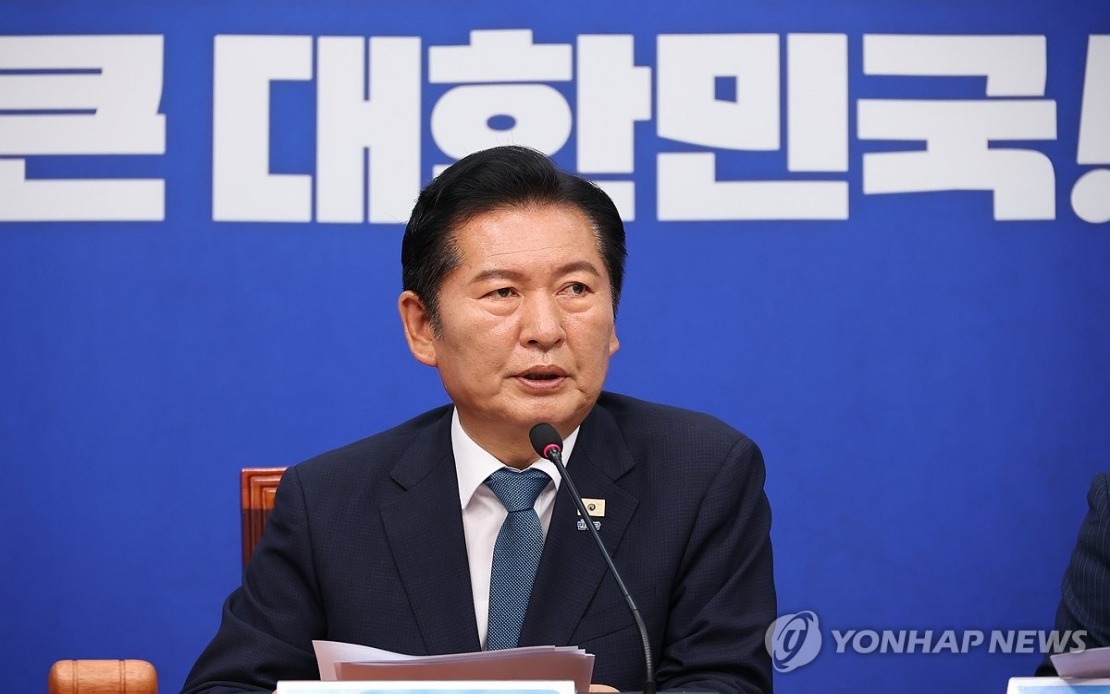
South Korean lawmaker Jung Chung-rae stepped down as chairman of the ruling Democratic Party on Wednesday, a resignation widely interpreted as the opening move in his campaign to reclaim the position through the party's forthcoming leadership election. The announcement, delivered during a session of the party's supreme council at the National Assembly in Seoul, sets the stage for a competitive three-way contest that will reshape the party's internal power structure ahead of crucial elections.
In his resignation statement, Jung reflected on the personal toll of his tenure, describing the emotional weight of constant scrutiny and internal discord. He emphasised his commitment to working cohesively with President Lee Jae Myung and the government, positioning himself as a bridge between the party apparatus and the presidential office. His comments underscored the significant pressure he has faced since assuming the role, navigating competing interests within the Democratic Party's fractious membership.
The friction underlying Jung's resignation centres on fundamental disagreements about party strategy and leadership philosophy. Critics within the party, particularly those allied with President Lee, have accused Jung of prioritising hardline supporters over collaborative governance. This tension reflects a broader challenge in South Korean politics, where ruling parties frequently struggle to maintain unity between the presidential faction and other internal power bases, a dynamic that resonates across East Asian political systems where presidential authority often dominates party structures.
With Jung's departure, DP floor leader Han Byung-do assumes interim leadership responsibilities until the convention scheduled for August 17. This caretaker arrangement provides breathing space for factional negotiations and positioning, a common feature in Korean party transitions that allows behind-the-scenes consolidation before formal contests. The interim period will likely witness intensive coalition-building and public campaigning from prospective candidates.
The emerging leadership race involves three significant political figures, each representing different constituencies within the party. Prime Minister Kim Min-seok enters as the establishment favourite, backed by his close alignment with President Lee and control of government resources and appointments. His candidacy appeals to those prioritising loyalty to the current administration and maintaining executive-party harmony. Song Young-gil, a former party leader, brings extensive party credentials and organisational experience, positioning himself as a stabilising force with independent stature.
Internal discussions suggest potential coalition-building between candidates. Song reportedly communicated to President Lee his intention to contest the leadership race while exploring possibilities for unifying his campaign with Kim's bid. Such alliances would reduce the number of serious contenders and increase the likelihood of achieving consensus around a compromise choice. This strategy reflects traditional Korean political practice, where formal contests often mask prior negotiations determining outcomes.
For Malaysian and Southeast Asian observers, South Korea's Democratic Party dynamics illustrate persistent challenges in party governance that transcend regional boundaries. Many ruling parties across Asia confront similar tensions between presidential authority and party independence, between ideological wings and pragmatists, and between internal democracy and organisational cohesion. The Democratic Party's experience demonstrates how these competing pressures can paralyse party operations and weaken government effectiveness.
The August convention will test whether the Democratic Party can achieve meaningful internal renewal or merely rotate personalities while preserving existing factional structures. Leadership selection processes that appear democratic but involve substantial behind-the-scenes negotiation risk alienating grassroots members, potentially weakening the party's electoral mobilisation capacity. This concern extends to other Asian democracies, where party vitality increasingly depends on member engagement and legitimacy perceptions.
Jung's calculated resignation strategy reflects sophisticated political timing. Rather than facing removal through a convention defeat, he positions himself as a reformist seeking fresh endorsement. This approach allows him to frame re-election as a positive renewal rather than defensive survival, potentially enhancing his campaign narrative. His emphasis on past sacrifices and devotion to presidential priorities attempts to neutralise accusations of independent power-seeking.
The Democratic Party's leadership turbulence occurs within a broader context of South Korean political polarisation and declining public trust in institutions. How the party manages its internal selection process will signal whether it can restore confidence among centrist voters and build broader electoral coalitions. Conversely, a contested convention marked by faction manoeuvring could reinforce negative perceptions of elite self-interest and contribute to further institutional erosion.
Regional implications extend beyond Korea's borders. The Democratic Party's functioning affects regional diplomatic alignment and economic policies given South Korea's geopolitical significance in Northeast Asia. A party capable of coherent strategy and unified direction strengthens government decision-making capacity on matters affecting regional security and economic integration. Conversely, debilitating internal conflict can create policy paralysis or unpredictability that complicates regional partnerships.
As South Korean voters contemplate the Democratic Party's leadership prospects, they face fundamental questions about party purpose and legitimacy. The August convention will reveal whether the party can balance competitive internal democracy with organisational effectiveness, or whether factional conflict will continue consuming resources and attention otherwise directed toward substantive policy development and electoral preparation.