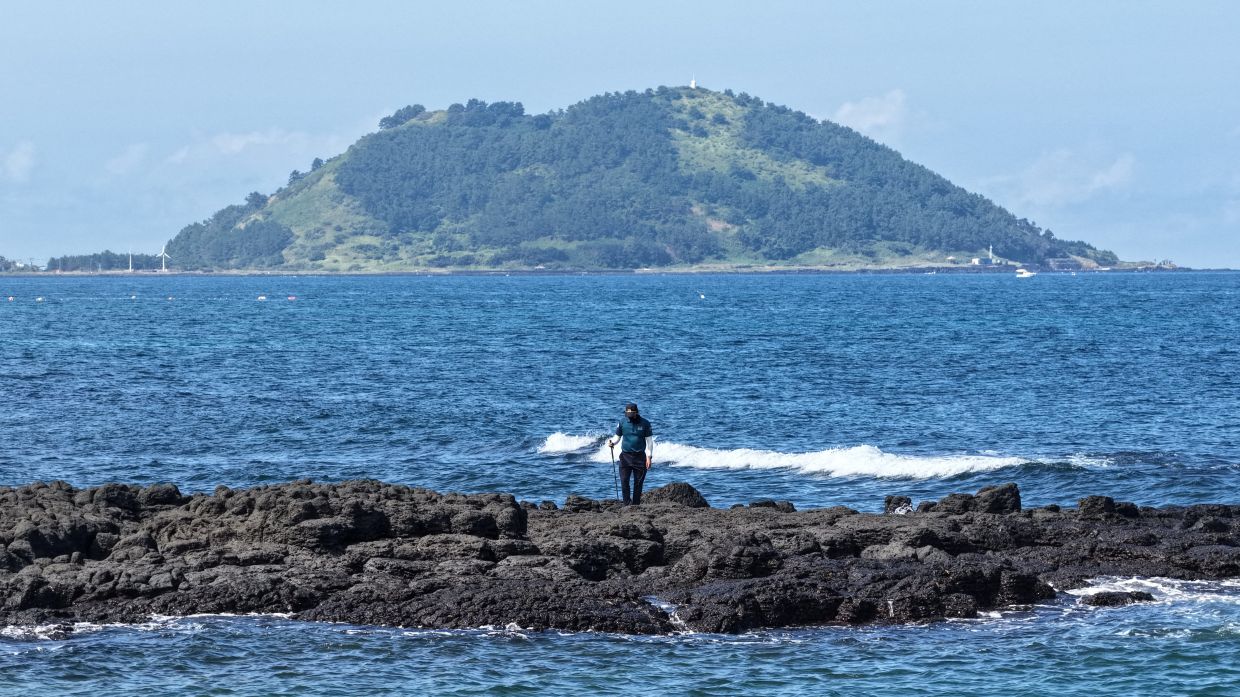
Jeju Island, long celebrated as South Korea's romantic destination for honeymooners and leisure travellers, now confronts an unprecedented credibility crisis after a police department scandal involving improperly closed missing-person investigations has eroded public confidence in the island's safety. The crisis intensified dramatically in late August when authorities discovered four individuals reported missing within just three days, each death sending fresh shockwaves through an already nervous population and casting doubt on law enforcement competence.
The scandal's epicentre involves Jang Mi-ran, a 37-year-old who vanished sometime between late May 12 and early May 13 after leaving her residence in Hallim-eup, Jeju City. Nearly three months elapsed before a body believed to be hers surfaced on Monday, August 26, discovered among palm trees within a ten-minute walk from her home. What transformed this tragedy into a systemic crisis was the revelation that the responsible police officer had falsely documented the case as closed in May, falsely claiming direct contact with the missing woman. This deception prevented proper investigation during critical early stages and raised alarming questions about departmental oversight and investigative rigour.
The same officer's misconduct extended beyond Jang's case. Authorities discovered a man in his 60s who had been reported missing dead in Gujwa-eup on Saturday, his file also fraudulently closed by the identical police officer. The staggering concentration of cases within seventy-two hours—compounded by institutional negligence—shattered any illusion that these deaths represented isolated incidents. On the same day Jang's remains were identified, another previously missing person's body surfaced near a valley in Aewol-eup. The following day, fishermen recovered the corpse of a man in his 70s from waters off Sinheung-ri, Jocheon-eup. Though authorities have not established direct connections between the deaths or discovered evidence suggesting coordinated criminal activity, the clustering of discoveries combined with police malfeasance proved catastrophic for public perception.
The psychological impact on residents and businesses has been immediate and severe. Cho, a Jeju resident operating a short-term rental operation, shared on Instagram that several tenants have cancelled long-term leases following recent incidents, indicating deep concerns about extended stays on the island. Hong Hye-geol, a doctor specialising in preventive medicine and television personality with seven years' island residence, posted candid observations about Jeju's isolation risks, noting that deserted village roads and trails lacking witnesses create vulnerability even during daylight hours, effectively discouraging solo travel for both women and men.
Social media platforms have become conduits for cancellation announcements and boycott calls. One prospective bride cancelled wedding photography sessions in Gujwa-eup, traditionally valued for its serene fields and quieter ambiance compared to central island locations, stating she could not justify proceeding given recent events. Another user explicitly advocated boycotting Jeju tourism entirely until authorities thoroughly investigated the police officer's conduct and accepted accountability for mishandled cases. These voices, amplified across digital networks, have generated momentum for organised resistance to visiting the island, regardless of whether actual crime statistics justify such caution.
Tourism operators face mounting customer anxiety despite the absence of documented dramatic visitor collapses. Bang, a 52-year-old woman operating a women-only guesthouse in Jocheon-eup for eight years, reports receiving frequent safety-related enquiries from prospective guests. While attributing a three-person cancellation two days prior to uncertain causes, she acknowledges the statistical likelihood that recent missing-person narratives influenced the decision. Ironically, her guesthouse's distinctive female-only accommodation model, previously a competitive differentiator, has transformed into a liability, intensifying rather than alleviating guest concerns about vulnerability.
The timing proves particularly damaging given Jeju's pre-existing tourism challenges. The Jeju Tourism Organization reported 963,401 domestic visitors during July, representing a 12.4 percent decline from 1,100,021 during the corresponding 2023 month—marking the first instance since the Covid-19 pandemic commenced in 2020 that monthly domestic visitor counts fell below one million. August data continued this downward trajectory, with daily averages of 35,295 domestic visitors from August 1-23, approximately 300 fewer than the 35,575 recorded during the identical 2023 period. This deteriorating baseline created vulnerability precisely when police credibility collapsed.
The statistical reality of Jeju's crime environment presents a complex picture that complicates narrative construction. Korean National Police Agency data indicates that Jeju recorded the nation's highest crime rate during 2024, at 4,539.6 crimes per 100,000 residents. However, this calculation employs Jeju's resident population of approximately 663,000 as its denominator while omitting millions of annual visitors from the calculation, creating statistical distortion that inflates the appearance of danger. The methodology reflects institutional limitation rather than intentional deception, yet the resulting figure fuels public perception precisely when police competence stands questioned.
The island's situation presents a critical test for South Korean institutional crisis management. Beyond immediate tourism revenue implications, Jeju faces questions about police accountability, investigative standards, and leadership capacity to restore public trust. The fabricated missing-person case closure represented not operational negligence but deliberate falsification, suggesting systemic corruption or profound professional breakdown requiring comprehensive examination. Without transparent accountability mechanisms and demonstrable institutional reform, Jeju's image rehabilitation will remain elusive regardless of actual crime statistics or safety realities.
The incident resonates across Southeast Asia and globally wherever destination-dependent economies depend upon tourism confidence. Jeju's predicament illustrates how institutional failures can rapidly undermine carefully cultivated destination brands, particularly when digital platforms amplify narrative momentum faster than official reassurances can credibly circulate. For Malaysian tourism operators and policymakers monitoring regional developments, Jeju's experience demonstrates the critical importance of police professionalism, investigative integrity, and transparent crisis communication in protecting tourism-dependent economies from perception-driven visitor abandonment regardless of objective safety conditions.
Moving forward, Jeju authorities face pressure to demonstrate that individual officer misconduct constitutes exception rather than systemic corruption, that investigative protocols have been fundamentally reformed, and that institutional accountability mechanisms function robustly. Without such evidence, the island risks prolonged visitor recovery timelines extending well beyond the immediate scandal's resolution. The transformation from romantic destination to cautionary tale underscores how institutional credibility, once damaged, requires sustained effort to rebuild, particularly within destination tourism markets where perception fundamentally shapes consumer behaviour.

