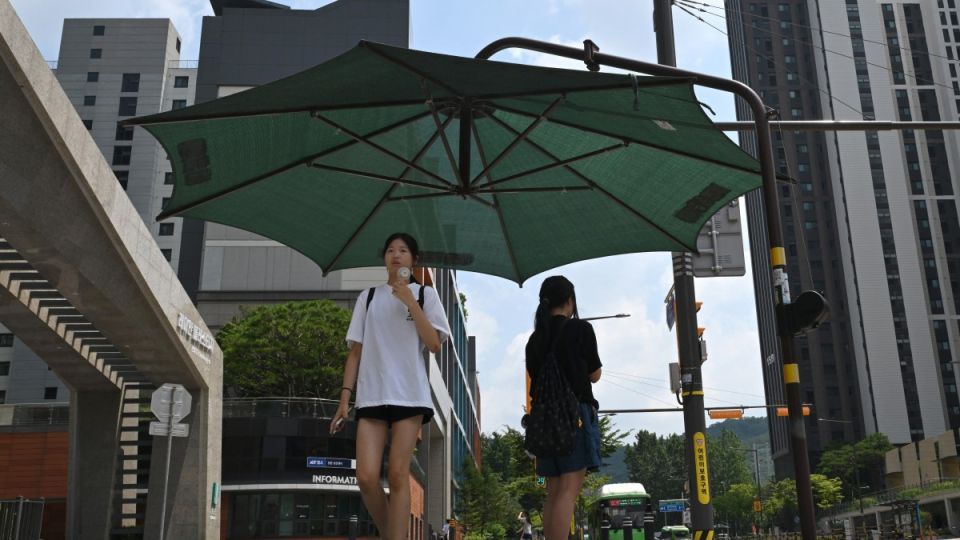
South Korea is witnessing an unprecedented workplace safety crisis as extreme heat sweeps across the nation, prompting major corporations to fundamentally reshape their operational rhythms through extended breaks, modified schedules, and expanded cooling infrastructure. Yet beneath this corporate response lies a troubling reality: the protections being rolled out remain concentrated among the country's largest employers, leaving millions of workers at smaller firms and outdoor worksites dangerously exposed to record-breaking temperatures that have already claimed lives and injured hundreds.
The scale of the current heat emergency became starkly evident when Yangsan in South Gyeongsang Province recorded a national temperature high of 42.5 degrees Celsius, while Seoul endured days under the highest-level heatwave warning. These conditions represent a dramatic intensification of occupational health risks, and the statistical toll has grown alarming. Data compiled by Rep. Kim Wi-sang of the ruling People Power Party demonstrates that the Korea Workers' Compensation and Welfare Service documented 195 heat-related workplace accidents between 2022 and June 2024, encompassing 20 fatalities. More concerning still, thirteen of these incidents—including four deaths—had already been officially recognised by the end of June, anticipating the typically severe July and August peak months when temperatures soar further and outdoor work intensifies.
The legal landscape has begun shifting in favour of worker protection following a landmark district court conviction last year. A construction company was prosecuted under the Serious Accidents Punishment Act for the heatstroke death of a subcontractor's employee, marking the first criminal conviction involving heat-related mortality under this stringent legislation. This judicial precedent has galvanised corporate risk management strategies, particularly among construction firms that historically account for a disproportionate share of industrial fatalities and thus face heightened regulatory scrutiny and potential liability.
Major construction conglomerates have emerged as leaders in implementation of comprehensive heat mitigation programmes. Hyundai Engineering & Construction operates an incentive system rewarding workers who utilise designated rest areas, while Lotte E&C has deployed Internet of Things-based monitoring across approximately eighty construction sites, measuring perceived temperature readings every five minutes and categorising heat exposure into five distinct risk classifications. Daewoo E&C has instituted a no-penalty policy allowing workers experiencing physical distress to cease work without fear of wage deduction or employment consequences. These measures reflect both genuine occupational health concern and strategic liability minimisation.
Recognising that migrant workers face particular vulnerability during extreme weather, some corporations have tailored protective interventions accordingly. Hyundai E&C has distributed emergency reporting guides in twenty-two languages and supplied cooling vests equipped with built-in fans alongside oral rehydration solutions specifically targeting workers identified as especially susceptible to heat-related illness. Kumho E&C has partnered with beverage manufacturer Lotte Chilsung to supply bottled water, sports drinks, cooling towels and portable shelter structures at construction sites through September, creating temporary cooling refuges for labourers with minimal access to permanent climate-controlled facilities.
Heavy industrial operations that cannot suspend production during heatwaves have implemented rigorous work-and-rest scheduling protocols. Posco, whose blast furnaces operate continuously throughout the year, mandates fifteen-minute rest periods following every forty-five minutes of labour when perceived temperatures exceed 35 degrees Celsius, with ten-minute breaks following fifty minutes of work when temperatures reach 31 degrees. Hyundai Steel enforces minimum hourly rest periods of ten minutes when perceived temperatures exceed 31 degrees, escalating to fifteen minutes when temperatures surpass 35 degrees. Shipbuilding companies have similarly restructured summer operations, with Hanwha Ocean doubling its morning and afternoon breaks from ten to twenty minutes through August and extending lunch breaks by thirty minutes when temperatures exceed 28 degrees, or one full hour when temperatures climb above 31.5 degrees.
HD Hyundai Heavy Industries has extended standard lunch breaks from one hour to ninety minutes throughout August whilst operating more than two hundred seventy cooling facilities distributed across its shipyard complexes. The company provides workers with cooling vests, ice water and electrolyte supplements, recognising that physiological resilience requires sustained access to temperature regulation and hydration support. Samsung Heavy Industries has established a dedicated organisational task force specifically coordinated to deploy additional portable cooling equipment across all facilities, whilst SK hynix has introduced extended rest periods during extreme heat episodes and Coupang has substantially expanded ventilation, air conditioning and broader climate-control infrastructure at its logistics warehouses.
However, these comprehensive protective interventions remain fundamentally concentrated among the nation's largest corporations with sufficient financial and operational capacity to install sophisticated cooling systems and reorganise complex work schedules without compromising production targets. The statistical reality reveals a disturbing pattern of occupational vulnerability. Among the one hundred ninety-five heat-related workplace accidents officially recognised since 2022, more than half—representing the majority—occurred at businesses employing fewer than fifty workers. Remarkably, forty-two incidents transpired at enterprises with fewer than five employees, indicating that South Korea's smallest employers, often operating with minimal safety infrastructure and no dedicated occupational health personnel, represent disproportionately dangerous work environments during extreme heat events.
Labour experts and parliamentary representatives uniformly emphasise that workers at smaller enterprises face substantially diminished access to safety personnel, cooling equipment and adequate rest facilities, rendering them exceptionally vulnerable during periods of extreme weather. The vulnerability extends particularly acutely to migrant workers engaged in agricultural labour and other outdoor occupations with minimal shelter or climate control infrastructure. Last month alone, a Thai seasonal worker died while labouring in agricultural fields in Haenam, South Jeolla Province, whilst a Vietnamese national perished during outdoor farm work in Goesan, North Chungcheong Province, underlining the life-or-death stakes facing temporary migrant labourers who often lack advocacy channels or comprehensive occupational protections.
Rep. Kim Wi-sang has explicitly urged the government to substantially extend its regulatory focus beyond the visible protections implemented by major corporations, advocating instead for intensified inspections and strengthened practical safeguards specifically targeting seasonal migrant workers and employees at small outdoor worksites. His parliamentary intervention reflects growing recognition that corporate goodwill initiatives, whilst commendable, cannot substitute for comprehensive governmental regulation and enforcement mechanisms capable of reaching the nation's most vulnerable and economically marginalised workforce segments. The emerging policy challenge confronting South Korean policymakers centres on whether regulatory frameworks and enforcement capacity can be adequately calibrated to protect workers at small enterprises and in agricultural sectors who remain substantially outside the protective cocoon that major corporations have constructed for their employees, potentially widening rather than narrowing occupational health inequalities.

