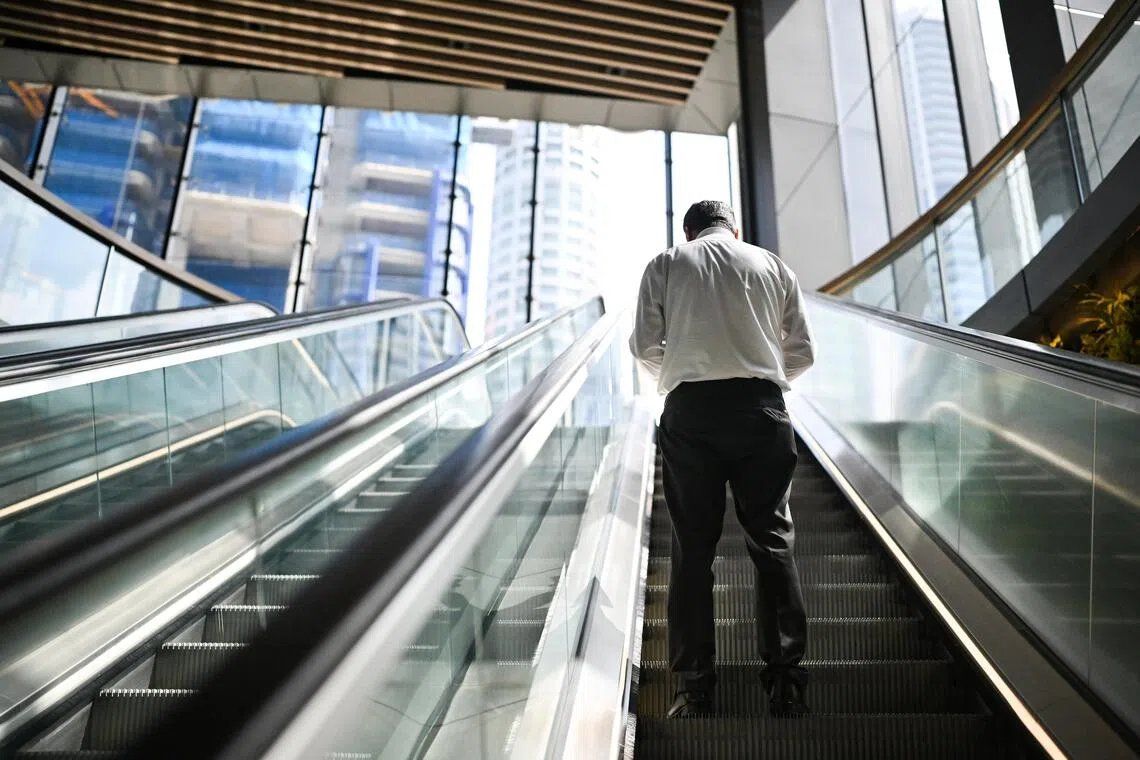
The question of how to properly use an escalator might seem trivial, but in South Korea it has become the subject of serious government inquiry and public debate. A recent survey by the country's authorities found the population almost perfectly polarised on the issue, with 50.1 per cent favouring the practice of standing on one side while leaving the other open for those wishing to walk, and 49.9 per cent preferring that all passengers stand still and occupy both lines. This razor-thin division reflects a decades-long tension among commuters that has never been satisfactorily resolved, despite multiple government campaigns attempting to guide public behaviour.
The intensity of this seemingly mundane disagreement became evident during a government-hosted forum in Seoul on 29 August, where approximately 200 citizens and experts gathered to discuss the merits and drawbacks of each approach. The discussion was far more nuanced than a simple preference poll might suggest. Jang Gye-ryeon, a public administration researcher at the Korea Institute of Industrial Relations, pointed out that the debate cannot be reduced to a binary choice. Instead, he argued that policy makers must consider whose interests are being prioritised and recognise that different circumstances might warrant different solutions.
The efficiency argument has long been central to this debate, but recent research suggests the conventional wisdom may be misleading. While an individual traveller can undoubtedly save time by walking up a moving escalator, the collective capacity of a crowded system may actually be enhanced when both sides are utilised for standing passengers. An experiment conducted at a busy British railway station demonstrated that passenger throughput increased by approximately 25 to 30 per cent when people occupied both sides of the escalator rather than restricting themselves to one. A smaller-scale test at Guri Station near Seoul corroborated these findings, with 190 people using the escalator during the same time period when both sides were occupied, compared with only 164 when one side remained reserved for walkers. Researchers emphasised, however, that these experiments were too limited in scope to permit definitive conclusions about system-wide efficiency gains.
Beyond efficiency considerations, safety emerges as a significant concern that cannot be overlooked. Sensor-based testing of escalator steps revealed that the physical stresses imposed by walking are considerable. Descending while walking generates impacts equivalent to approximately 2.01 times a person's body weight, whereas ascending produces impacts of about 1.54 times body weight. These repeated mechanical stresses, particularly when combined with uneven weight distribution from one-sided standing, could theoretically accelerate equipment deterioration and increase maintenance requirements. Heo Yun-seop, a professor at Korea Lift College, noted that such cumulative wear might extend repair cycles and inflate costs, though he acknowledged that insufficient evidence currently exists to establish a definitive causal link between one-sided standing practices and escalator malfunction.
South Korea's policy approach has been inconsistent over the past quarter-century, reflecting the genuine difficulty in resolving the issue. Authorities first promoted one-side standing in 1998, a practice that became entrenched nationwide around the time of the 2002 FIFA World Cup as administrators sought to facilitate faster passenger movement. However, this stance shifted dramatically around 2009 as accumulated evidence of accidents and maintenance problems prompted a policy reversal. Between 2009 and 2014, the government actively encouraged two-line standing, only to abandon prescriptive guidance entirely from 2015 onwards. The current recommendation focuses on three neutral safety principles: secure grip on the handrail, refrain from walking or running, and remain within designated safety zones. This hands-off approach reflects governmental uncertainty and the acknowledgment that no single solution satisfies all considerations.
Accident statistics provide sobering context for ongoing policy discussions. Data spanning from 1993 to 2025 reveals that user behaviour accounts for 72.3 per cent of recorded escalator incidents. Most troublingly, individuals aged 60 and older represent 53.3 per cent of those injured, highlighting vulnerability among elderly populations who may lack the balance or reflexes to safely walk on moving surfaces. This demographic consideration holds particular relevance for South Korea, which like much of East Asia faces rapid population ageing. A policy that inadvertently encourages elderly passengers to walk, or conversely places them at disadvantage, carries significant public health implications.
The August 29 forum provided an opportunity to gauge shifting preferences among engaged citizens. Before the discussion commenced, survey participants showed a clear leaning toward two-line standing, with 45.9 per cent supporting this approach compared with only 13.4 per cent favouring one-side opening for walkers. However, the forum's discussions substantially altered these positions. Afterward, support for one-side standing nearly tripled to 29.9 per cent, while backing for two-line standing declined to 31.4 per cent. These movements suggest that exposure to evidence-based arguments regarding both safety and efficiency altered minds, though they also indicated that neither position achieved consensus.
Most significantly, the largest post-forum group, representing 38.1 per cent of participants, endorsed a contextual approach that would vary escalator rules depending on location and passenger density. This pragmatic position recognises that a busy downtown commuter hub during rush hour likely operates under different constraints than a shopping mall escalator on a quiet afternoon, or an airport serving international travellers unfamiliar with local conventions. Such flexibility would require sophisticated signage systems and public education campaigns to prevent confusion.
The implications of South Korea's escalator debate extend beyond the immediate question of standing etiquette. The issue reflects broader tensions between individual convenience and collective welfare, between safety and efficiency, and between prescriptive government guidance and personal choice. For Southeast Asian readers, particularly those in rapidly developing cities where escalators are increasingly common in modern malls, transit systems, and office buildings, the South Korean experience offers instructive lessons. Malaysia's own shopping centres and public transport stations may face similar questions as usage patterns intensify. The South Korean case demonstrates that there are no simplistic answers and that different cultural contexts, demographic profiles, and built environments might require tailored approaches.
Interior Minister Yun Ho-jung announced that the government will incorporate insights from the forum into future escalator safety initiatives. This suggests that South Korea may eventually move toward a flexible, location-specific policy framework rather than attempting to impose uniform nationwide standards. The path forward likely involves continued research, enhanced safety signage, targeted education for vulnerable populations, and acknowledgment that different escalator environments may warrant different behavioural guidance. What began as a curiosity about commuter habits has evolved into a sophisticated policy question touching on public safety, infrastructure efficiency, demographic vulnerability, and governmental role in regulating everyday behaviour.

