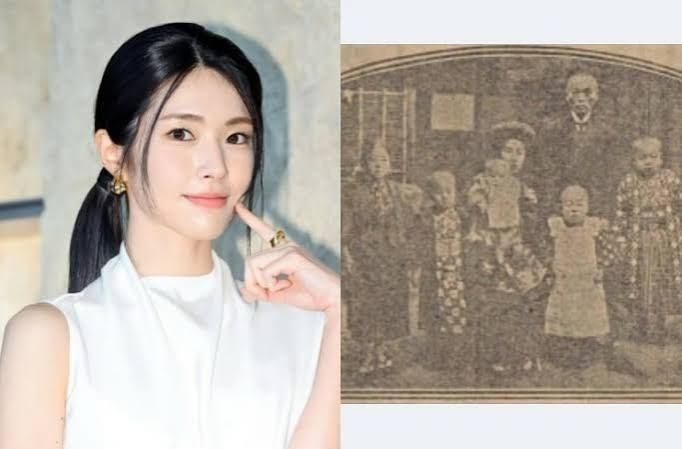
South Korea's genealogy sector has become unexpectedly central to national discourse following revelations about actress Ahn Ha-young's family connections to alleged pro-Japanese collaboration during the Japanese colonial occupation of Korea. The controversy, which intensified in mid-August, prompted such an overwhelming surge in online traffic to genealogical databases that several platforms experienced technical failures. The timing—arriving days before South Korea's Liberation Day on August 15—has given the affair particular resonance, forcing public figures and ordinary citizens alike to reckon with a period many families have kept deliberately opaque.
The focal point of the controversy involves Ahn Sang-ho, the actress's great-grandfather, whom Ahn Ha-young had publicly described as a pioneering Western-trained physician who established Seoul's first modern clinic and provided medical care to Emperor Gojong during the late 19th and early 20th centuries. While such credentials might ordinarily have been presented as sources of family pride, online investigators began circulating allegations that Ahn Sang-ho had maintained associations with pro-Japanese collaborators during the 35-year colonial period between 1910 and 1945. This raised uncomfortable questions about whether the family's social advancement and professional status during the occupation had been secured through problematic connections.
The genealogy website commonly known as "in search of roots" became the epicentre of this investigative fervour, as South Koreans sought to verify information about the actress's lineage and historical context. The platform, which maintains detailed records of 287 distinct family lineages, their origins, geographical distributions, and population demographics, proved instrumental for users attempting to cross-reference Ahn's family history with colonial-era collaborator lists and historical documentation. The technical infrastructure could not withstand the unprecedented demand, leading to multiple server overloads beginning on the evening of August 12 and continuing through August 13, during which the site experienced repeated outages lasting several minutes each.
What began as a targeted investigation into one actress's family background has expanded into a broader phenomenon, with South Koreans increasingly interested in examining their own ancestral records and historical connections. The incident highlights how genealogy—ostensibly a matter of personal historical interest—intersects directly with national identity and collective memory in South Korea. The colonial period remains a source of profound national trauma, and the question of collaboration versus resistance has never been fully resolved within many families, particularly among the educated and professional classes who were positioned to benefit from cooperation with Japanese authorities.
Ahn Ha-young herself issued a public apology on August 12, acknowledging that she had been unaware of the problematic dimensions of her family's past when she had publicly discussed her great-grandfather's accomplishments on television. Her agency had initially dismissed the collaboration allegations, but mounting public pressure and continued online investigation prompted the actress to take personal responsibility and express regret for having spoken favourably about her ancestor without fuller historical knowledge. This response—while accepted by some observers—underscores the challenge that contemporary public figures face when confronted with uncomfortable family histories that predate their own moral consciousness.
The genealogy website's architecture enables users to explore not just individual family trees but the broader historical narratives embedded within Korean society. Each of the 287 recorded lineages carries its own complex history, and many families undoubtedly have ancestors whose activities during the colonial period would not withstand contemporary ethical scrutiny. The website's surge in traffic suggests that the Ahn Ha-young controversy has prompted many South Koreans to confront a question they may have previously avoided: what exactly did their own ancestors do during those 35 years, and how should modern descendants reckon with that knowledge?
The timing of this controversy relative to Liberation Day on August 15 magnifies its symbolic weight. Liberation Day is not merely a historical commemoration but a reaffirmation of South Korean national identity and collective pride in resistance against colonial domination. When a prominent actress's family history becomes entangled with allegations of collaboration, it complicates the national narrative in uncomfortable ways. It suggests that the boundary between collaboration and survival was not always clear, and that many families prospered by navigating a morally ambiguous middle ground during the occupation.
This incident also reflects broader patterns in how South Korean society processes historical memory. Unlike Germany, which has institutionalized rigorous examination of its Nazi past, or Japan, which has faced international pressure regarding its colonial legacy, South Korea has engaged in less systematic public reckoning with the internal divisions and complexities of its own colonial experience. The genealogy website traffic surge indicates that this historical work is not primarily led by institutional initiatives but rather emerges organically from public curiosity, driven by the exposure of individual cases that provoke widespread interest.
For Southeast Asian observers, the controversy offers instructive insights into how historical grievances over colonialism continue to shape contemporary societies. Colonial legacies are not merely matters of academic history but remain embedded in family narratives, social hierarchies, and questions of national legitimacy. The Ahn Ha-young case demonstrates how questions of historical collaboration can suddenly become urgent and contested in the present moment, particularly when they involve figures in the public eye. It also reveals how digital platforms enable rapid collective investigation and how social pressure can compel public figures to reassess narratives they had previously accepted uncritically.
The practical consequences of the genealogy website's technical failures extend beyond mere inconvenience. The crashes themselves became a form of cultural marker, demonstrating just how intensely South Koreans engaged with questions of ancestry and historical connection following the controversy. In a nation where family lineage has traditionally carried significant social weight, the surge in genealogical research represents both a technological phenomenon and a deeper social process of historical reckoning. Families across South Korea are likely reviewing their own historical records and considering what uncomfortable truths might emerge if subjected to similar scrutiny.
Looking forward, the Ahn Ha-young controversy may catalyze more systematic historical documentation and public discussion regarding colonial-era collaboration. While individual families may prefer to leave such questions unexamined, the case demonstrates that public figures cannot easily insulate themselves or their relatives from historical accountability. The genealogy website's expanded traffic may continue as South Koreans seek to understand not only their ancestors' circumstances but also the structural conditions that created opportunities and incentives for collaboration during foreign rule. This process, though uncomfortable, represents a form of national maturation in confronting historical complexity rather than accepting simplified narratives of purely heroic resistance.

