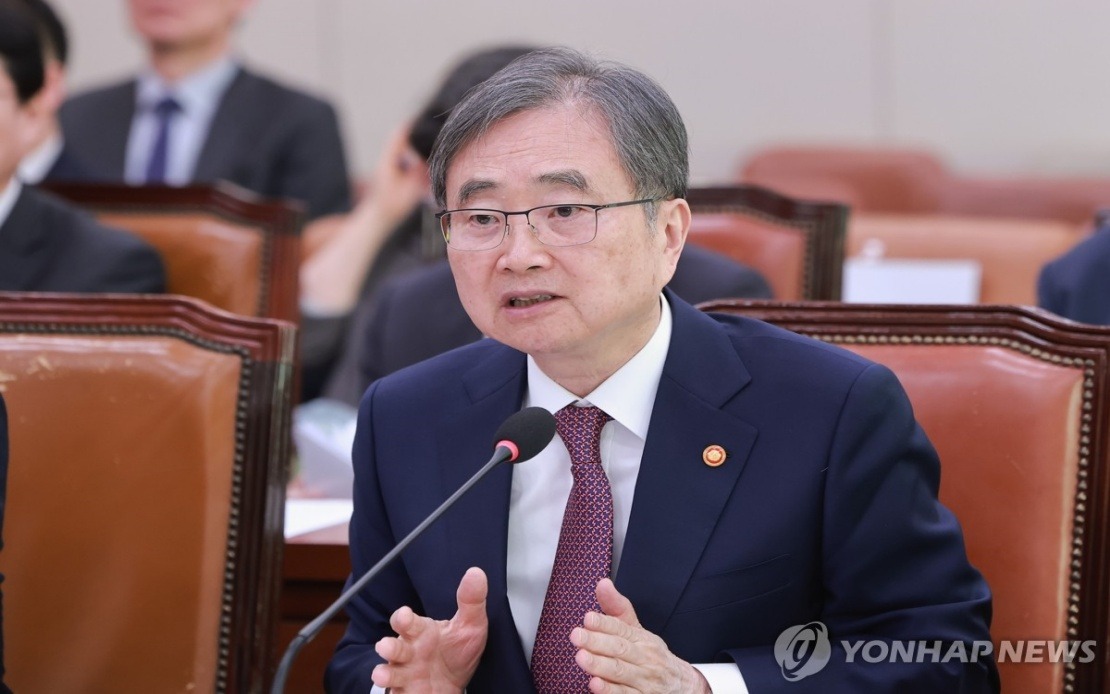
South Korea's top diplomat was caught off guard when United States President Donald Trump announced significant reductions to joint military exercises through social media, bypassing conventional diplomatic channels entirely. Foreign Minister Cho Hyun disclosed to parliament on Wednesday that neither Seoul nor Washington had been informed beforehand, exposing an unusual breach in protocol between the two allied nations during a period of heightened security concerns on the Korean peninsula.
The revelation underscores the unpredictable nature of Trump's communication style and raises questions about the coherence of diplomatic coordination between longstanding security partners. Cho explained to the parliamentary committee overseeing foreign affairs and unification that government officials on both sides had no advance knowledge of the announcement, leaving Seoul scrambling to understand the implications of a decision affecting one of Asia's most significant military exercises.
Within hours of Trump's August 16 declaration that he had instructed the Pentagon to substantially reduce the scale of joint Korea-US military operations, South Korea's Defence Minister Ahn Gyu-back initiated urgent consultations with American counterparts to clarify the situation. This reactive engagement suggests that Seoul was forced into damage-control mode, attempting to salvage what remained of the planned exercise through rapid diplomatic engagement rather than participating in the decision-making process itself.
The practical impact of the directive became concrete when South Korea's Joint Chiefs of Staff announced that Ulchi Freedom Shield, the annual summertime joint exercise, would be compressed from its original 11-day schedule spanning August 17-27 down to just five days concluding on August 21. This represents a substantial curtailment of training operations that typically involve complex field maneuvers, computer-simulated command post exercises, and comprehensive civil defence drills designed to test interoperability between allied forces.
The timing of the announcement proved particularly jarring because Commander of the United States Forces Korea Xavier Brunson visited Seoul's defence ministry building the day after Trump's social media post, creating an appearance of post-hoc consultation rather than collaborative planning. The sequence of events—announcement first, dialogue afterward—contrasts sharply with the diplomatic tradition of confidential advance discussions followed by coordinated public statements.
Ulchi Freedom Shield represents far more than a routine training exercise for regional observers. The drill serves as a critical confidence-building measure for South Korea's security posture and demonstrates the solidarity of the US commitment to the country's defence amid ongoing tensions with North Korea. Any reduction in scope or intensity carries symbolic weight beyond the immediate tactical considerations, signaling potential shifts in Washington's strategic priorities toward the region.
From a Southeast Asian perspective, the incident illuminates broader concerns about policy consistency and predictability in US-led security arrangements. Nations across the region that depend on American security guarantees and military partnerships are watching carefully to assess whether similar communications breakdowns could occur affecting their own agreements. The Trump administration's demonstrated willingness to announce major military policy decisions through unconventional means raises fundamental questions about how allied nations should interpret and respond to US strategic decisions affecting their security interests.
Cho's testimony to parliament also served a domestic political purpose, establishing a clear record that South Korea had not accepted or endorsed the unilateral decision. By emphasizing that Defence Minister Ahn had immediately engaged with American officials to discuss rather than implement the cuts, Seoul sought to distance itself from any impression of passive acquiescence to a presidential decree. This distinction matters because South Korea's own military readiness and public confidence in allied protection depend partly on perceptions that Seoul retains voice and agency in security matters affecting its territory.
The incident reflects deeper tensions within the US-Korea alliance regarding the cost and necessity of military exercises. Trump has previously expressed skepticism about the expense of maintaining military presence in Asia and questioned the value of large-scale drills, viewing them as wasteful rather than strategically essential. This philosophical divide between Washington's budgetary concerns and Seoul's security imperatives creates space for miscommunications and policy inconsistencies.
For regional analysts tracking US strategic recalibration in Northeast Asia, the episode demonstrates that even time-tested alliance relationships are subject to sudden disruption when communication channels fail to function as designed. South Korea cannot afford complacency in its security arrangements given its geographic proximity to North Korea and its dependence on American military support. The urgency with which Defence Minister Ahn engaged with American officials reflected genuine alarm at the potential implications of reduced military coordination.
Moving forward, the incident may prompt Seoul and Washington to establish more formal protocols ensuring that major policy decisions affecting joint military operations receive advance notification through appropriate diplomatic and defence channels. The current crisis management approach, while effective in damage limitation, highlights vulnerabilities in the alliance's communication infrastructure that both nations have strong incentives to remedy.
The reduction to Ulchi Freedom Shield also carries practical consequences for troops and planners who must now compress months of preparation into an abbreviated timeline. The loss of training days means reduced opportunity for allied personnel to practice complex coordination scenarios, potentially diminishing the exercise's value as a readiness assessment tool during a period when North Korea's military capabilities continue advancing.

