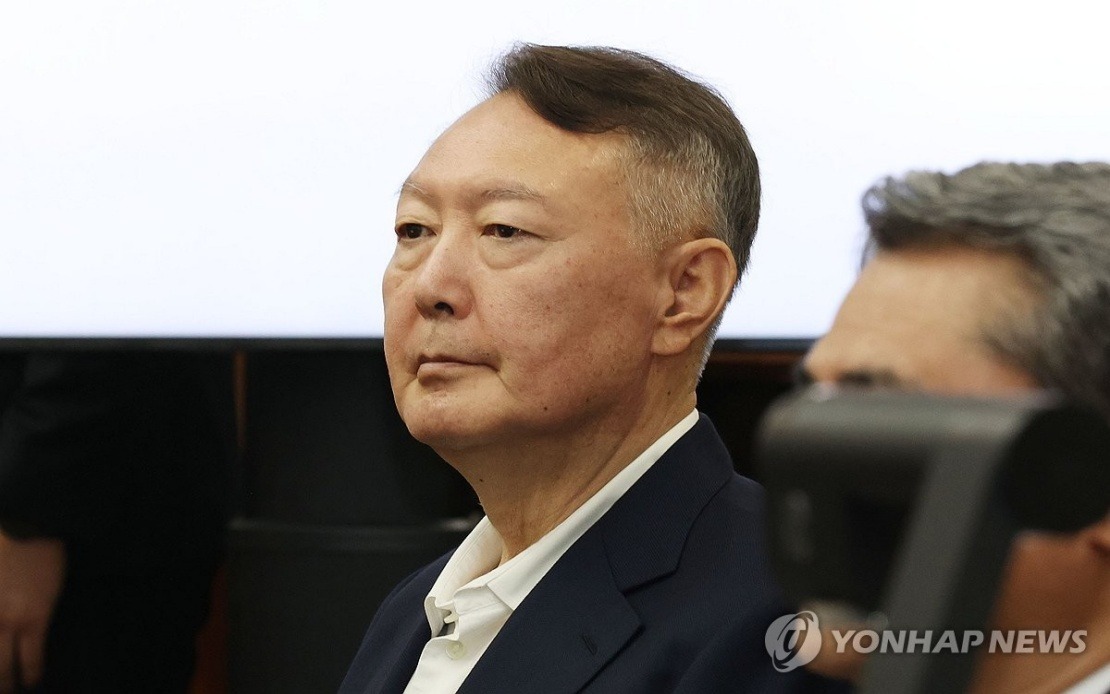
Former South Korean President Yoon Suk Yeol has been handed a two-year prison sentence by the Seoul Central District Court after being convicted of accepting illegal political funds in the form of complimentary opinion polls. The conviction marks a significant judicial development in the mounting legal troubles facing the jailed ex-leader, who has faced multiple prosecutions since his failed attempt to impose martial law in 2024.
The court determined that Yoon had received 14 opinion polls at no cost from Myung Tae-kyun, a self-proclaimed power broker and political operative, between April 2021 and March 2022. This arrangement was found to violate South Korea's Political Funds Act, which strictly regulates financial contributions to political figures and campaigns. The judges also ordered Yoon to forfeit 13.96 million won in connection with the illegal arrangement, cementing the financial consequences of the conviction.
The legal basis for the verdict rested on evidence that Yoon had promised to back former Representative Kim Young-sun's nomination as a parliamentary candidate in the conservative People Power Party's internal selection process for mid-term elections held in June 2022. In exchange for this political support, Myung provided the former president with access to valuable polling data at no charge—a transaction the court concluded constituted an illegal political contribution under South Korean law. Prosecutors had initially levied charges against Yoon for colluding with his wife, former first lady Kim Keon Hee, though the wife's involvement became a point of contention between the courts.
The special counsel's office, led by Min Joong-ki, had originally sought a more severe penalty of four years imprisonment for Yoon, arguing that the scope and significance of the illegal funds merited a harsher sentence. However, the court settled on a two-year term, suggesting the judges viewed the conduct as serious but not rising to the level of punishment prosecutors had demanded. Similarly, Myung Tae-kyun, the power broker at the centre of the case, received an 18-month prison sentence for his role in facilitating the illegal transaction.
A striking aspect of this ruling is its divergence from a separate trial involving Yoon's wife. In April of this year, an appellate court acquitted Kim Keon Hee on identical charges of accepting free opinion polls from Myung. The Seoul High Court reasoned that since Myung had distributed his polling services to multiple individuals and organisations, the couple could not reasonably be characterised as having profited from a scheme designed specifically to benefit them. This reasoning—that broad distribution negates the illegal character of a transaction—has not satisfied prosecutors, who have formally appealed the acquittal decision.
The divergent outcomes in the two cases highlight the complexities of South Korean political corruption law and the challenges prosecutors face in establishing culpability when multiple parties are involved in similar conduct. The fact that husband and wife, who typically coordinate politically and financially, received opposite verdicts on substantially the same allegations underscores how judicial interpretation of intent, benefit, and illegality can produce starkly different results even in related proceedings.
For Southeast Asian observers, the case illustrates the intricate legal mechanisms through which democracies attempt to regulate political financing and prevent the covert transfer of resources to candidates and officeholders. South Korea's Political Funds Act represents an attempt to create transparency and equity in electoral competition by prohibiting in-kind contributions that might distort the playing field. The opinion poll scheme exposed in this trial exemplifies precisely the kind of hidden benefit transfer that such laws are designed to prevent—valuable market research provided at no cost, thereby conferring an undisclosed advantage on a political figure.
Yoon's accumulating legal liabilities extend well beyond this conviction. In February 2024, a separate court sentenced him to life imprisonment for his role in orchestrating the brief martial law declaration in December 2024, which prosecutors characterised as an attempted insurrection. That conviction stands as the most severe punishment Yoon has received to date, though appeals proceedings remain ongoing. The former president now faces multiple concurrent trials and sentences, positioning him as perhaps the most legally embattled former head of state in contemporary South Korean history.
The ramifications of Yoon's conviction reverberate through South Korean politics at a moment when the country grapples with questions about presidential accountability, the limits of executive power, and the institutional capacity to prosecute former leaders. Successful prosecutions of former presidents have become a recurrent feature of South Korean political life, reflecting both the intensity of factional competition and the judiciary's willingness to intervene in high-level political disputes. Whether this pattern represents healthy democratic accountability or problematic politicisation of the justice system remains hotly contested among legal scholars and policymakers in Seoul.
The opinion poll case also underscores how political power can be exercised through intermediaries and informal networks that operate in the shadows of formal institutions. Myung Tae-kyun, despite lacking any official position, wielded sufficient influence to affect candidate selection processes within a major political party—a dynamic that reveals the gap between formal democratic structures and actual power distribution in contemporary politics. This phenomenon transcends South Korea and reflects patterns visible across Asia and beyond, where unelected operatives often exert outsized influence over political outcomes.
As Yoon's various legal proceedings continue through the appeals process, the former president remains incarcerated, and South Korea confronts the question of whether its legal system can effectively constrain those who hold or have held supreme executive authority. The two-year sentence in the opinion poll case, combined with the life sentence for the martial law declaration, creates a scenario where Yoon faces years of imprisonment even if some convictions are eventually overturned on appeal. The outcomes of these cases will significantly shape how future South Korean leaders perceive the risks and constraints associated with exceeding constitutional boundaries.

