South Korea is preparing to close the final chapter on one of Asia's most controversial culinary practices. From February 2027, the breeding, slaughter and sale of dogs for meat will become illegal across the nation, drawing to a close a tradition that has endured for centuries but has faced mounting domestic and international opposition. The landmark legislation, which passed in January 2024 following decades of heated debate, granted farmers a three-year transition period to wind down their operations—a grace period now rapidly approaching its end.
The transformation is already visible across the country's agricultural landscape. According to South Korea's Ministry of Agriculture, Food and Rural Affairs, more than 80 per cent of the approximately 1,500 dog meat farms operating before the ban had ceased production by May 2026, leaving fewer than 300 farms still active. This represents a dramatic shift in an industry that once operated with relative impunity, reflecting the significant generational and cultural change sweeping through South Korean society, particularly among younger residents who increasingly view dogs primarily as companion animals rather than livestock.
The government has engineered this transition through a combination of financial incentives and supportive programmes. Farmers winding down operations ahead of the February 2027 deadline have access to government compensation reaching up to 600,000 won per dog, equivalent to approximately US$426. Beyond direct payments, the administration has provided low-interest loans and comprehensive transition support, including job-retraining initiatives and employment counselling designed to ease farmers into alternative livelihoods. This carrot-and-stick approach reflects both the government's commitment to the ban and recognition of the economic hardship faced by longtime operators in the industry.
The restaurant sector tells a more nuanced story of an industry in freefall. While comprehensive nationwide closure figures remain unavailable, interviews with business owners and meat vendors paint a picture of dramatic decline. Establishments specialising in boshintang, the traditional dog meat stew consumed during South Korea's hottest summer days, report revenues have contracted to approximately one-third of historical levels. A vendor at Seoul's Gyeongdong Market, one of the few remaining retail points for dog meat, revealed that prices have nearly tripled from approximately 20,000 won per kilogramme in 2024 to 60,000 won today—a reflection of both dwindling supply and reduced consumer demand.
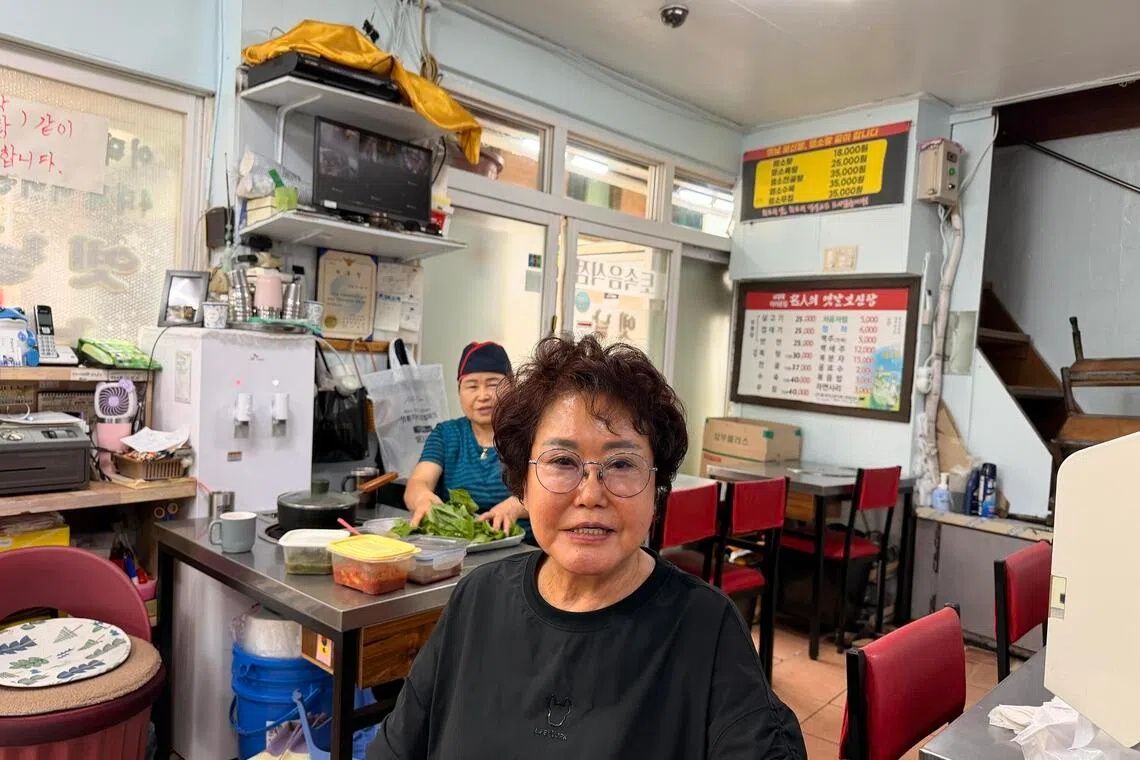
The summer months, traditionally the busiest season for dog meat consumption, have become economically precarious for long-established restaurant owners. Lee Deok-sung, who has operated a dog meat stew restaurant near Seoul's popular Dongdaemun Market for 45 years, characterised this summer as a complete commercial failure. The cultural practice of consuming boshintang during South Korea's three hottest summer days—falling this year on July 15, July 25 and August 14—reflects traditional Korean beliefs that the dish replenishes energy and stamina depleted by intense heat. Yet this year's boknal period represents the final summer season before the ban takes effect, and even this historically lucrative window has failed to generate sufficient revenue.
Restaurant operators have been forced to raise prices substantially merely to maintain basic profitability. Lee increased her menu prices from 16,000 won to 25,000 won per bowl, a significant hike reflecting the rising cost of sourcing dog meat in a contracting market. She struggles to sell all available meat by end-of-service each day to break even financially. Her frank assessment—"I am barely making ends meet now. I don't know what will happen to me when the ban kicks in next year"—captures the existential anxiety gripping the sector.
Across Seoul's restaurant alley from Lee's establishment, Lee Kyung-ja operates another boshintang restaurant with over four decades of history. Both neighbouring venues are recognised institutions within Seoul's dog meat consumption community. In an attempt to adapt, both restaurants introduced black goat stew earlier in 2026, selecting goat as a substitute because its texture and gamey flavour approximate dog meat's culinary characteristics. However, this diversification strategy has failed to gain commercial traction. Lee Kyung-ja reports that some days pass without a single customer, and regulars who continue visiting explicitly prefer dog meat, citing superior taste and traditional recommendations from Korean medicine practitioners who continue advocating the meat for patients recovering from serious illness.
For Lee Kyung-ja, now 75 years old, the economic calculus has become deeply personal. She acknowledges that if business deteriorates further following the February 2027 ban implementation, she may simply retire rather than attempt the demanding task of rebuilding a customer base around goat meat. Her age and the substantial effort required to establish new clientele make this transition particularly burdensome. She articulates the challenge facing an ageing demographic within the industry: establishing alternative revenue streams demands entrepreneurial energy and market patience that older operators may lack.
The practice of consuming dog meat in South Korea extends far deeper into cultural history than many external observers realise. Historical records suggest the tradition traces back at least to the Joseon Dynasty, with one of the most significant scholarly references appearing in the Donguibogam, a seventeenth-century medical text compiled by royal physician Heo Jun. This foundational medical work explicitly categorises dog meat as a warming food believed to restore energy and bodily vitality—establishing dog meat consumption within the framework of traditional Korean medicine rather than mere subsistence nutrition. This medical-cultural foundation has proven remarkably persistent, with modern practitioners still recommending dog meat to patients requiring nutritional support during recovery from serious health conditions.
The practice became dramatically more prevalent during Japan's colonial administration from 1910 to 1945 and intensified in the aftermath of Korea's devastating three-year war, when widespread poverty and acute food shortages compelled many citizens to pursue inexpensive protein sources. These historical traumas created an entire generation for whom dog meat represented survival during existential scarcity. Yet modern South Korea bears little resemblance to the impoverished postwar nation, and this economic transformation has fundamentally altered the cultural rationale for the practice among younger generations who view animal welfare through a fundamentally different ethical lens than their predecessors.
The ban represents more than simple legislative action; it reflects a profound generational and ideological divide within South Korean society. Musician and animal welfare advocate Annie Ko exemplifies this shift. At 45, Ko had never previously owned a pet, yet the sight of DeeJay—a Labrador puppy and the runt of a litter born on a dog meat farm in Wonou, two hours from Seoul—trembling in her arms proved sufficient motivation to adopt him in 2015. DeeJay, rescued through the efforts of non-profit organisation Humane World for Animals, represents one of approximately 2,800 dogs the group has saved from meat farms, with most finding new homes in the United States, Britain and Canada. DeeJay remains unique among his littermates: he is the sole survivor living permanently in South Korea, while his siblings would have almost certainly met slaughter had rescue efforts not intervened.
South Korea's forthcoming ban signals a decisive victory for animal welfare advocates who have mobilised domestically and internationally to end the practice. The three-year transition period reflects political pragmatism—providing sufficient time for economic adjustment while maintaining legislative momentum toward complete prohibition. As February 2027 approaches, the industry faces its final death knell. Restaurant owners grappling with empty seats, farmers winding down operations with government support, and customers increasingly alienated from a practice their grandparents considered nutritional necessity all testify to a nation in the midst of profound cultural transformation. The dog meat era in South Korea is not simply fading; it is being deliberately, methodically, and irreversibly extinguished.

