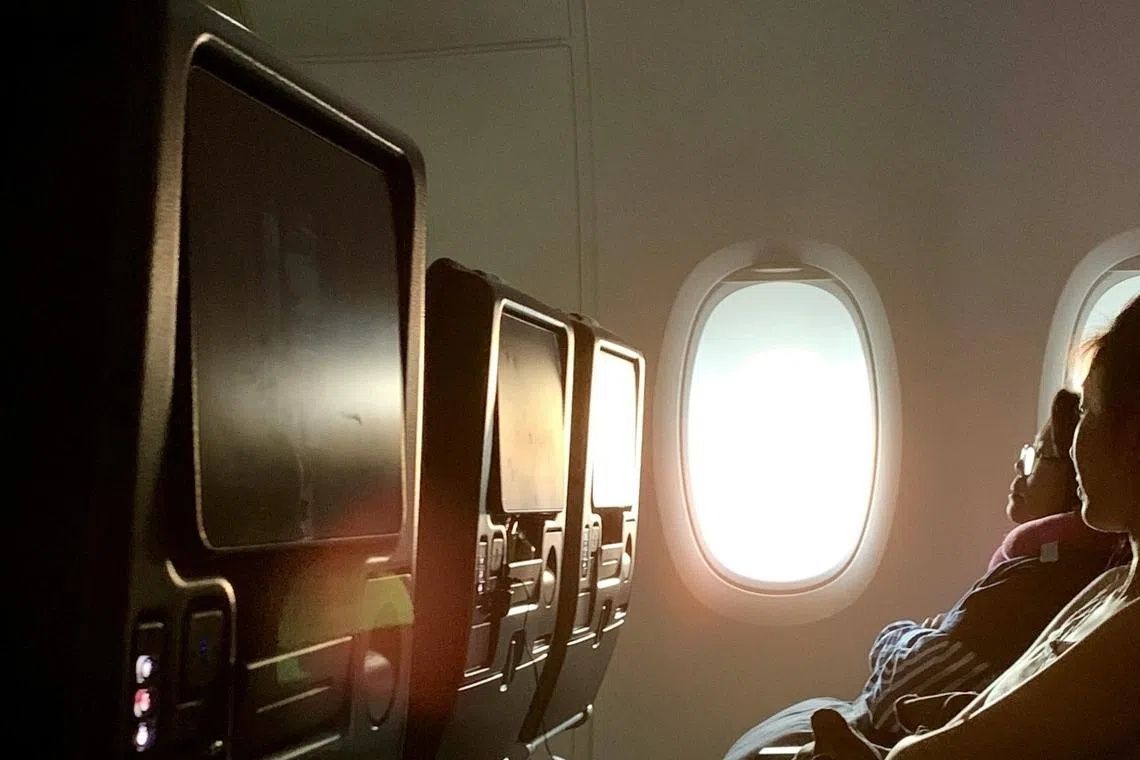
A middle school student in South Korea has escalated concerns about child safety during air travel by lodging a formal complaint through the government's official petition platform, urging authorities to impose mandatory content restrictions on in-flight entertainment systems. The complaint, submitted via Petition 24, a portal operated by the Ministry of the Interior and Safety, highlights the vulnerability of young passengers to age-inappropriate material displayed on individual seat-back monitors, a fixture of modern commercial aviation that currently operates without robust protective mechanisms.
The petitioner described an experience of involuntary exposure to violent and sexually explicit content while airborne, emphasising the difficulty of avoiding material when presented directly in one's personal viewing space. The situation was compounded by the presence of the complainant's younger sister, a fourth-grade elementary school student, who was similarly exposed to problematic scenes. This intergenerational impact underscores a gap in current airline policies, which fail to account for the diverse age composition of passengers in confined spaces where content consumption extends beyond individual choice.
The teenager's proposed solution centres on implementing privacy screens or similar technological barriers on seatback monitors, a measure designed to prevent adjacent and nearby passengers from viewing content rated above certain age thresholds. This suggestion acknowledges the practical reality of modern aircraft cabins, where seating proximity makes content visible to unintended audiences. Such an approach would represent a significant shift from current industry practice, which relies primarily on editorial curation rather than technical barriers to regulate what appears on screen.
The complaint explicitly invokes South Korea's legal framework governing child protection, referencing both the Child Welfare Act and the Youth Protection Act, which establish statutory obligations to shield minors from harmful content. By grounding the petition in existing legislation, the complainant positions the issue not as a matter of parental preference but as a question of regulatory compliance and government responsibility. This legal framing carries particular weight in South Korea's highly regulated media environment, where content classification systems are strictly enforced in other sectors.
South Korea's two dominant carriers, Korean Air and Asiana Airlines, operate content policies that appear comprehensive on the surface but have proved insufficient in practice. Both airlines explicitly prohibit the exhibition of material classified for viewers aged nineteen and above, theoretically creating an age-based ceiling on available content. Additionally, both carriers typically source edited versions of films in which the most graphic scenes have been removed or substantially altered, a practice intended to render material suitable for younger audiences.
However, the filing of this complaint suggests such measures are perceived as inadequate protection. The discrepancy between official policy and practical implementation may stem from the grey area occupied by content rated for viewers fifteen and above, which can still contain violence and sexual content that some parents and guardians deem inappropriate for younger children. The 2020 decision to remove the acclaimed film Parasite from both airlines' playlists, despite its fifteen-plus rating, illustrates this tension. Though the film received critical acclaim and artistic recognition, the airlines determined that certain violent and sexual scenes warranted its removal, acknowledging that ratings alone may not capture the full spectrum of parental and societal concerns.
This incident arrives at a time of broader global scrutiny regarding child safety in digital environments and media exposure. The complaint resonates with ongoing debates across Southeast Asia and beyond about corporate responsibility in protecting vulnerable populations from inadvertent harmful content. For regional carriers and the aviation industry more broadly, the petition signals that current approaches to content curation may face growing pressure from stakeholders demanding more stringent protective measures.
The specific identity of the offending film remains undisclosed, which may reflect the complainant's desire to keep focus on the systemic issue rather than a single instance. This strategic choice elevates the complaint from a specific grievance to a demand for structural change affecting all passengers and all future content selections. It also prevents airlines from dismissing the concern as idiosyncratic or addressing it through isolated removal of a particular title.
For Malaysia and other Southeast Asian nations with significant aviation sectors and substantial youth populations, this Korean case offers a cautionary example of regulatory gaps. Malaysian carriers including Malaysia Airlines and AirAsia, alongside numerous regional competitors, operate similar in-flight entertainment systems and must consider whether existing content policies adequately protect young passengers. The complaint underscores that parental reliance on airline self-regulation may prove insufficient and that government intervention through mandated technical or editorial safeguards may become increasingly necessary.
The petition also highlights questions about the responsibility distribution between content providers, airlines, and regulators. Should airlines bear sole responsibility for protecting children, or should filmmakers and distributors develop content specifically tailored for in-flight viewing? Should governments establish binding technical standards for aircraft seating, or should this remain an industry-driven initiative? These questions remain largely unanswered across the region.
As South Korean authorities evaluate this petition, their response will likely set precedent affecting airlines throughout Asia. A decision to mandate protective measures could drive technological innovation and reshape how carriers approach in-flight content curation, with implications extending far beyond Korea's borders. Conversely, a decision to maintain status quo reliance on editorial choice may prompt further complaints and eventual legislative action. Either path suggests that the contemporary aviation industry's approach to protecting child passengers from inappropriate content faces imminent reassessment.

