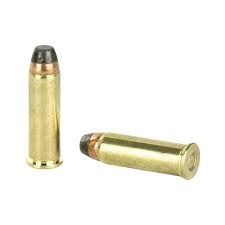
A police officer in South Korea's Gyeonggi province has been placed under formal investigation after attempting to board a domestic flight while carrying live ammunition, marking a serious breach of the nation's stringent firearms regulations. Authorities at Jeju Seobu Police Station confirmed on July 3 that they have launched proceedings against the officer, who is in his 30s, following the incident at Jeju Airport on June 28 at approximately 8.40pm local time. The officer was discovered carrying two live rounds intended for a .38-calibre pistol, the standard-issue firearm for most police personnel across South Korea, though he was not actually carrying a firearm at the time of the security check.
The discovery emerged through a discrepancy in airport screening procedures between Jeju and Gimpo airports. When the officer initially boarded a flight from Gimpo to Jeju on June 26, airport security did not detect any ammunition in his luggage. However, when he attempted to return via Gimpo Airport two days later, officials identified the two live rounds he was carrying. The investigation subsequently revealed that ballistic analysis by South Korea's National Forensic Service confirmed the ammunition matched the specifications of .38-calibre rounds used by the police service, narrowing the scope of the inquiry and raising questions about how such a breach could occur in one of Asia's most security-conscious nations.
The officer is now facing allegations of violating the Act governing the safety management of guns, swords and explosives, a comprehensive legislative framework that South Korea enforces rigorously to maintain public safety and prevent unauthorised weapons handling. This legal structure represents one of the region's strictest approaches to firearms control, reflecting the country's commitment to minimising gun-related incidents. The violation carries significant implications not only for the individual officer but also for the police force's institutional credibility and its ability to maintain public confidence in firearms protocol adherence.
During questioning, the officer provided an explanation for his possession of the ammunition, claiming he had received the two rounds from a former colleague who had recently retired from the police force. This account has become central to the investigation, as authorities seek to determine whether the transfer was intentional and, if so, what motivated it. The explanation also raises broader questions about how retiring officers hand over their equipment and whether the process for disposing of or transferring police-issued ammunition contains procedural gaps that could be exploited or overlooked inadvertently.
South Korea maintains exceptionally strict protocols for police officers handling firearms and ammunition. Officers are statutorily required to store their personal arms at the armoury facility located at their relevant police station, with strict documentation and sign-out procedures governing any removal or use. These regulations exist to prevent unauthorised possession and to ensure complete accountability for all firearms and ammunition within the police system. The incident suggests that despite these formal requirements, practical enforcement or compliance verification mechanisms may contain vulnerabilities that allowed ammunition to leave official custody.
For Malaysian readers and Southeast Asian observers, this incident illuminates the contrast between different approaches to firearms regulation across the region. While South Korea maintains a comprehensive centralised system with severe penalties for violations, Malaysia operates under its own distinct regulatory framework governing police and civilian firearms. The South Korean case demonstrates how even highly developed nations with sophisticated enforcement mechanisms can experience breaches in weapons security, underscoring the universal challenge of maintaining perfect compliance across large police forces with thousands of personnel.
The incident also raises questions about the transition process for retiring police officers. South Korea, like Malaysia and other Southeast Asian nations, maintains an ageing police demographic as older officers retire and younger personnel enter service. The procedures governing the return and disposal of equipment during retirement represent a critical vulnerability point in any firearms management system. If retiring officers retain access to ammunition or other materials beyond their official separation date, systemic loopholes may develop that compromise safety protocols.
Airport security screening procedures have proven effective in both instances examined here, successfully identifying the ammunition before it could be transported. This suggests that South Korea's aviation security infrastructure, coordinated between Jeju and Gimpo airport authorities, functions as an important secondary safeguard against breaches originating within the police force itself. The fact that inconsistent screening between departure and arrival points ultimately revealed the violation underscores the importance of standardised security procedures across multiple airports and jurisdictions.
The investigation now proceeding in South Korea will likely examine several dimensions beyond the individual officer's conduct. Institutional reviews may assess whether the police station's inventory management, the procedures for equipment transfer during retirements, and the internal culture regarding firearms handling require strengthening. For Malaysian law enforcement and other regional police services monitoring this case, the incident provides a cautionary lesson about the necessity of ongoing vigilance in enforcement and the importance of regular audits of firearms storage and accountability systems. The stakes of such lapses extend beyond institutional discipline to questions of public safety and the maintenance of confidence in police professionalism.

