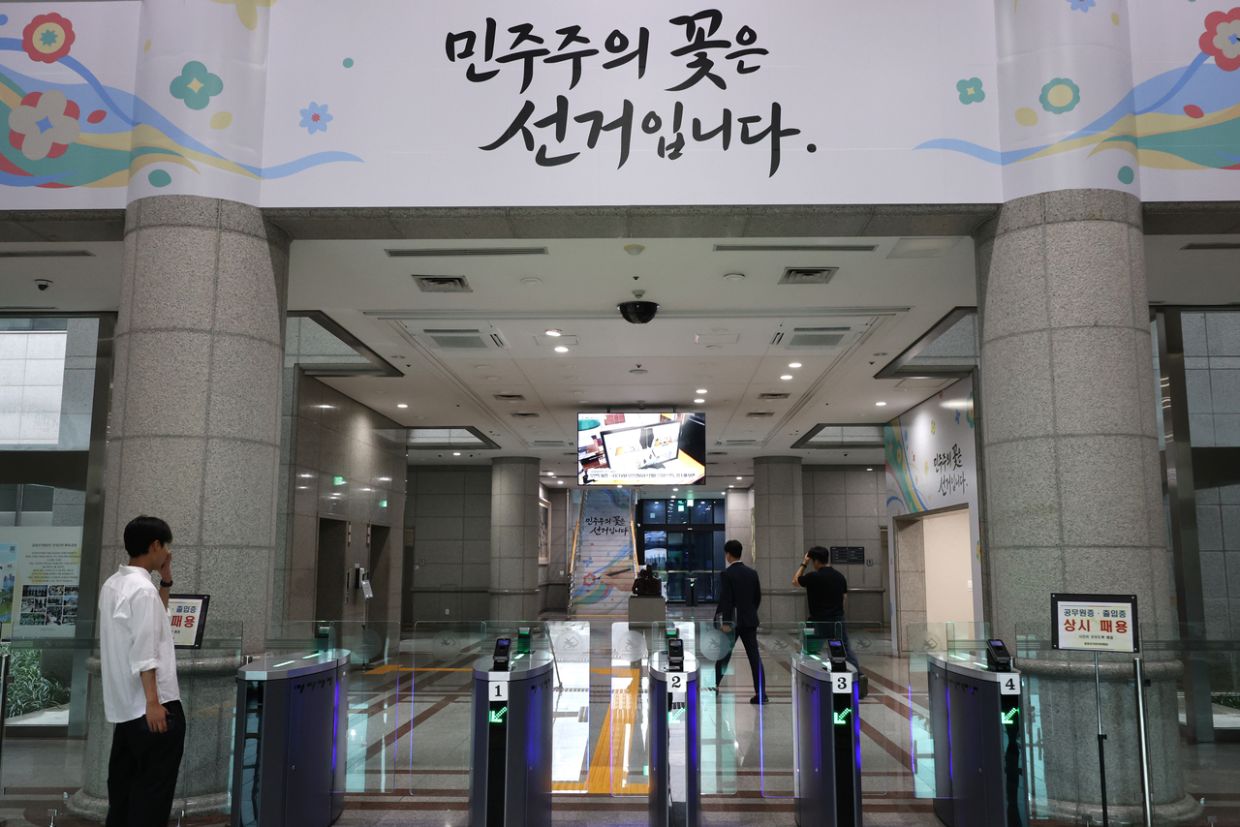
South Korean law enforcement authorities conducted a major operation on Thursday, executing a search warrant at the National Election Commission headquarters in Gwacheon, a city south of Seoul, as part of a sweeping inquiry into suspected statistical tampering tied to the June 3 local elections. According to legal sources, prosecutors and investigators from a joint task force combining prosecution and police resources descended on the NEC offices to secure documentary and digital evidence related to what officials believe was a systematic effort by certain commission employees to alter computer records.
The investigation centres on a critical failure during South Korea's June local elections when numerous polling stations reported an insufficient supply of ballots on voting day. Multiple voters found themselves unable to participate in the democratic process after arriving at their designated polling locations, only to discover that ballot papers had run out. The shortfall affected the integrity of an election meant to determine local government leadership and represent the collective will of the electorate at the municipal level.
Central to the expanding probe is evidence suggesting that National Election Commission staff members deliberately modified statistical data within the organisation's computer systems. These alleged alterations were apparently designed to obscure and minimise the apparent scale of administrative errors related to the calculation and distribution of voter numbers to polling stations. By manipulating records, investigators believe the commission sought to downplay responsibility for a significant organisational failure that undermined public confidence in electoral processes.
The ballot shortage incident represents a serious breach of electoral protocol in a country with a strong democratic tradition and rigorous institutional frameworks. South Korea's election system is ordinarily praised for its transparency and systematic approach to ensuring every eligible citizen can exercise their voting rights. The discovery that internal data may have been tampered with to conceal administrative failures strikes at the credibility of these institutions and raises questions about oversight mechanisms within the commission itself.
For Malaysian observers and regional analysts, the incident offers cautionary lessons about the importance of robust internal controls and independent monitoring of electoral bodies. Maintaining public trust in democratic institutions requires not only fair conduct during elections but also honest administration of electoral processes before, during, and after voting. When electoral organisations themselves become subjects of investigation for concealing failures, the implications extend beyond individual accountability to touch the broader legitimacy of the democratic system.
The involvement of a joint prosecution-police task force underscores the seriousness with which South Korean authorities are treating the matter. Such coordinated investigative structures typically emerge when officials believe evidence suggests organised or systematic wrongdoing rather than isolated individual misconduct. The decision to execute search warrants and secure evidence suggests prosecutors believe they have sufficient grounds to pursue criminal charges against those involved in the alleged manipulation.
The timing of the investigation demonstrates how electoral irregularities can trigger prolonged scrutiny extending well beyond polling day itself. What initially presented as a logistical failure—inadequate ballot provision at certain stations—evolved into a more troubling narrative involving potential cover-up attempts. This progression illustrates why election officials must prioritise transparent reporting of problems alongside efforts to prevent them, as concealment often generates greater institutional damage than acknowledgment and remediation.
South Korea's experience carries implications for other democracies, particularly across the Asia-Pacific region where electoral integrity remains a significant concern. The incident highlights vulnerabilities in systems where administrative bodies have both operational and statistical reporting responsibilities, potentially creating conflicts of interest. Regional election commissions and civil society watchdogs in Southeast Asia might consider whether their own institutional structures adequately prevent similar scenarios from occurring undetected.
The investigation also raises questions about what specific measures the National Election Commission will implement to prevent future data manipulation and to strengthen internal governance. South Korean lawmakers and electoral reform advocates will likely scrutinise not only the individuals allegedly responsible for tampering but also the institutional culture and oversight gaps that allowed such conduct to occur. Systemic reforms addressing procedural transparency and multi-level verification of electoral statistics may emerge from this probe.
As the inquiry progresses, the National Election Commission faces reputational challenges that extend beyond the specific allegations. Public confidence in the organisation's independence and integrity has been tested by revelations that employees may have prioritised institutional image over accurate reporting. Rebuilding trust will require comprehensive reform initiatives and demonstrated commitment to accountability, serving as a reminder that electoral institutions must maintain the highest standards of conduct to preserve democratic legitimacy across their societies.

