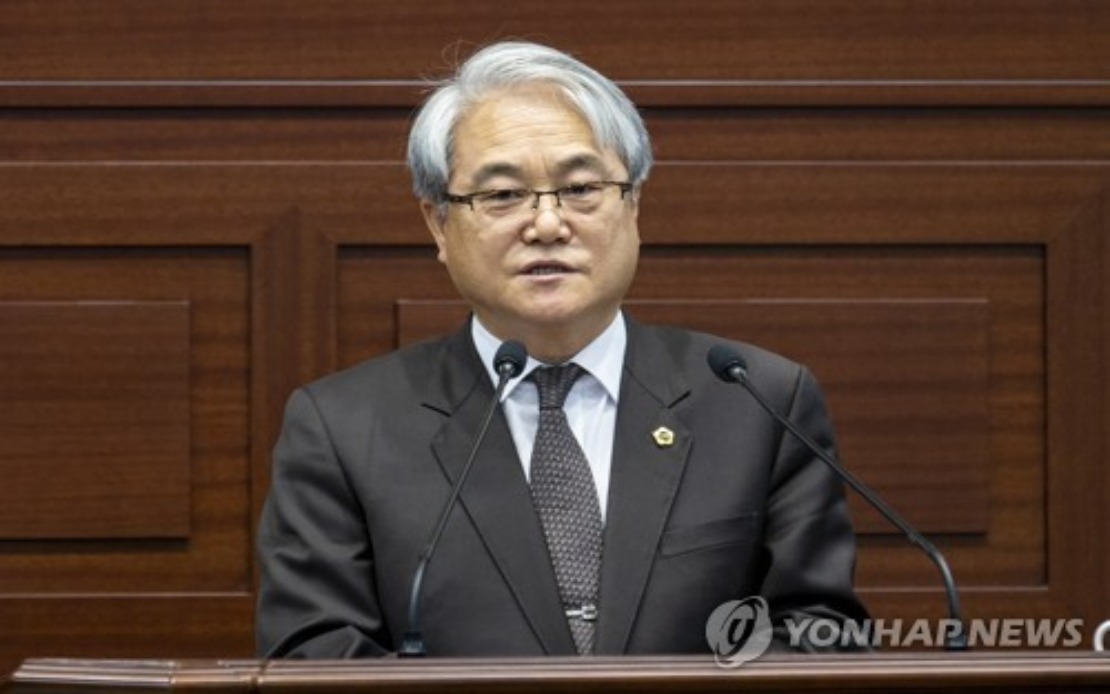
The death of Kim Ha-soo, who previously led Cheongdo county in South Korea's southeastern region, has intensified scrutiny into official corruption within local government administration. Rescue teams discovered his body on a mountain early Monday morning, alongside what appeared to be a handwritten note, according to police accounts relayed through Yonhap News Agency. The discovery marks a dramatic conclusion to an ongoing investigation that had cast a shadow over the former official's recent tenure and raised broader questions about accountability mechanisms within South Korea's local governance structure.
Kim's final months in office—which ended earlier this year after serving from 2022—had become increasingly scrutinized following allegations of financial impropriety. Investigators had been examining claims that he received unlawful payments from a public servant in exchange for facilitating a promotion, a transaction that sits at the heart of systemic corruption concerns afflicting many regional administrations across the country. The nature and scope of these alleged kickbacks pointed to a troubling pattern where career advancement within government bureaucracy could be expedited through illicit financial arrangements rather than merit-based evaluation.
The investigation into Kim's conduct had not proceeded in isolation. A man believed to have acted as the intermediary in delivering the alleged bribe had himself been found dead previously, adding another layer of complexity to the case. This development raises uncomfortable questions about the pressures faced by individuals implicated in such schemes and whether there may be broader circumstances surrounding these deaths that extend beyond simple administrative malfeasance.
Beyond the bribery allegations, prosecutors had initiated separate proceedings against Kim for his alleged involvement in a breaking-and-entering incident at a nursing home director's residence in January. This criminal referral introduced charges of a more violent nature, suggesting that Kim's pattern of misconduct extended well beyond financial corruption into direct violations of personal property and safety. The combination of economic crimes with property violations paints a picture of an official who repeatedly disregarded both legal boundaries and ethical constraints during his administration.
The case resonates throughout South Korea's regional governance landscape, where investigations into local officials frequently uncover networks of corruption spanning multiple municipalities and administrative levels. Cheongdo's experience reflects challenges that plague many county and provincial governments attempting to maintain integrity within hierarchical bureaucratic systems where personal relationships and transactional dealings sometimes supersede institutional accountability. The administrative infrastructure designed to prevent such abuses often proves insufficient when enforcement mechanisms lack adequate resources or political will.
For Malaysian observers monitoring governance trends across East Asia, the Cheongdo case illustrates persistent vulnerabilities in anti-corruption frameworks even within developed democracies with established legal institutions. South Korea's National Police Agency and prosecution systems, while generally regarded as functional, nonetheless contend with officials who calculate personal advantage despite visible surveillance and investigation. This suggests that structural oversight alone cannot guarantee ethical conduct without complementary cultural shifts and institutional incentives that fundamentally reorient official behaviour toward public service principles.
The circumstances surrounding Kim's death—specifically the discovery of an apparent personal note—remain incompletely disclosed by authorities, leaving open questions about his state of mind during the final period of investigation. Police officials declined to elaborate on the note's contents or the forensic details surrounding the discovery, maintaining discretion that both respects privacy and potentially limits public understanding of the broader context. This restraint, while following established protocols, also reflects broader challenges in South Korean journalism and public discourse where official confidentiality sometimes obscures important contextual information.
The incident underscores ongoing tensions within South Korea's regional administrative system between performance-oriented governance objectives and personal enrichment motivations. County chiefs occupy critical positions bridging central government policy directives with local community needs, wielding discretionary authority over resource allocation, personnel decisions, and infrastructure projects. When individuals in these positions succumb to corruption, the damage extends beyond personal misconduct to undermine public trust in institutional functioning and civic confidence in government legitimacy.
For Southeast Asian governance specialists, the Cheongdo case offers instructive lessons about the enduring prevalence of corruption despite robust legal frameworks and investigative capacity. Even nations with advanced economies and sophisticated institutional development confront challenges in constraining official misbehaviour, suggesting that solutions must extend beyond procedural reforms to encompass deeper changes in organizational culture and incentive structures. Regional governments across ASEAN nations grappling with comparable corruption issues might examine both South Korea's investigative successes and its apparent limitations in preventing such misconduct from occurring in the first place.

