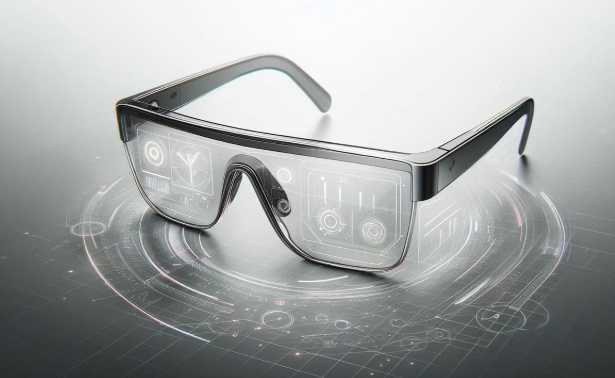
South Korea has entered uncharted legal territory with its first prosecution involving artificial intelligence-enabled eyewear used to circumvent national qualification exams. The Gwangju District Prosecutors' Office formally indicted a man in his 40s last month for breaching the National Technical Qualification Act through the deployment of smart glasses during a fire protection facilities engineer certification test. The case underscores an escalating challenge facing examination authorities across the country as technology enables increasingly sophisticated forms of academic dishonesty.
The defendant was apprehended in May at an examination centre in Gwangju after an invigilator detected an unusual light reflection from his spectacle lenses—a telltale sign that ultimately exposed the scheme. What began as a routine supervision discovery unravelled into a significant investigation revealing not merely an isolated incident but a deliberate attempt to test an unauthorised system. During questioning, the accused disclosed that he had personally engineered an artificial intelligence application specifically designed to interface with the glasses, ostensibly to verify whether the system could accurately transmit correct answers to the eyewear's display.
This case represents only the visible portion of a broader problem. Two additional men in their twenties were identified using identical cheating methods at examination venues in Seoul and Mokpo during the same month, suggesting that AI glasses have become a tool of choice for test-takers seeking unfair advantages. The methodology appears remarkably straightforward: candidates covertly wear devices capable of receiving real-time information, allowing them to bypass traditional knowledge requirements. Such tactics fundamentally undermine the integrity of national qualification frameworks designed to certify professional competence in critical fields.
The phenomenon extends beyond professional certification exams. Authorities have documented multiple instances of AI glasses being deployed in TOEIC examinations, international English proficiency tests widely taken by South Koreans pursuing education and employment opportunities abroad. At least three individuals were caught utilising the technology in May and June, indicating that the practice transcends specific examination categories. The widespread nature of these incidents suggests that word of the vulnerability may have circulated among test-takers, prompting copycat attempts before detection systems could be strengthened.
The implications of such cheating carry substantial weight within the South Korean context, where national qualification examinations serve as gatekeepers to prestigious professions and represent critical career milestones. A fire protection facilities engineer certified through fraudulent means poses genuine public safety risks, as do English language credentials obtained dishonestly for roles requiring genuine communication skills. The trust placed in these examination systems by employers, regulators, and international institutions depends upon the integrity of testing conditions and the authenticity of certified competencies.
Recognising the urgency of the situation, examination administration bodies convened an emergency meeting on July 10 to formulate comprehensive countermeasures against the emerging technological threat. The gathering brought together officials responsible for overseeing major national qualification assessments to deliberate on regulatory responses. Two principal strategies emerged from discussions: first, the explicit inclusion of AI glasses and related smart eyewear within prohibited items lists governing examination rooms, and second, the implementation of significantly harsher penalties for individuals apprehended engaging in cheating activities.
These regulatory adjustments represent necessary evolution in examination security protocols to keep pace with technological advancement. Traditional exam room rules were drafted in eras when such devices were either non-existent or prohibitively expensive for most test-takers. By codifying AI glasses as explicitly banned equipment rather than relying on general prohibitions against electronic devices, authorities can provide examination supervisors with clear guidance and strengthen enforcement. Simultaneously, calibrating penalties to reflect the premeditation and technological sophistication involved in such schemes communicates that attempting to game the system carries serious consequences.
The South Korean situation offers cautionary insights for examination authorities throughout Southeast Asia and globally. As artificial intelligence capabilities become increasingly accessible and affordable, and as smart eyewear proliferates as consumer technology, other jurisdictions will inevitably confront similar vulnerabilities. Malaysian examination boards administering professional qualifications, university entrance assessments, and standardised language tests should proactively evaluate whether their current monitoring and equipment prohibition frameworks adequately address emerging technological threats. The cost of reactively responding after widespread cheating occurs far exceeds the investment required for anticipatory regulatory design.
The psychological and practical aspects of this enforcement challenge should not be underestimated. Detection remains difficult when devices are designed to be visually inconspicuous, and supervisors cannot be expected to identify cutting-edge technology without training and awareness. South Korea's experience demonstrates that supervisor vigilance, enhanced by knowledge of how these systems operate and what physical indicators might reveal their presence, constitutes the first line of defence. Yet technology ultimately requires technological countermeasures, suggesting that examination centres may need to invest in equipment detection capabilities or employ environmental factors that degrade the functionality of wireless communication devices.
Beyond the immediate examination integrity concerns lies a broader question about the trajectory of technological advancement and institutional response. Manufacturers of AI-powered glasses market them as productivity and information-access tools for legitimate professional purposes. Their application to examination cheating represents a perversion of intended use, yet once such applications become known, preventing motivated individuals from repurposing consumer technology becomes exponentially more difficult. This dynamic suggests that examination authorities must anticipate technological disruption as an ongoing challenge rather than a discrete problem awaiting permanent solution.

