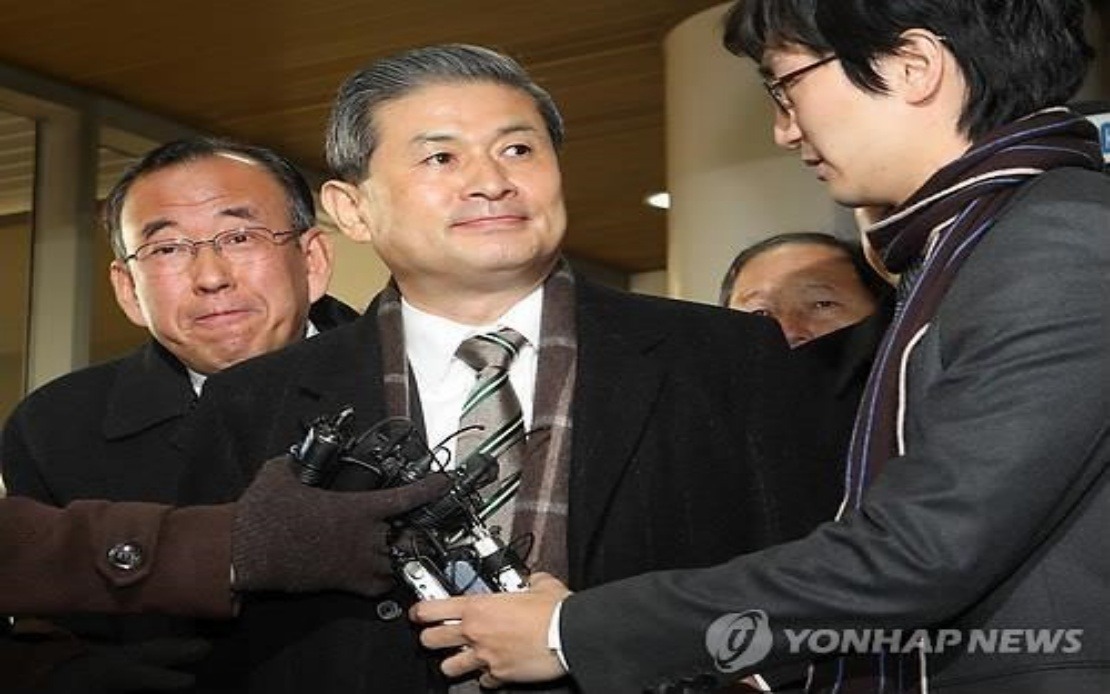
South Korea's interior ministry has formally revoked its Top Science and Technology Award from former Seoul National University professor Hwang Woo-suk, marking the final chapter in one of modern science's most notorious fraud cases. The decision, granted presidential approval on Tuesday, came after the science ministry requested the revocation in March. The award, the nation's most prestigious honour for scientific and technological achievement, was originally presented to Hwang in 2004 with accompanying prize money of 300 million won, equivalent to approximately US$201,200 at the time.
Hwang's fall from grace began in 2005 when investigators discovered that his landmark research paper claiming to have created the world's first cloned human embryo was built entirely on forged data. The revelation shocked the global scientific community and tarnished South Korea's reputation as an emerging biotechnology powerhouse. For years, Hwang's work had been celebrated as a breakthrough achievement that positioned the country at the forefront of regenerative medicine research. The fabrication fundamentally undermined faith in peer review processes and raised serious questions about how such deception could have passed initial scrutiny from the journal Science, which had published his work.
Following the exposure of his scientific misconduct, Hwang was dismissed from Seoul National University in 2006. However, the journey to formally strip him of his honours proved unexpectedly complicated. The government took an initial step to revoke the award in 2020, but this first revocation was later invalidated by a court that found procedural irregularities in how the process was conducted. The legal setback required authorities to restart the entire revocation procedure, demonstrating how even in cases of blatant fraud, administrative and legal processes must be followed meticulously to withstand judicial challenge.
The Top Science and Technology Award itself represents South Korea's commitment to recognising individuals whose contributions significantly advance the nation's scientific and technological capabilities. By 2004, when Hwang received it, South Korea was aggressively positioning itself as a global leader in cutting-edge research fields. The award carried enormous prestige and was intended to celebrate genuine achievement and innovation. Hwang's fraudulent research had exploited this credibility, using South Korea's growing international standing to lend false authority to his false claims about human cloning achievements.
This case carries particular relevance for Southeast Asian nations, including Malaysia, which are similarly investing heavily in biotechnology and stem cell research infrastructure. The Hwang scandal serves as a cautionary tale about the institutional vulnerabilities that can emerge when prestigious research institutions prioritise rapid achievements and international recognition over rigorous scientific standards. Malaysian scientists and policymakers have witnessed how one researcher's misconduct can dampen a nation's scientific reputation for years. The reputational damage extends beyond individual institutions to affect perceptions of an entire country's scientific output and credibility.
The protracted nature of the revocation process also highlights how scientific institutions grapple with accountability mechanisms. The court's initial finding of procedural flaws, while technically correct, underscores the importance of establishing clear, legally defensible protocols for investigating and responding to research fraud. When such frameworks are absent or poorly documented, even straightforward cases of misconduct can become entangled in bureaucratic and legal complications that delay appropriate consequences and allow public confusion about the status of the researcher's credentials.
For the international scientific community, the formal revocation represents important closure and reinforces the principle that fraudulent research carries permanent consequences. However, it also reflects how difficult it can be to completely erase a researcher's legacy once publications have circulated widely through academic networks. Many of Hwang's retracted papers likely remain visible in databases and citation indices, potentially misleading researchers unfamiliar with the case. Institutions across Asia have subsequently strengthened their governance structures around research integrity, with many establishing dedicated research ethics committees and more rigorous data verification protocols.
The timing of this week's revocation, more than two decades after the initial award, demonstrates both the seriousness with which South Korea treats scientific misconduct and the systemic challenges involved in enforcing accountability at the highest levels. The interior ministry's involvement reflects how research integrity has become not merely an academic matter but a state priority affecting national reputation and international standing. For countries like Malaysia and others in Southeast Asia developing their research ecosystems, the lesson extends beyond warning against fraud to encompassing the need for robust institutional oversight that can respond decisively when misconduct is discovered.
Moreover, the case underscores evolving standards in scientific publishing and institutional governance. Today's research institutions maintain far stricter requirements for data transparency, require raw data preservation, and conduct more thorough verification of methodology before publication. The absence of such protections in the early 2000s made Hwang's deception possible, but subsequent reforms across major journals have made similar large-scale fraud considerably more difficult. South Korea's experience in addressing this episode has informed institutional practices throughout East and Southeast Asia, contributing to a gradual strengthening of research integrity standards across the region.

