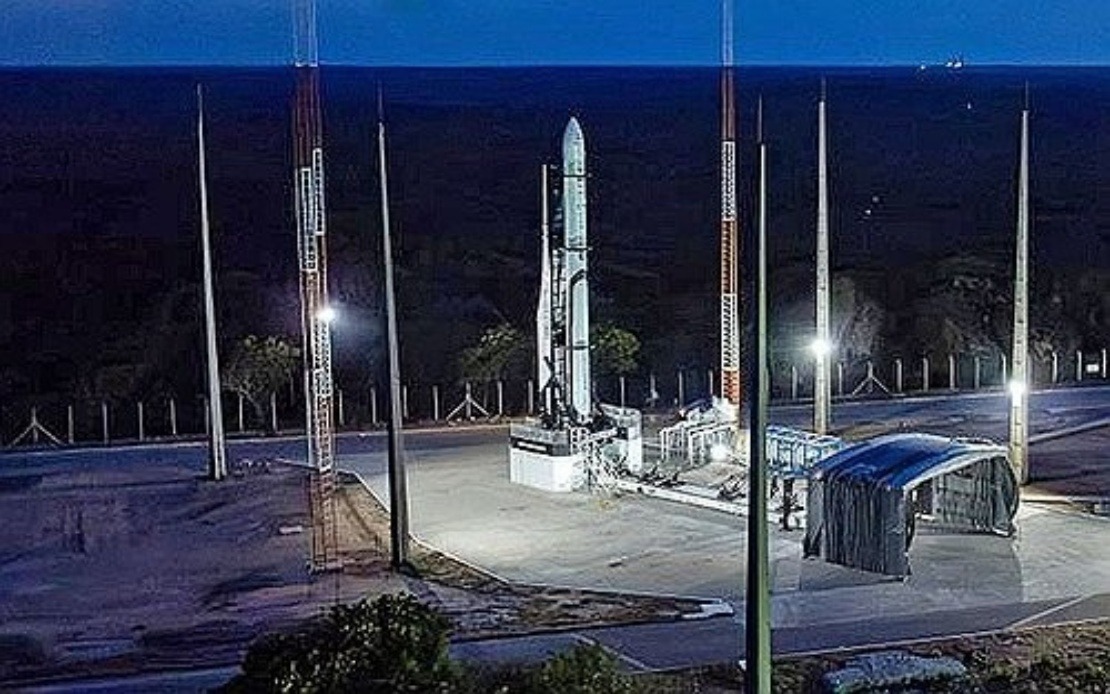
South Korea has shelved plans to conduct a landmark test of its domestically developed Mir solid-fuel space rocket, marking a significant setback for a programme designed to bolster the nation's independent surveillance capabilities and reduce strategic dependence on foreign intelligence assets. The defence ministry announced the cancellation on Tuesday, citing unspecified safety concerns that emerged during final pre-launch preparations, without disclosing the specific technical issues that prompted the decision to scrub the launch that had been scheduled for 2 pm from a sea barge positioned off the coast of Jeju Island in the country's south.
The postponement represents a meaningful delay for a project that has consumed considerable research and development resources since its inception in 2021. This would have been the first time South Korea attempted to launch the Mir vehicle in its complete four-stage configuration, representing a major milestone in the country's quest to develop indigenous space launch capabilities independent of reliance on foreign providers. Previous trials conducted during 2022 and 2023 had tested only partial three-stage configurations, making this full-system test a critical step toward operational deployment of the satellite constellation envisioned under the broader programme.
The Mir initiative sits at the intersection of South Korea's military modernisation ambitions and its geopolitical rivalry with the nuclear-armed North. The programme explicitly targets the development of small observation and surveillance satellites positioned in low-Earth orbit below 500 kilometres, with the ultimate objective of creating an indigenous reconnaissance network that would substantially diminish South Korea's reliance on American satellite intelligence for monitoring adversarial threats emanating from across the Demilitarised Zone. This strategic autonomy in intelligence gathering represents a long-term goal for Seoul, particularly given the unpredictable nature of regional security dynamics and the need to maintain independent situational awareness.
Solid-fuel propulsion technology offers distinct operational advantages that make it particularly attractive for military applications in the Korean context. Unlike liquid-fuel systems, which require complex handling procedures and must be fuelled immediately before launch, solid-fuel rockets can remain loaded and ready for extended periods, permitting rapid deployment when strategic circumstances demand immediate satellite reconnaissance. The structural simplicity of solid-fuel designs also translates into reduced maintenance requirements and lower operational costs compared to their liquid counterparts, factors that become significant when considering the substantial constellation of up to 60 small satellites that South Korea aims to position in orbit by the end of this decade.
The broader context of South Korea's space ambitions reveals a sophisticated, multi-pronged approach to achieving comprehensive indigenous surveillance capabilities. Running parallel to the Mir solid-fuel development programme is South Korea's military spy satellite initiative, which has already achieved considerable success by leveraging SpaceX's Falcon 9 rockets to place five reconnaissance satellites into orbit as of November of the previous year. This hybrid approach, combining reliance on proven foreign launch providers for larger satellites with domestic development of smaller, more rapidly deployable solid-fuel systems, reflects pragmatic strategic planning that acknowledges both present constraints and future aspirations.
The planned deployment of 60 small spy satellites under the Mir programme would fundamentally reshape South Korea's intelligence collection architecture by creating a distributed network capable of providing persistent surveillance coverage over critical regions of interest. When combined with the five larger military reconnaissance satellites already operational, this constellation would establish what Seoul hopes will be a comprehensive and redundant observation system, substantially reducing vulnerability to gaps in coverage that might otherwise compromise national security interests. The redundancy inherent in such a large number of smaller satellites also provides resilience against technical failures or the loss of individual platforms.
The current postponement underscores the inherent risks and complexities involved in developing advanced aerospace technologies, particularly when safety considerations must be balanced against programme schedules and strategic imperatives. The defence ministry's decision to cancel rather than proceed despite identified concerns demonstrates adherence to professional engineering standards and risk management protocols, even when delays impose costs on overall programme timelines. The commitment to announcing a rescheduled launch date once identified issues have been resolved suggests confidence in the underlying technical approach, despite the setback.
For regional observers, particularly in Southeast Asia, South Korea's space programme development carries implications beyond Seoul's immediate security concerns. Successful development of indigenous space launch capabilities by a major regional power could influence strategic calculations throughout East and Southeast Asia, as other nations evaluate their own needs for independent access to space. The technical expertise and industrial capacity generated through such programmes also contribute to broader technological advancement and economic development within the region, with potential spillover benefits across multiple sectors.
The timing of the postponement, occurring during an already tense period in Korean Peninsula dynamics, adds another layer of significance to what might otherwise appear as a routine technical delay. North Korea's continued development of ballistic missile capabilities and periodic provocative actions maintain constant pressure on South Korea's military planners to accelerate the development of surveillance systems that can provide independent strategic warning of emerging threats. Each delay in the Mir programme, however justified by safety concerns, represents a deferral of operational capabilities that Seoul believes essential for maintaining strategic balance in its challenging security environment.

