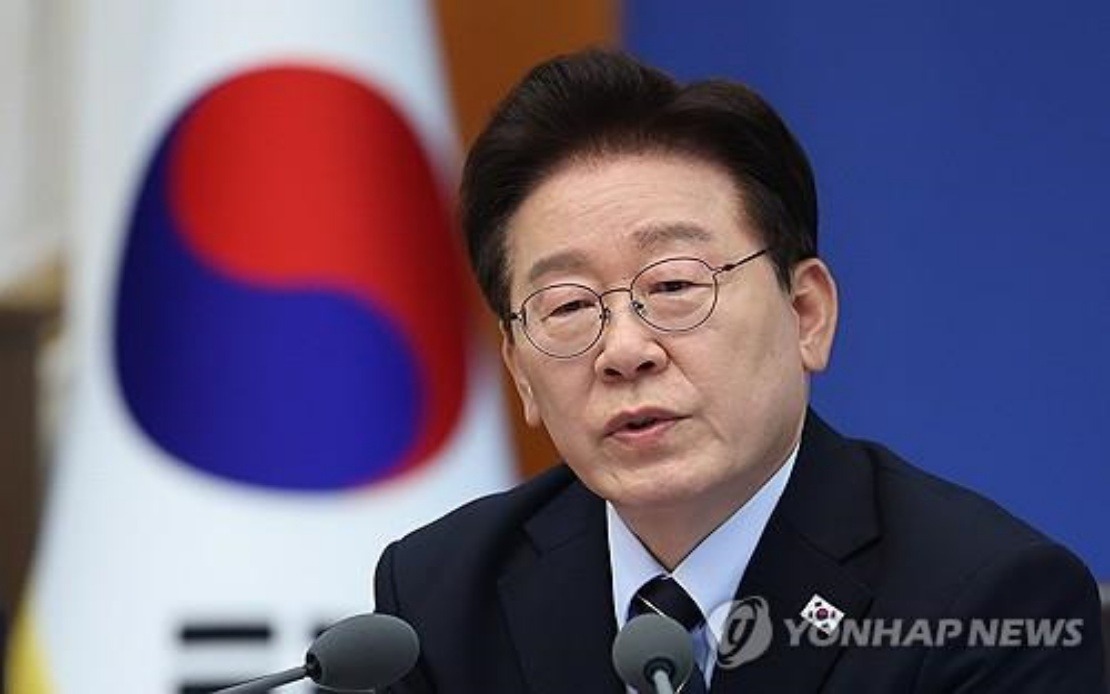
South Korea is embarking on a fundamental restructuring of its military framework, with President Lee Jae Myung directing officials to accelerate defence modernisation centred on technological sophistication rather than personnel-intensive structures. The initiative represents an acknowledgment that the nation's sharply declining birth rate makes continued reliance on traditional conscription models economically and strategically problematic, forcing Seoul to recalibrate how it maintains security whilst adapting to demographic realities that parallel challenges across East Asia.
At a senior policy meeting held at the presidential compound, Lee articulated a vision for transforming South Korea's armed forces into what officials term a "smart, elite and strong" military that prioritises advanced equipment and cutting-edge systems over sheer manpower volume. The strategic shift emerges from recognition that persisting below-replacement fertility rates render the current structure, which conscripts all able-bodied males for minimum 18-month service terms, fundamentally inefficient and increasingly difficult to sustain. This reorientation has significant implications not merely for Korean defence but for broader regional stability dynamics, given Seoul's frontline position in one of the world's most militarised confrontations.
Central to the reform package is the introduction of selective conscription mechanisms that would allow the military to be more discerning about recruitment patterns whilst redirecting resources toward technological capabilities. This approach contrasts sharply with the universal conscription system that has underpinned South Korean security doctrine since the Korean War. By making military service conditional rather than mandatory, Seoul aims to retain sufficient manpower whilst freeing younger cohorts to pursue education, entrepreneurship, and career pathways that strengthen the broader economy. The challenge lies in determining which categories of personnel remain essential whilst ensuring that selective conscription does not fracture social cohesion or create perceptions of unfair burden-sharing.
A critical dimension of Seoul's reform strategy involves reshaping military service to constitute a genuine asset in individuals' career development rather than lost productive years. Lee emphasised government responsibility to ensure that conscription connects soldiers to quality employment opportunities, educational advancement, and wealth accumulation pathways upon discharge. This reframing transforms military service from an obligation grudgingly fulfilled into a potentially valuable investment period—a necessary psychological and practical shift if younger South Koreans are to regard conscription as compatible with personal ambition rather than antithetical to it. The government has outlined policies designed to facilitate this transition, though implementation details remain to be developed.
The timing of these defence reforms intersects with broader Seoul governance challenges, particularly acute housing shortages that have become a defining policy battleground. The administration announced plans to release more than 230,000 additional residential units across the Seoul metropolitan region through accelerated development on publicly held land, selective greenbelt modifications, and private sector incentives. Lee characterised the housing shortage as resulting from permit constraints and construction slowdowns beginning in 2022, creating what officials term a "supply cliff" that requires extraordinary corrective measures. Streamlining approval procedures and revising regulatory frameworks represent the administration's proposed solutions, though such measures often generate environmental and urban planning concerns.
The interweaving of defence and housing policy reflects how demographic pressures cascade through multiple policy domains simultaneously. Young Koreans confronting military obligations amid expensive housing markets and limited job prospects represent a structural tension that no single policy intervention can resolve. The government's attempt to coordinate military reform with housing expansion suggests recognition that addressing generational grievances requires multifaceted approaches spanning security, economic opportunity, and quality-of-life considerations. Yet critics may question whether technological military modernisation adequately addresses underlying demographic decline or merely postpones confronting fundamental challenges.
For regional observers, particularly in Southeast Asia, South Korea's defence recalibration offers both instructive example and cautionary elements. Nations facing their own demographic transitions and rising military technology costs might study how Seoul attempts to maintain credible deterrence whilst adapting conscription systems to contemporary realities. Malaysia, which maintains relatively younger demographics than East Asian peers but nonetheless faces defence modernisation pressures, has different demographic circumstances but potentially relevant lessons regarding force structure optimisation and technology investment prioritisation.
The strategic implications of South Korean military transformation extend beyond Seoul's immediate security requirements. As the armed forces shift emphasis toward technological sophistication, this likely accelerates investment in autonomous systems, artificial intelligence applications, cyber capabilities, and advanced weaponry—domains where the South Korean defence industry already demonstrates significant competence. Such modernisation might enhance deterrence credibility against North Korean forces, though it also raises questions about whether technology-centric approaches adequately address asymmetric threats or unconventional security challenges.
Implementing selective conscription whilst maintaining public support presents substantial political obstacles. South Korean society has historically regarded universal military service as expression of shared civic duty and national sacrifice. Shifting toward selective systems risks creating perceptions that certain social classes or educational cohorts receive exemptions whilst others bear disproportionate burdens, potentially generating the kinds of equity concerns that have periodically roiled Korean politics. The government must navigate this perception minefield carefully, ensuring that selection criteria appear transparent and fair whilst actually achieving military effectiveness objectives.
The government's emphasis on connecting military service to career advancement also requires substantial institutional development. Creating pathways from military roles to civilian employment, establishing educational credit systems, and building relationships between defence establishments and private employers all demand sustained commitment and resources. Without such infrastructure, the rhetorical commitment to making service valuable remains empty promise unlikely to shift negative perceptions among youth cohorts already skeptical about military obligations.
Longer term, South Korea's defence reform strategy may establish precedents for other developed nations confronting similar demographic trajectories. As birth rates decline across East Asia and Europe, militaries everywhere face recruitment challenges and pressure to demonstrate that service constitutes wise individual choice rather than unwanted imposition. Seoul's experiment with selective conscription combined with technology-driven force development will provide data on whether such hybrid approaches successfully maintain deterrent capabilities whilst adapting to twenty-first-century demographic realities. The outcomes will likely influence defence policy thinking across the region and potentially worldwide.

