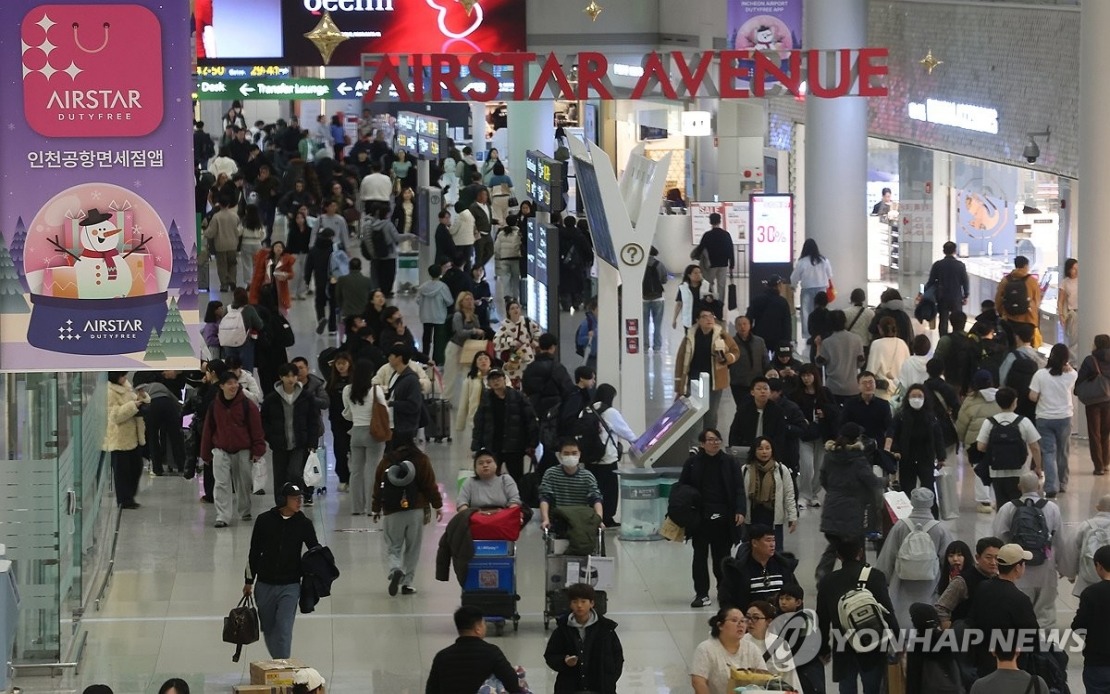
South Korea is on track to set a new tourism record as the country surpassed the 10 million foreign visitor mark by mid-June, significantly outpacing the previous year's arrival schedule. The milestone represents a watershed moment for the nation's tourism sector, which is rebounding with striking momentum following the challenges of recent years. The timing of this achievement—roughly a month earlier than when the figure was reached in mid-July last year—underscores the accelerating appeal of South Korea as a destination for international travellers and signals robust growth in the months ahead.
For the first time in the country's tourism tracking history, the 10 million visitor threshold has been breached within the first half of a calendar year, marking a significant shift in travel patterns and demand. The Ministry of Culture, Sports and Tourism has highlighted this unprecedented timing as evidence of sustained recovery and expanding interest in South Korean attractions. This early achievement provides a strong foundation for achieving record annual figures, particularly given that the peak tourism seasons of summer and autumn still lie ahead.
The resurgence in international arrivals has been particularly pronounced in recent months. May alone drew 1.95 million visitors, representing a robust 19.4 per cent increase compared to the same month in the preceding year. This month-on-month growth demonstrates that the recovery is not merely a temporary spike but reflects deepening travel demand across diverse source markets. The consistency of growth throughout the first half of the year suggests that South Korea's appeal extends beyond seasonal fluctuations.
Chinese travellers continue to dominate South Korea's inbound tourism landscape, comprising the largest contingent with 560,000 arrivals in May alone. Japanese visitors formed the second-largest group at 360,000, while Americans accounted for 210,000 visits during the same month. This tripartite composition reflects South Korea's geographic proximity to major Asian economies and its growing cultural cachet among North American audiences, particularly through the global expansion of Korean entertainment and consumer products. The sustained strength of arrivals from these three nations provides a stable foundation for tourism revenue.
Particularly encouraging for policymakers has been the geographical diversification of visitor flows beyond the Seoul metropolitan region. Arrivals through regional airports climbed steadily from 230,000 in January to 360,000 by May, demonstrating that tourism benefits are spreading to secondary and tertiary cities across the nation. This decentralisation relieves pressure on capital-region infrastructure while bolstering economic activity in provincial centres, a strategic priority for balanced national development. The expanding distribution of tourists suggests that South Korea is successfully marketing attractions beyond its capital's conventional landmarks.
Foreign visitors' spending capacity has also reached notable heights. Card expenditure by international tourists in May, encompassing both physical and online purchases, totalled 2.12 trillion won, equivalent to approximately US$1.38 billion. This figure surpassed the 2 trillion won monthly threshold for the first time since South Korea began systematically tracking such data in 2018. The record spending demonstrates that visitors are not merely arriving in greater numbers but are also engaging more deeply with the local economy through consumption and retail activity.
Despite headwinds from elevated fuel surcharges attributed to regional geopolitical tensions centred on the Middle East, the tourism sector has demonstrated remarkable resilience. Year-on-year growth through May reached 21 per cent, indicating that external economic challenges have failed to dampen international demand substantially. This resilience suggests that the appeal of South Korea as a destination has deepened sufficiently to withstand cost pressures that might otherwise deter budget-conscious travellers.
The South Korean government is capitalising on this momentum by mobilising cultural and commercial assets to sustain the expansion. Kang Jung-won, heading the Ministry of Culture, Sports and Tourism's policy division, articulated plans to deepen partnerships with the private sector, leveraging the global phenomenon of Korean popular music and entertainment alongside export-oriented enterprises. This integrated approach recognises that tourism promotion now operates across multiple channels, from digital platforms popularised by K-pop artists to commercial networks utilised by manufacturing companies seeking to attract international business delegations.
For regional observers, South Korea's tourism surge carries implications beyond its borders. As the country attracts record numbers of visitors from across Asia and beyond, it establishes competitive benchmarks that other Southeast Asian destinations must contemplate. The diversification of visitor origins and spending patterns demonstrates how cultural exports and entertainment industries can substantially amplify tourism revenue, a lesson particularly relevant for countries seeking to develop non-traditional tourism assets. Additionally, South Korea's success in dispersing visitors beyond capital regions offers a template for nations grappling with overtourism in major cities.
The trajectory suggests that South Korea's tourism sector will conclude 2024 with historically significant achievements. Should current momentum persist through the traditionally robust latter half of the year, the nation's tourism revenue and visitor volumes will likely establish new benchmarks. This performance underscores how cultural influence, infrastructure quality, and strategic positioning within regional travel networks combine to create powerful tourism advantages in an increasingly competitive global marketplace.

