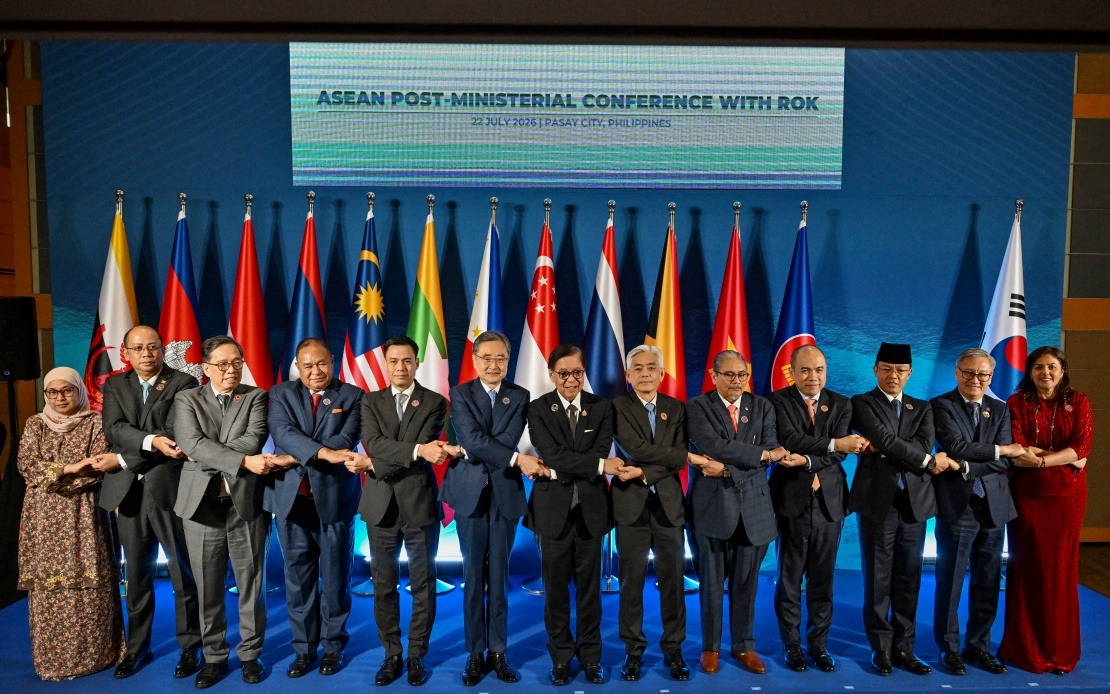
The partnership between South Korea and the Association of Southeast Asian Nations entered a new phase this week with the unveiling of concrete initiatives designed to bind the two regions more closely together across technology, culture, and security domains. Foreign Minister Cho Hyun and his Thai counterpart co-hosted talks in Manila on Wednesday that crystallised Seoul's ambition to position itself as an indispensable player in Southeast Asia's economic and technological future, while ASEAN member states signalled their readiness to deepen engagement across multiple sectors.
The Comprehensive Strategic Partnership vision that forms the architectural foundation for this relationship was articulated by South Korean President Lee Jae Myung at last year's Korea-ASEAN summit. Built on three pillars—people-centred cooperation, growth and innovation, and peace and stability—the framework reflects recognition among both parties that the region's rapid transformation demands coordinated responses. Cho's framing of South Korea and ASEAN as "indispensable partners" underscores the strategic calculus underlying these initiatives, particularly given the continent's ongoing supply chain restructuring and accelerating technological change that neither actor can navigate alone.
Among the concrete offerings from Seoul, the Korea-ASEAN AI Partnership Initiative represents perhaps the most forward-looking commitment. The programme aims to establish functional artificial intelligence ecosystems across member states, nurture research capabilities and develop workforce talent in this critical sector, and establish governance frameworks ensuring AI deployment occurs safely and responsibly. South Korea's positioning of itself as possessing "full-stack AI capabilities"—suggesting comprehensive technological prowess from foundational infrastructure through application layers—offers ASEAN nations a potentially transformative partnership opportunity, particularly for smaller economies lacking the domestic capacity to build these systems independently.
Beyond artificial intelligence, Seoul introduced complementary initiatives targeting cultural and creative industries, domains where Southeast Asian nations possess considerable untapped potential. The creative sector represents one of the fastest-growing components of regional economies, from film and music production in Thailand and Indonesia to gaming and design across Vietnam and the Philippines. South Korea's own success in exporting cultural products globally—exemplified by the streaming phenomenon of Squid Game or the international triumph of K-pop—provides a proven playbook that Southeast Asian partners can adapt to local contexts. The willingness to share expertise in monetising cultural assets reflects Seoul's understanding that soft power and economic development increasingly intertwine.
The ministerial gathering also surfaced less glamorous but strategically vital cooperation proposals, including efforts to combat organised online scam networks that have plagued Southeast Asia, and the establishment of a joint maritime safety academy. These initiatives address genuine regional vulnerabilities. Cybercriminal operations laundering proceeds through cryptocurrency and other digital channels have exploded across the region, devastating vulnerable populations and straining law enforcement resources. Similarly, maritime security remains contested terrain in Southeast Asia, with competing territorial claims, piracy concerns, and the need for coordinated search-and-rescue capabilities making a shared training institution genuinely valuable.
Economic cooperation represents the bedrock underpinning these newer initiatives. South Korea and ASEAN already maintain extensive trading relationships, with Seoul exporting approximately US$122.5 billion worth of goods annually to member states, making ASEAN South Korea's third-largest trading partner. The decision to launch formal negotiations upgrading their Free Trade Agreement—originally signed in 2006 for goods, expanded to services in 2007 and investment in 2009—signals both parties' commitment to capturing emerging opportunities. The explicit focus on digital economy integration, critical minerals access, and other nascent sectors suggests negotiators are looking beyond traditional manufactured goods toward the technologies and materials underpinning the twenty-first century economy.
ASEAN member states' receptiveness to these proposals, as conveyed through official channels, indicates the initiatives struck an appropriate balance between Seoul's strategic interests and regional preferences. The bloc has long sought technology transfer and capacity-building partnerships that enhance member state capabilities without imposing political conditions or demanding exclusive arrangements. South Korea's approach, emphasising ecosystem development and talent cultivation rather than direct control or ownership structures, appears calibrated to this preference.
The peninsula dimension also featured prominently in discussions. Cho utilised the platform to brief ASEAN counterparts on Seoul's ongoing efforts toward peaceful coexistence and shared growth with North Korea—a diplomatic priority that has fluctuated considerably with changes in Seoul's administrations. ASEAN member states reiterated their support for Seoul's Korean Peninsula policies and underscored their conviction that peace and stability on the peninsula directly impacts regional security and prosperity. This affirmation carries weight given ASEAN's formal non-alignment stance and preference for inclusive regional dialogues; the bloc's support enhances Seoul's diplomatic credibility in navigating engagement with Pyongyang.
The bilateral meetings Cho conducted with counterparts from the Philippines and Thailand complemented the broader multilateral discussions, allowing Seoul to address specific national interests and concerns. The Philippines, as current ASEAN chair and a country with significant technology sectors and cultural industries, represents a particularly important bilateral relationship. Thailand, hosting important South Korean manufacturing investments and serving as a regional hub, similarly warrants sustained high-level engagement.
For Malaysian observers and policymakers, these developments carry several implications. As an ASEAN founding member with sophisticated technology sectors and a thriving creative economy, Malaysia stands positioned to benefit substantially from the AI Partnership Initiative and cultural industry cooperation frameworks. The digital economy focus in FTA negotiations could open avenues for Malaysian technology firms and creative enterprises. Moreover, given Malaysia's significance in regional supply chains and maritime commerce, participation in the maritime safety academy and supply chain resilience initiatives offers direct advantages. The broader strategic message—that South Korea views ASEAN as increasingly central to its economic and security strategy—reflects regional rebalancing that smaller and mid-sized Southeast Asian economies can leverage to strengthen their own negotiating positions and development trajectories.

