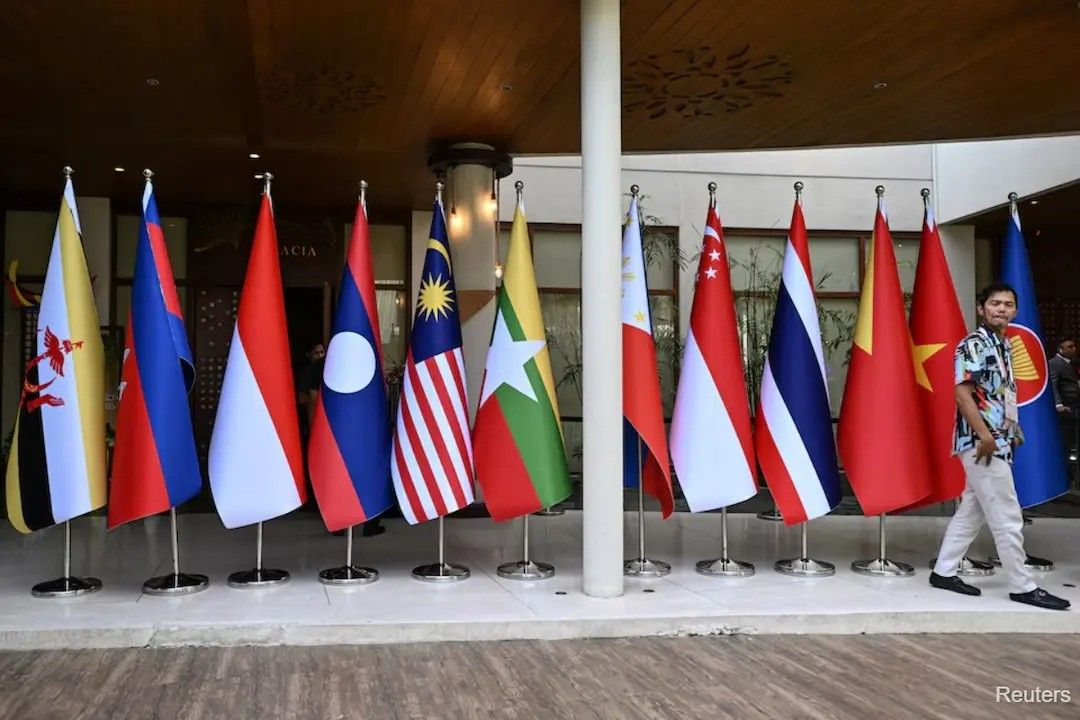
Geopolitical friction in the South China Sea is set to dominate discussions at this week's ASEAN foreign ministers' gathering in Manila, with the United States taking an unusually sharp rhetorical stance on Chinese maritime behaviour just as Secretary of State Marco Rubio arrived in the Philippine capital. The timing of Washington's condemnation of "dangerous" actions in the disputed waterway underscores how the waterway has become a flashpoint where competing regional and global interests collide, threatening to complicate the bloc's already crowded agenda that includes questions about Myanmar's political future and energy security challenges rippling across Southeast Asia.
Rubio's presence at the talks signals a recalibration of American diplomatic engagement in Southeast Asia, particularly as Beijing's top diplomat Wang Yi is also expected to attend. Before leaving Washington, the Secretary of State indicated willingness to meet Wang Yi on the sidelines, suggesting that despite strong rhetoric on maritime disputes, space remains for bilateral engagement. However, Rubio's accompanying op-ed published in Manila media outlets framed the South China Sea as fundamental to regional stability, arguing that freedom of navigation underpins the prosperity and security of ASEAN nations. His language reflected growing American concern that unchecked Chinese control over the waterway could fundamentally alter the strategic balance, transforming it from an international commons into a domain where a single power could weaponise trade relationships to extract geopolitical concessions.
Beijing's overwhelming territorial claims across the South China Sea, encompassing roughly ninety per cent of the waterway despite the 2016 international arbitration ruling invalidating their legal basis, have long created tension within ASEAN. The bloc contains members with competing interests: some nations like Vietnam and the Philippines face direct Chinese pressure, while others prioritise economic ties with Beijing. A fresh confrontation at Second Thomas Shoal on Monday illustrated how fragile the current status quo remains. Philippine account said Chinese Coast Guard personnel physically assaulted Filipino sailors stationed on a beached vessel that serves as a military garrison, while Beijing characterised the incident as Philippine provocation involving personnel in small rubber boats approaching Chinese vessels. This divergence in narratives highlights how even routine military interactions risk spiralling into diplomatic crises.
The incident disrupts tentative hopes for a Code of Conduct between ASEAN and China that could establish clearer rules governing maritime behaviour and dispute resolution. Analysts have long questioned whether such an agreement could achieve meaningful constraints on either party, but negotiations have continued sporadically over more than two decades. The latest clash casts further doubt on whether a binding agreement is achievable, particularly given that ASEAN members themselves lack consensus on what acceptable terms would look like. For smaller Southeast Asian nations attempting to balance economic dependence on China with strategic concerns about maritime freedom, the Code of Conduct represents a pathway to formalised coexistence rather than a solution to underlying territorial disputes.
Beyond the South China Sea, regional stability faces pressures from global energy markets and Middle Eastern conflicts. The rekindled confrontation between the United States and Iran is disrupting oil flows through the Strait of Hormuz, with consequences extending into Southeast Asia. The Philippines has faced acute energy shortages and declared a national emergency in March, forcing authorities to diversify fuel sources in ways that would have been politically unthinkable years ago—including purchasing Russian oil despite Western sanctions. Russian Foreign Minister Sergei Lavrov's scheduled arrival in Manila on Tuesday adds another layer of complexity to the week's diplomatic calendar, suggesting that energy security discussions will necessarily incorporate non-traditional suppliers and potentially fraught relationships.
This energy dimension touches Malaysian interests directly, as the nation's economy depends significantly on reliable and affordable power supplies. The framework governing ASEAN's petroleum security cooperation, particularly the bloc's joint fuel-sharing scheme, remains inadequately ratified by member states. Renewed momentum toward binding energy cooperation would represent one of few concrete achievements possible during this week's sessions, offering member nations some protection against supply shocks originating in distant regions. The contrast between the intractable territorial disputes in the South China Sea and the more tractable energy cooperation agenda reflects ASEAN's fundamental challenge: members can unite around functional problems but fracture over matters involving sovereignty.
Myanmar's political crisis and the bloc's response to it has consumed enormous diplomatic effort without producing results, creating frustration that threatens to undermine ASEAN's consensus-based decision-making model. Since the military coup in 2021, the nation has descended into civil conflict, with resistance forces and ethnic armed organisations challenging junta control across multiple regions. Myanmar's formal exclusion from senior-level ASEAN meetings marked an unprecedented rupture in the bloc's non-interference principle, yet isolation has produced neither political change nor humanitarian improvement. Thai Foreign Minister Sihasak Phuangketkeow has championed reintegration, arguing that five years of exclusion justifies reopening dialogue with junta leader Min Aung Hlaing, who is reportedly planning a visit to Thailand in August.
Thailand's advocacy for Myanmar's return reflects its unique position as a neighbouring state hosting millions of Burmese refugees and migrants. Thai officials contend that engagement rather than ostracism offers better prospects for facilitating eventual political transition, and that maintaining communication channels with the junta may create opportunities for gradual moderation. However, this position faces resistance from other member states, particularly Malaysia, where Foreign Minister Mohamad Hasan has publicly stated that talks cannot proceed while systematic oppression continues. Malaysia's stance reflects a different calculation: that legitimising the junta through high-level dialogue contradicts ASEAN's stated commitment to democracy and human rights, and risks signalling that military coups carry few consequences within the regional framework.
This disagreement exposes ASEAN's institutional weakness in addressing member state crises. The bloc's five-point plan for Myanmar, established in 2021, aimed at initiating dialogue, ceasefire arrangements, humanitarian access, and eventual political transition, has stalled almost entirely. Member states cannot agree on benchmarks for progress, timelines for reintegration, or what minimum political outcomes should justify Myanmar's return to full participation. Philippine President Ferdinand Marcos's recent call for "fine-tuning" the plan acknowledged that the current approach has failed while avoiding concrete proposals for alternative mechanisms. This rhetorical pivot, emerging from an emotional May meeting in Cebu, suggests growing acceptance that the original framework is unworkable.
The Myanmar question carries implications extending beyond humanitarian concerns. If ASEAN cannot enforce or credibly articulate consequences for military takeovers, the precedent affects every member state's calculation about political legitimacy and the bloc's role in preventing or managing state collapse. Myanmar's pariah status drains diplomatic energy that might otherwise address South China Sea disputes or energy security, creating incentive for some members to normalise relations simply to reduce the issue's prominence on the agenda. Conversely, if ASEAN reintegrates Myanmar without tangible political progress, it effectively abandons the international pressure campaign that represents its primary leverage over the junta.
This week's Manila meeting will likely produce modest statements affirming ASEAN unity while each issue—maritime disputes, energy security, and Myanmar's status—remains fundamentally unresolved. The bloc's consensus requirement means that breakthrough agreements are unlikely when members prioritise conflicting interests. American diplomatic presence, signalled through Rubio's visit, will reinforce Washington's role as external actor with significant leverage over individual member states' strategic calculations, particularly the Philippines and Vietnam. Chinese participation, through Wang Yi's attendance, ensures that Beijing's perspective is heard even as ASEAN members attempt to coordinate responses to its maritime assertiveness. For Malaysian observers, the meeting illustrates both ASEAN's continuing relevance as a forum for regional communication and its limited capacity to generate binding commitments that overcome member divergence.

