South Africa has escalated its legal battle against Israel by submitting a detailed filing to the International Court of Justice asserting that the Israeli government has deliberately disregarded multiple binding orders issued by the court. The submission, made under Article 11 of the ICJ's procedural rules, represents a significant step in Pretoria's effort to enforce compliance with judicial directives that the South African government maintains are legally non-negotiable.
The case itself traces back to December 29, 2023, when South Africa formally initiated proceedings against Israel, accusing the country of violating the 1948 Genocide Convention. The ICJ responded by issuing three separate provisional measures orders—in January, March, and May 2024—each directing Israel to implement comprehensive measures designed to prevent actions that would contravene the convention's protections. These interim orders are intended to preserve the legal rights of Palestinians under international law while the court deliberates on the merits of the case.
According to South Africa's Department of International Relations and Cooperation, Israel has systematically failed to respect these orders. The department's statement emphasizes that provisional measures issued by the ICJ carry binding legal force and cannot be disregarded by member states without serious consequences for international law. This framing positions South Africa's complaint not merely as a political position but as a defense of the international judicial system itself.
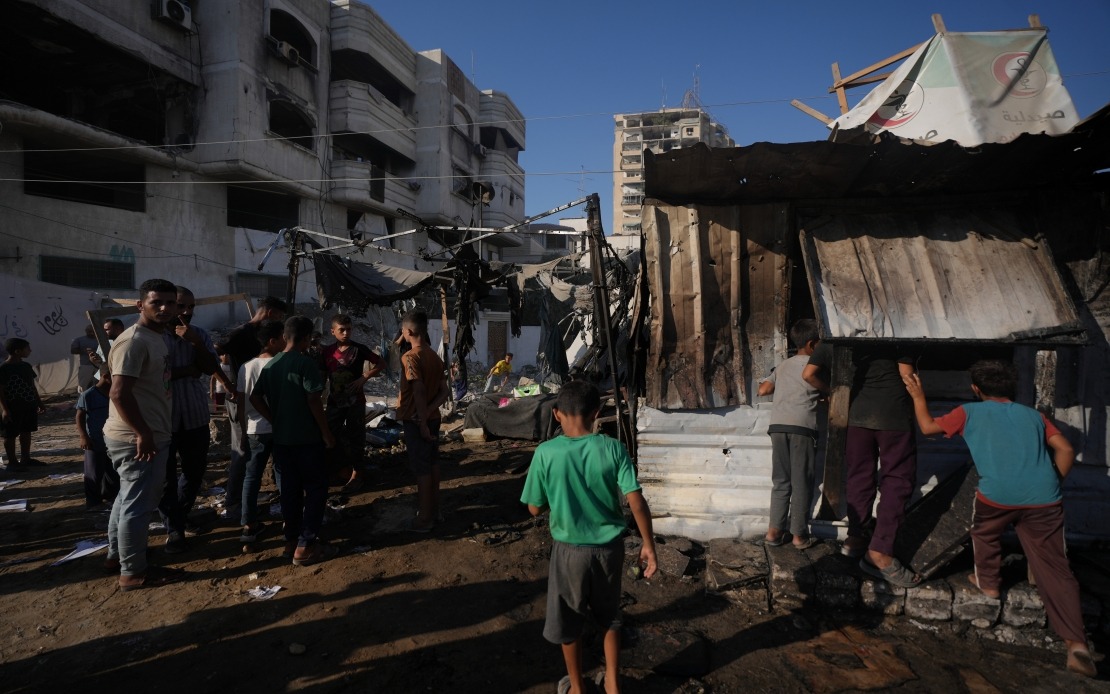
The humanitarian situation in Gaza forms the substantive basis of South Africa's allegations. The filing documents that Palestinian survivors continue to experience escalating trauma whilst confined to progressively smaller geographic areas with increasingly severe shortages of food, medical supplies, and other essentials. South Africa contends that these conditions directly result from Israeli military operations that allegedly violate the provisional measures designed to halt such conduct.
Statistics presented in the filing paint a stark picture of ongoing casualties since a ceasefire took effect on October 10, 2025. South Africa claims that Israeli violations of this ceasefire agreement have resulted in the deaths of more than 1,300 Palestinians and injuries to over 4,330 individuals. Additionally, rescue teams have recovered hundreds of bodies from rubble, suggesting that civilian infrastructure continues to be affected by military operations despite the ceasefire framework.
These recent casualty figures must be contextualized within the broader scope of the conflict that intensified following October 7, 2023. According to data from the Palestinian Health Ministry cited in the filing, the totality of Israeli military operations in Gaza has resulted in approximately 73,438 Palestinian deaths and 174,447 injuries since that date. This magnitude of casualties has provided the evidentiary foundation for South Africa's genocide allegations and continues to inform its compliance arguments.
For Southeast Asian readers and policymakers, this development carries implications extending beyond the immediate Middle Eastern context. The case represents a test of whether the ICJ can enforce its own orders against major military powers, a question with relevance to regional disputes and maritime conflicts in Asia. Should the court prove unable to compel compliance, the precedent could undermine confidence in international judicial mechanisms that are often invoked in regional disputes.
South Africa's determination to pursue multiple avenues of enforcement—as stated in its commitment to utilize all available procedures—suggests that Pretoria views this as a matter of principle regarding international law's credibility. The government has explicitly framed the provisional measures as essential safeguards for Palestinian rights and as mechanisms to prevent irreparable harm before the ICJ renders its final judgment on the substantive genocide allegations.
The strategic timing and comprehensive nature of South Africa's filing also reflect broader geopolitical alignments within the Global South. South Africa's leadership role in advancing this case at the ICJ has resonated with numerous developing nations and non-aligned states that view the case as representative of international law's applicability to all nations regardless of military power. Malaysia and other ASEAN members have watched this litigation with interest, particularly regarding implications for how international courts address allegations of mass civilian harm.
Israel has consistently denied genocide accusations and maintains that its military operations target Hamas and other militant organizations whilst implementing measures to minimize civilian casualties. The Israeli government's perspective has not been fully represented in South Africa's filing, reflecting the adversarial nature of ICJ proceedings. However, the court's own issuance of provisional measures indicated that the judges found at minimum a plausible case of potential genocide risk warranting interim protection orders.
The path forward remains uncertain. The ICJ must determine whether Israel's conduct since the provisional measures constitutes material non-compliance sufficient to warrant additional enforcement mechanisms or consequences. South Africa appears prepared to maintain legal pressure through successive filings and procedural motions, signaling that it views this litigation as a long-term commitment rather than a symbolic gesture.
For the international community, particularly nations invested in the stability of international legal institutions, the outcome of this compliance phase carries significance. If the ICJ successfully enforces its orders, it reinforces the court's authority and relevance. Conversely, demonstrated inability to compel compliance could prompt fundamental reconsideration of the ICJ's role in addressing grave allegations of mass harm.

