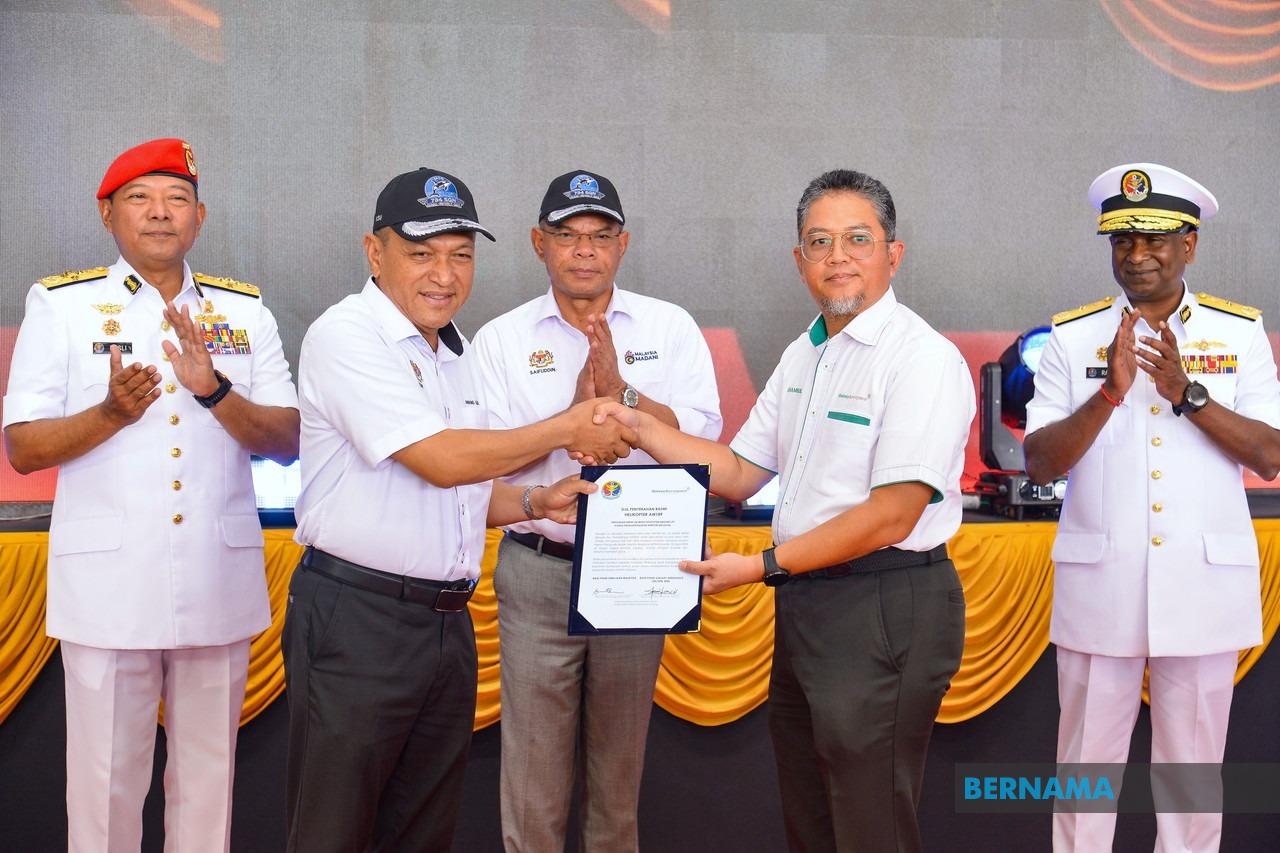
Home Minister Datuk Seri Saifuddin Nasution Ismail has underscored the necessity for comprehensive examination of two pressing national security and humanitarian matters: the Security Offences (Special Measures) Act 2012 (SOSMA) and the country's approach to refugee management. Speaking following a ministerial discussion on both subjects, Saifuddin stressed that policymakers must move beyond simplistic assessments and instead adopt a multifaceted approach that incorporates evolving circumstances, on-the-ground realities, and forward-thinking solutions.
The Home Minister's intervention suggests growing recognition within government circles that existing frameworks require recalibration. Rather than implementing reactive measures that address only immediate crises, Saifuddin emphasized the importance of crafting policies that are intellectually rigorous, empirically sound, and appropriately calibrated to Malaysia's specific context. His emphasis on dialogue and structured deliberation indicates an acknowledgment that both SOSMA and refugee policy have become subjects of sustained public and expert contention, requiring elevated scrutiny to maintain legitimacy and effectiveness.
SOSMA, enacted in 2012, fundamentally reshaped Malaysia's security apparatus by replacing the Internal Security Act 1960 (ISA). The 1960 legislation had been criticized for decades as an instrument of excessive state power, particularly during periods of political turbulence. The newer statute was intended to modernize security protocols while ostensibly introducing greater oversight mechanisms. However, since its introduction, SOSMA has itself attracted considerable criticism from civil society organizations, legal scholars, and international human rights bodies, who contend that certain provisions remain overly broad and that implementation has sometimes proceeded without adequate safeguards for due process and individual liberties.
The act's provisions concerning detention, interrogation procedures, and evidentiary standards have generated persistent debate. Advocates for reform argue that the threshold for invoking SOSMA in particular circumstances remains ambiguous, potentially enabling authorities to classify cases as security matters when alternative legal frameworks might suffice. Meanwhile, security establishment officials maintain that the legislation remains essential for countering genuine threats. This fundamental disagreement underscores why Saifuddin's call for in-depth scrutiny carries significance—finding consensus requires acknowledging the legitimate concerns on both sides rather than dismissing either security imperatives or civil liberties protections.
The refugee question presents an equally complex challenge, particularly regarding the substantial population of Myanmar nationals who have entered Malaysia amid regional instability. Malaysia hosts one of Southeast Asia's largest refugee and irregular migrant populations, creating pressures on urban infrastructure, labor markets, and public services. The Myanmar situation has intensified these pressures considerably, with humanitarian organizations reporting increasing numbers of arrivals fleeing conflict and persecution. This influx has generated legitimate public concerns regarding resource allocation, community cohesion, and security screening processes.
Conversely, Malaysia maintains no permanent legal framework specifically governing refugee protection, instead managing these populations under immigration law and ad hoc administrative arrangements. International humanitarian organizations have criticized this approach as providing insufficient protections and creating precarious conditions for vulnerable populations. Refugees in Malaysia face restrictions on employment, education access, and freedom of movement, contributing to marginalization and underground economies. The tension between national security and humanitarian obligation remains unresolved, partly because previous policy discussions have treated these as competing rather than complementary objectives.
Saifuddin's insistence that neither issue should be examined through a single lens reflects sophisticated policymaking thinking. Regarding SOSMA, this implies reconsidering which offences genuinely warrant special measures, whether procedural protections require enhancement, and how oversight mechanisms might function more effectively. For refugee policy, it suggests recognizing that humane treatment and effective security screening are not inherently contradictory—indeed, transparent, lawful processes often enhance rather than diminish security outcomes by building community trust and enabling information-sharing.
The establishment of dedicated discussion platforms to examine these matters represents a positive institutional development. Malaysia has previously struggled with closed-door policy formulation that emerged without adequate public input, generating implementation difficulties and persistent legitimacy questions. Structured dialogue bringing together government officials, security experts, humanitarian practitioners, legal specialists, and affected communities can identify blind spots and surface practical implementation challenges that purely technocratic approaches overlook. Such engagement is particularly valuable for refugee policy, where frontline organizations often possess crucial ground-level knowledge about informal coping mechanisms, vulnerability patterns, and what protection measures communities actually require.
For Malaysia specifically, the outcomes of these policy reviews carry substantial implications. The country's standing as a regional economic hub and relatively stable democracy depends partly on its ability to manage security threats while maintaining rule of law and respect for fundamental rights. Neighboring nations observe Malaysian security practices closely, and policy directions here influence regional approaches to counterterrorism and migration management. Additionally, Malaysia's business community has interests in both terrorism prevention and labor market flexibility—concerns that sometimes pull in different policy directions regarding refugee employment restrictions.
Moreover, Southeast Asia faces unprecedented displacement pressures from Myanmar's instability, Afghanistan's transition, and potential future climate-driven migration. How Malaysia addresses refugee management will establish precedents affecting the entire region's approach to forced displacement. Neighboring countries including Thailand, Indonesia, and Bangladesh are watching to observe whether Malaysia can develop frameworks that balance humanitarian and security imperatives, offering a potential model for regional solutions.
The timing of Saifuddin's intervention also merits consideration. Over recent years, Malaysia has experienced terrorism-related incidents involving both international networks and domestic extremists, generating legitimate security concerns. Simultaneously, civil society has documented concerning instances of SOSMA application that arguably overreached legitimate security bounds. Rather than hardening positions, this moment offers opportunity for reconsidering both statutes comprehensively. Effective policy typically emerges from genuine attempts to understand opposing perspectives and identify where reasonable compromises exist.
Moving forward, the Home Ministry must ensure that policy review processes incorporate diverse expertise and perspectives, include transparency regarding evidence and assumptions underlying current approaches, and produce recommendations with clear implementation pathways rather than abstract principles. The refugee policy review particularly requires input from affected communities, humanitarian organizations with operational experience, and neighboring countries managing similar challenges. Success will be measured not by whether existing policies remain unchanged, but whether revised frameworks prove more effective at their intended purposes while commanding broader legitimacy.

