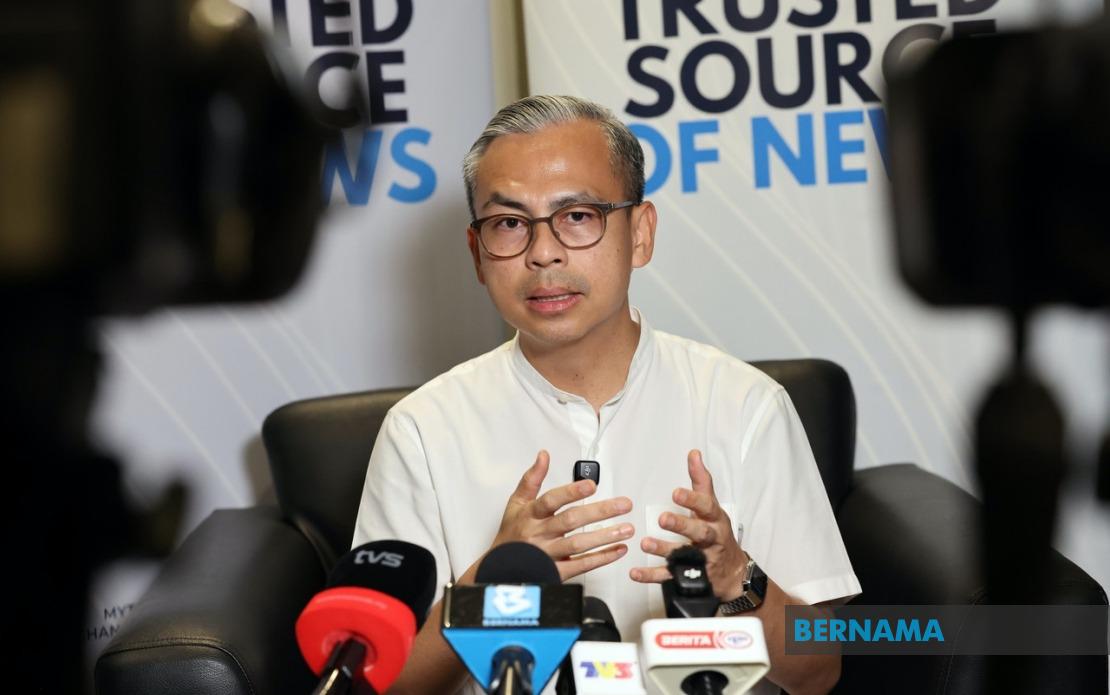
The battle against election-related misinformation has intensified with Communications Minister Datuk Fahmi Fadzil issuing a direct call for social media platform providers to heighten vigilance during the 16th Johor state election, scheduled for Saturday. Speaking at the Malaysian National News Agency operations centre in Johor Bahru on July 7, Fahmi expressed particular concern about the potential for false narratives to circulate on polling night itself, when voters are most vulnerable to last-minute manipulation through unverified claims about results or individual constituency outcomes.
Fahmi's intervention underscores a critical vulnerability in Malaysia's digital ecosystem: while major social media platforms have established policies prohibiting false information, the gap between policy and enforcement remains dangerously wide. The minister pointedly noted that platforms possess the mechanisms to prevent misinformation but have failed to deploy them with sufficient rigour, particularly during high-stakes political moments when false claims can spread exponentially within hours. This observation resonates across Southeast Asia, where elections in recent years have been undermined by coordinated disinformation campaigns that exploit platform algorithms designed to maximise engagement rather than verify accuracy.
The minister's concern about Saturday's polling night reflects a real and documented risk. Previous elections across the region have witnessed the rapid proliferation of fabricated results graphics, fake victory announcements, and misleading vote tallies that create confusion, suppress turnout, and undermine confidence in democratic institutions. In Malaysia's context, where social media penetration remains high and trust in traditional media has been eroded by years of political polarisation, the potential for online falsehoods to shape electoral outcomes cannot be dismissed as theoretical.
Fahmi emphasised that tackling misinformation requires a two-pronged approach. The first involves addressing the misuse of legitimate media logos and institutional branding to create credible-looking fake graphics—a tactic that has become increasingly sophisticated. The Malaysian Communications and Multimedia Commission and the Malaysian Media Council have already signalled willingness to collaborate on this front, recognising that fraudulent graphics mimicking news outlets carry particular weight with audiences seeking trusted information during elections. However, as Fahmi acknowledged, this represents only half the challenge.
The second and more intractable problem stems from organic user-generated content produced by ordinary netizens. Unlike professionally manufactured fake graphics, these posts are harder to identify and remove at scale. Citizens sharing election predictions, unverified exit polls, or emotional commentary about results lack any institutional verification mechanism, yet their posts can accumulate millions of shares before platform moderators intervene. This decentralised nature of misinformation creation poses a fundamental test for platform governance, particularly in developing democracies where moderation resources may be stretched thin and local context is often misunderstood by overseas content teams.
The minister called for accelerated action from platform providers, urging them to cooperate directly with the MCMC rather than waiting for complaints to surface. This proactive posture represents an evolution in Malaysia's approach to digital regulation. Rather than adopting a purely reactive stance—waiting for false content to cause damage before intervening—Fahmi's statement signals expectation that tech companies should anticipate risk vectors specific to electoral periods and deploy additional resources during these windows. Such an approach, if implemented consistently across platforms, could establish a precedent for managing digital risks during sensitive governance events.
Interestingly, Fahmi noted that no complaints regarding social media campaign misconduct had been filed with the MCMC thus far, suggesting that either violations remain unreported or the commission's complaint mechanisms are insufficiently accessible to the public. This gap itself warrants scrutiny, as misinformation often circulates widely before formal complaints are lodged, by which time viral spread has already occurred. The absence of complaints may also reflect low awareness among voters about where and how to report false content, pointing to a need for public education campaigns accompanying any regulatory effort.
Beyond content moderation, Fahmi's broader message addressed voter participation and turnout targets. The ruling coalition's focus on mobilising outstation voters—Johoreans working or studying elsewhere—reflects recognition that demographic shifts and labour mobility have transformed electoral dynamics in Malaysia. Public transport operators providing special packages for returning voters and requests to the retail and food and beverage sectors for flexibility represent practical attempts to reduce friction in the voting process. Similarly, granting leave to students from training institutes acknowledges that youth participation remains critical to democratic legitimacy.
Fahmi's stated target of exceeding 60 per cent voter turnout carries political significance. Higher turnout generally benefits ruling coalitions in Malaysian elections, but it also strengthens the democratic mandate of whatever party wins. The push to encourage parental involvement in persuading outstate children to return home reflects understanding that family networks remain influential in Malaysian political culture, despite social media's rising prominence. This layered approach—combining digital regulation, practical logistics, and social persuasion—illustrates the complexity of managing elections in an era of rapid technological change.
The timing of this intervention, one week before polling day, suggests that platform-related threats were considered sufficiently acute to merit ministerial attention. In most developed democracies, such concerns would be handled through established government-tech company liaison channels without public commentary. Fahmi's public airing of these anxieties may reflect either the newness of these coordination mechanisms in Malaysia or genuine alarm about platform unresponsiveness. The approach carries risks: it alerts bad actors to potential vulnerabilities and may prompt them to intensify misinformation efforts before enhanced monitoring takes effect.
For Malaysian voters and regional observers, this moment illustrates the contested space between platform autonomy and democratic governance. Social media companies operate globally under uniform policies but must navigate vastly different political cultures, regulatory frameworks, and threat environments. Whether platforms can meaningfully accelerate misinformation response within a week remains uncertain, but Fahmi's intervention has clearly signalled that Malaysian authorities will hold tech companies accountable for their performance during this critical electoral moment.

