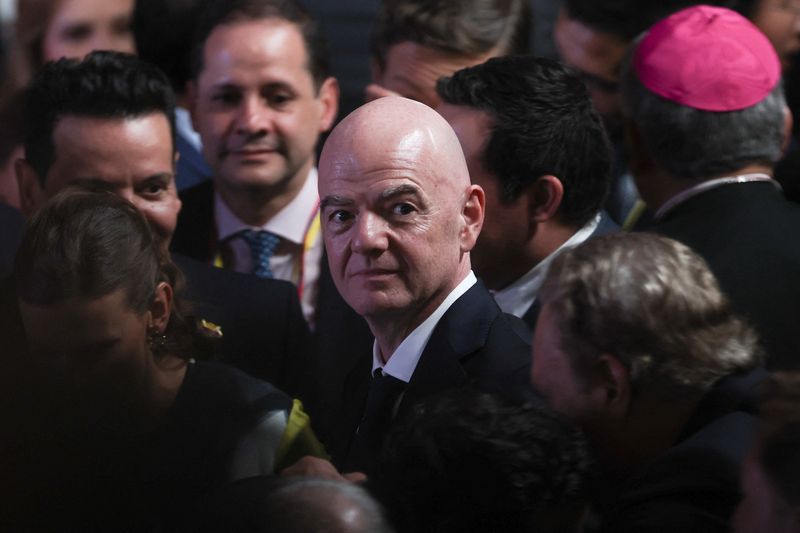
Three of world soccer's most powerful regional confederations are actively considering a no-confidence vote to remove FIFA President Gianni Infantino from office, according to senior officials familiar with closed-door discussions. UEFA, representing Europe's football associations, the AFC covering Asia-Pacific nations, and CONCACAF, which oversees North and Central American plus Caribbean football, are preparing what would mark the first-ever formal challenge to a sitting FIFA president in the organization's 122-year history. The dramatic escalation reflects deepening fury within the global soccer establishment over Infantino's handling of a controversial investment proposal that would have sold private equity stakes in World Cup commercial rights—a plan that collapsed amid accusations of poor governance and lack of transparency.
The genesis of this political crisis traces to Infantino's ill-fated proposal to establish a new FIFA commercial entity and sell a minority stake to external investors. Under the scheme, this entity would have controlled the lucrative rights to the World Cup, soccer's premier competition. While FIFA projected this arrangement could generate over $15 billion in revenue during the 2023-2026 financial cycle, with the bulk arriving during the 2026 World Cup hosting year, the three major confederations viewed the privatization plan as fundamentally compromising the sport's governance. Their opposition centered on FIFA's failure to properly consult member associations, inadequate transparency, and what they characterized as a breach of institutional trust. The proposal also would have offered individual member associations up to $20 million in capital for infrastructure development, coaching programs, national team operations, competitions, grassroots initiatives, and women's football—financial incentives that ultimately failed to overcome the confederations' governance concerns.
Under FIFA's constitutional framework, triggering an Extraordinary Congress—necessary to conduct a no-confidence vote—requires either approval from the FIFA Council or a written petition from at least one-fifth of FIFA's 211 member associations specifying their agenda items. Once formally convened, an Extraordinary Congress must occur within three months, with each member association casting one vote. However, FIFA's current statutes contain no explicit mechanism for removing a sitting president through such a process, meaning a successful no-confidence vote would represent uncharted legal and procedural territory. One anonymous senior figure involved in the discussions characterized the situation starkly: "There is no way out. Either he goes the peaceful way and decides not to stand in March or he goes the hard way," alluding to the March 2027 scheduled presidential election where Infantino has announced his intention to seek reelection.
Infantino's recent weeks have been turbulent beyond the confederation revolt. Kevin Lamour, FIFA's Chief Operating Officer, departed unexpectedly after publicly criticizing the investment proposal and asserting that FIFA staff had been "deceived" about the project's true nature, describing it as driven by a single individual. His exit prompted FIFA Vice President Sandor Csanyi to withdraw support for Infantino, calling Lamour's departure the "final straw" in a cascade of governance failures. These high-level departures signal cracks within FIFA's own executive apparatus, though FIFA has provided no formal explanation for Lamour's exit. The organization did issue an apology to member associations for handling mistakes related to the proposal, but this mea culpa has done little to restore confidence among the confederation leadership.
Yet despite these setbacks, Infantino maintains substantial structural advantages and appears far from politically isolated. Africa's confederation CAF, led by President Patrice Motsepe, has publicly pledged continued support, with Motsepe stating that Infantino retains African backing and that his future should be decided through electoral processes. Six Arab football associations, including Qatar and Morocco—a co-host of the 2030 World Cup—issued public statements supporting Infantino following FIFA's crisis management meeting in Morocco. This geopolitical coalition suggests that while Europe, Asia-Pacific, and the Americas have turned decidedly against the FIFA president, he retains the backing of significant voting blocs, particularly among developing nations whose associations may view FIFA revenues as crucial financial support.
Confederation leaders and their allies face genuine tactical uncertainty about whether a no-confidence vote constitutes a winning strategy or a self-defeating gambit. One senior source familiar with ongoing deliberations acknowledged that while the three confederations favor a no-confidence approach, strategic concerns persist: an unsuccessful challenge could paradoxically strengthen Infantino by demonstrating his continued electoral support among FIFA's general membership, thereby boosting his positioning ahead of the scheduled March 2027 presidential contest. This calculation explains why some observers have urged potential challengers to step forward publicly and present alternative visions for FIFA's leadership rather than relying on a procedural maneuver that might misfire. The November 18 nomination deadline looms, yet no credible rival candidate has publicly emerged, leaving the anti-Infantino coalition without a positive alternative to rally behind.
Beyond FIFA's official voting structures, pressure is mounting from powerful clubs and commercial stakeholders. The European Football Clubs organization, chaired by Paris Saint-Germain president Nasser Al-Khelaifi and representing more than 800 professional clubs across Europe, has aligned with UEFA and other confederations in advocating for FIFA leadership change. EFC has explicitly warned that its member clubs may boycott future Club World Cups—both men's and women's tournaments—unless FIFA addresses governance concerns and fundamentally restructures its relationship with the professional club sector. While clubs wield no formal vote within FIFA's Congress, their commercial and sporting leverage is immense, as their players, squads, and broadcast power generate the gravitational center of modern soccer.
Malaysian and Southeast Asian soccer administrators face particular relevance from this FIFA crisis given the AFC's active participation in confederation discussions. The conflict over World Cup investment, governance standards, and presidential accountability will likely shape the AFC's priorities and influence whether member associations in the region prioritize alignment with European reform agendas or African-based incumbent support. For football development authorities in Southeast Asia, the outcome could affect infrastructure funding availability, tournament hosting opportunities, and the confederation's political weight in future FIFA decision-making.
Sponsor sentiment, despite the magnitude of this governance crisis, has remained conspicuously muted. Michael Payne, a former International Olympic Committee marketing executive, noted that while FIFA sponsors are reportedly questioning the organization's ability to transition smoothly from World Cup success to institutional stability, none have issued public critiques. Payne observed that sponsors are puzzled by FIFA's apparent capacity to shoot itself in the foot following the demonstrable success of World Cup operations. The absence of sponsor condemnation may reflect commercial calculations about protecting relationships with the winning incumbent, or alternatively, sponsors' expectation that FIFA's internal processes will eventually resolve the crisis through normal democratic means.
The broader strategic dilemma confronting Infantino's opponents remains complex. An election victory for the incumbent—even with a narrow 51 percent majority achieved through support from smaller member associations—would leave FIFA's leadership operationally difficult if virtually all major soccer powers oppose the president's authority. Conversely, the lack of a named challenger creates a potential vacuum should Infantino be ousted, leaving confederation leadership without a predetermined transition plan. Whether the three confederations proceed with no-confidence proceduralism, pivot toward supporting a declared candidate, or negotiate some negotiated resolution involving Infantino's voluntary withdrawal remains uncertain, but the fundamental breach of trust within FIFA's governance structure shows no signs of healing.

