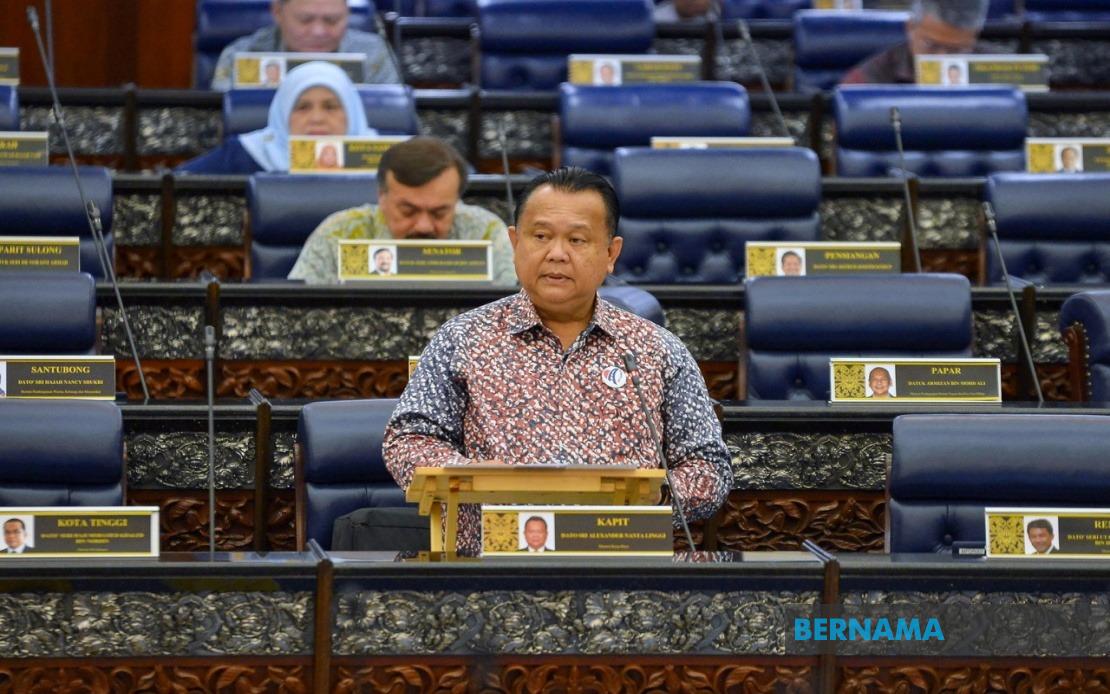
The Smart Lane initiative deployed across selected sections of the North-South Expressway has emerged as a meaningful tool in combating Malaysia's persistent highway congestion problem. Since the scheme's launch in 2023, the Malaysian Highway Authority (LLM) has documented traffic congestion reductions ranging from 30 to 50 per cent along participating stretches, Works Minister Datuk Seri Alexander Nanta Linggi revealed during parliamentary proceedings on July 2. The system represents a targeted response to congestion during the nation's busiest travel periods, particularly around peak commuting hours and major festive holidays when millions of Malaysians take to the roads.
The Smart Lane concept, which allows certain vehicle categories to utilise sections of the expressway with greater flexibility, has undergone continuous technical evaluation to verify its safety credentials. These assessments have become increasingly important given public concerns about the system's compatibility with vulnerable road users, particularly motorcycle riders who constitute a substantial proportion of Malaysia's road traffic. The government's investment in real-time monitoring infrastructure reflects recognition that congestion solutions must not compromise the safety and security of all expressway users, regardless of vehicle type.
Data collected across the monitoring period presents a compelling case for the initiative's effectiveness during periods of high demand. The accident statistics from the first five months of 2023 offer particular reassurance: across 12 Smart Lane locations on regular weekdays, only 36 accidents were recorded—a figure that becomes more meaningful when contextualised against the volume of vehicles utilising these routes. More significantly, the proportion of motorcycle-related incidents in Smart Lane zones proved substantially lower than comparative figures from conventional expressway sections, contradicting initial predictions that shared lanes would increase rider vulnerability.
The apparent safety advantage may stem from behavioural modifications among road users. Motorcycle riders navigating Smart Lane sections demonstrate heightened caution, according to analysis of incident patterns, suggesting that awareness of sharing dedicated lane space encourages more defensive riding practices. This phenomenon illustrates how infrastructure design and regulatory clarity can positively influence user behaviour, a principle increasingly recognised in traffic safety research across Southeast Asia where motorcycle usage dominates transport patterns.
However, the government's analysis identified that human factors remain the primary accident causation element within Smart Lane zones. User non-compliance with operational protocols—including improper use of emergency lanes, sudden lane changes without adequate notice, and unauthorised vehicle stops—accounts for the majority of recorded incidents. This finding underscores that technological and infrastructural improvements, while necessary, remain insufficient without concurrent public education campaigns emphasising adherence to specific Smart Lane operational requirements. The gap between infrastructure capability and user compliance represents a persistent challenge across Malaysia's road network.
Recognising this limitation, the Malaysian Highway Authority has instituted comprehensive long-term oversight mechanisms. Highway concessionaires operating PLUS expressway sections now face mandatory requirements to engage independent road safety auditors who conduct comprehensive stage five road safety audits at five-yearly intervals. This regulatory framework ensures that Smart Lane operations undergo rigorous external scrutiny rather than relying solely on internal monitoring systems. The audit scope encompasses broader safety considerations beyond motorcycle-specific concerns, reflecting a holistic approach to expressway safety management.
The government has simultaneously accelerated investment in advanced traffic monitoring technology to enhance real-time operational oversight. Closed-circuit television networks integrated with artificial intelligence algorithms now enable the Malaysian Highway Authority and expressway concessionaires to detect traffic density fluctuations instantaneously and coordinate traffic management responses accordingly. These technological enhancements transform highway management from reactive problem-solving into predictive congestion mitigation, potentially extending the benefits currently observed across Smart Lane zones to neighbouring expressway sections.
For Malaysian road users, these developments carry practical implications. Commuters and long-distance travellers can anticipate continued expansion of Smart Lane schemes as evidence of their effectiveness accumulates, potentially reducing journey times on major corridor routes. However, this optimism must be tempered with the recognition that safety compliance remains individual responsibility; the technology and systems enable safer travel but cannot eliminate risk entirely. Riders and drivers must familiarise themselves with specific Smart Lane operational parameters before encountering them during peak travel periods.
The Smart Lane initiative also holds broader relevance for Southeast Asian transport planning. As regional nations grapple with rapid urbanisation and exponential traffic growth, Malaysia's systematic approach to congestion management—combining innovative lane usage protocols with rigorous safety validation—offers a potentially replicable model. The emphasis on data-driven decision-making and continuous improvement cycles reflects international best practices in highway management, positioning Malaysia among regional leaders in transport infrastructure innovation despite ongoing traffic challenges.
Looking forward, the government's commitment to expanding CCTV networks with AI capability suggests that Smart Lane deployment will likely extend beyond current PLUS expressway sections. The combination of improved traffic flow, documented safety performance, and demonstrated public acceptance creates conditions favouring broader implementation. Nevertheless, sustained success depends on maintaining the discipline of regular safety audits, public compliance with operational guidelines, and continuous technological refinement. As Malaysian highways absorb ever-increasing traffic volumes, initiatives like Smart Lanes represent pragmatic infrastructure solutions that acknowledge the nation's transport realities while prioritising user safety.

