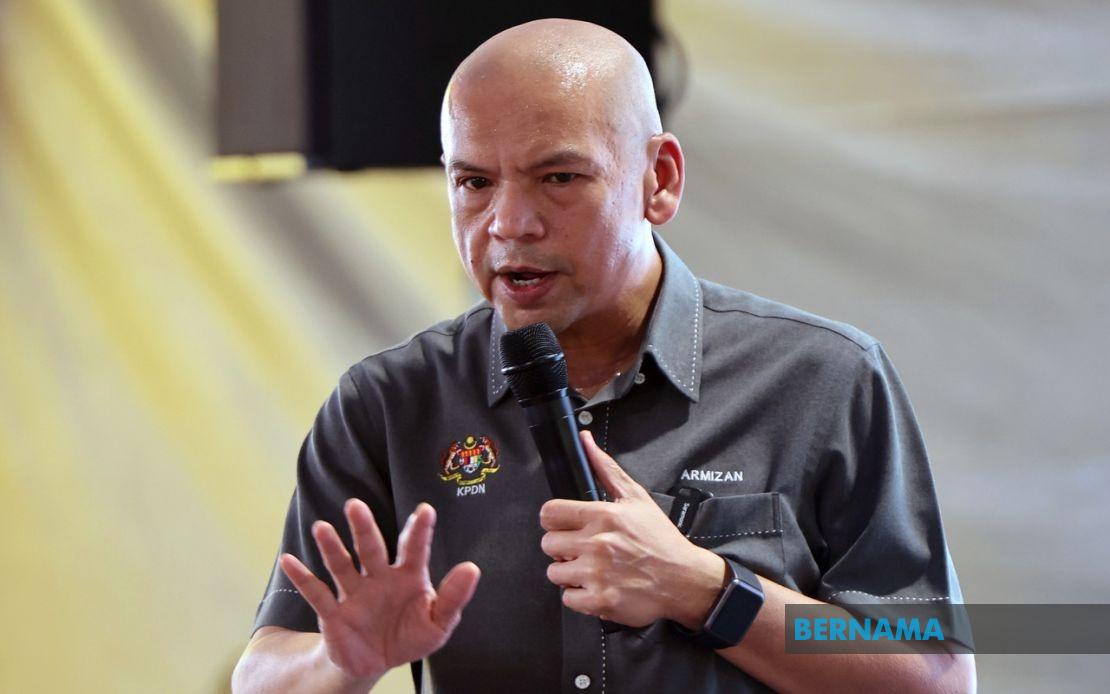
Malaysia's government has introduced a targeted assistance measure to support small enterprises struggling with rising operational expenses, offering monthly diesel quotas of 300 litres through fleet cards to micro-entrepreneurs and local contractors. The initiative, announced by Domestic Trade and Cost of Living Minister Datuk Armizan Mohd Ali in Kota Kinabalu on July 18, represents a flexible extension to the diesel subsidy programme that commenced nationwide on July 1, with particular emphasis on Sabah, Sarawak, and Labuan.
The subsidy mechanism targets partnerships and sole proprietorships that operate commercial vehicles but fell outside existing support frameworks. Armizan explained that these smaller business operators previously encountered obstacles when attempting to claim assistance using individual names, creating a gap in the government's coverage. By providing fleet-card based access to subsidised fuel, the administration aims to address the economic pressures facing micro-entrepreneurs whose profit margins are significantly eroded by fuel costs. This represents a pragmatic recognition that many small business models do not fit neatly into the two primary sectors covered under the Subsidised Diesel Control System, namely public transport operators and commercial goods or essential consumer supply transporters.
The decision to extend support reflects cabinet-level approval for what the ministry characterises as an immediate intervention measure. Armizan emphasised that the government recognises the particular vulnerability of small-scale operators who lack the regulatory classification and bargaining power of larger transport companies. These businesses utilise vehicles for essential commercial purposes—ranging from building contractors operating pickup trucks to small logistics operators managing local deliveries—yet remain unprotected by formal subsidy categories. The 300-litre monthly quota represents a meaningful, albeit partial, reduction in fuel expenditure for operators managing modest vehicle fleets.
Implementation of the broader subsidy programme in Sabah, Sarawak, and Labuan has prompted the government to emphasise flexibility in its approach. Rather than treating the July 1 rollout as final, Armizan signalled openness to operational refinements, provided they satisfy three overarching criteria. The administration remains committed to safeguarding consumers' cost-of-living pressures, preventing subsidy leakage through fraud or misuse, and managing the fiscal burden on government finances. These competing considerations underscore the complexity of targeted subsidy design in a federal system where regional circumstances vary substantially.
To strengthen operational delivery, particularly in remote interior regions of Sabah and Sarawak where registration and verification systems remain underdeveloped, state-level agencies will assume expanded roles in managing eligibility verification and preventing ineligible claimants from accessing assistance. This decentralised approach acknowledges that federal agencies cannot effectively reach all eligible beneficiaries without local institutional partnerships. The emphasis on interior areas reflects recognition that geographical isolation often compounds economic disadvantage, making rural and indigenous communities especially vulnerable to subsidy programme failures that favour urban centres with established infrastructure.
Armizan's announcement came during his official attendance at the MADANI Foster Village Project launch at Kampung Sekalong in Menumbok, where his ministry allocated RM500,000 for comprehensive village infrastructure development. The connection between diesel subsidy expansion and rural infrastructure investment is not coincidental—both initiatives address the government's commitment to narrowing development gaps between urban and rural communities. The Kampung Sekalong project encompasses construction of a multipurpose community hall, road upgrades, culvert repairs, solar lighting installation, and village landmark development, with completion targeted within two to three months.
This marks the third MADANI Foster Village initiative undertaken by Armizan's ministry, following earlier projects in Mukim Kaiduan, Papar in 2024 and Mukim Tikam Batu, Kedah in the previous year. The broader MADANI programme seeks to provide foundational amenities—water supply, electricity, road access, streetlighting, internet connectivity, and community facilities—that remain absent in many Malaysian villages. The programme reflects federal policy recognition that subsidy interventions alone prove insufficient; sustainable economic development in underserved areas requires parallel infrastructure improvements that enable small businesses to operate efficiently.
For Malaysian small business operators, the diesel subsidy expansion offers tangible relief at a moment when global fuel volatility continues pressuring transportation and logistics costs throughout Southeast Asia. The 300-litre monthly allowance, while not eliminating fuel expenses entirely, provides meaningful assistance for operators managing modest fleet sizes typical of local contractors and small trading enterprises. Fleet card administration offers operational simplicity compared to alternative distribution mechanisms, reducing bureaucratic friction while enabling government tracking of subsidy utilisation.
The subsidy programme's emphasis on preventing leakage reflects lessons from previous subsidy initiatives that experienced distortion through fraud, smuggling, or unauthorised use. By restricting access to registered vehicle owners operating legitimate business entities, the government attempts to balance accessibility with fiscal responsibility. The focus on Sabah, Sarawak, and Labuan—where targeted subsidies were specifically implemented—recognises these regions' geographical distinctiveness and higher transport costs relative to Peninsular Malaysia.
Regional implications extend beyond Malaysia's borders, as the subsidy approach may influence discussions within ASEAN regarding fuel price management and support mechanisms for small-scale transport operators across Southeast Asia. Several regional neighbours face similar pressures regarding transport-dependent economies and politically sensitive fuel pricing. Malaysia's targeted approach, rather than blanket subsidies, represents an alternative model that other developing economies within the region increasingly consider.
The government's three-pillar framework—balancing consumer welfare, leakage prevention, and fiscal sustainability—establishes a template for subsidy governance that recognises trade-offs inherent in assistance programmes. This approach suggests that future subsidy iterations may incorporate additional targeting mechanisms or verification technologies to enhance efficiency. For small business stakeholders, the current allocation offers immediate support whilst the government develops longer-term structural solutions addressing underlying cost pressures affecting Malaysian enterprises.
Looking forward, the success of this expanded diesel subsidy scheme will depend substantially on effective implementation by state-level agencies, particularly in remote regions where administrative capacity remains constrained. The allocation of RM500,000 to Kampung Sekalong, coupled with wider subsidy expansion, signals the government's commitment to comprehensive rural economic support rather than piecemeal interventions. For Malaysian small contractors and entrepreneurs, these initiatives represent acknowledgment of their economic importance and recognition that sustainable development requires targeted, multi-faceted support addressing both immediate cost pressures and longer-term infrastructure deficiencies.

