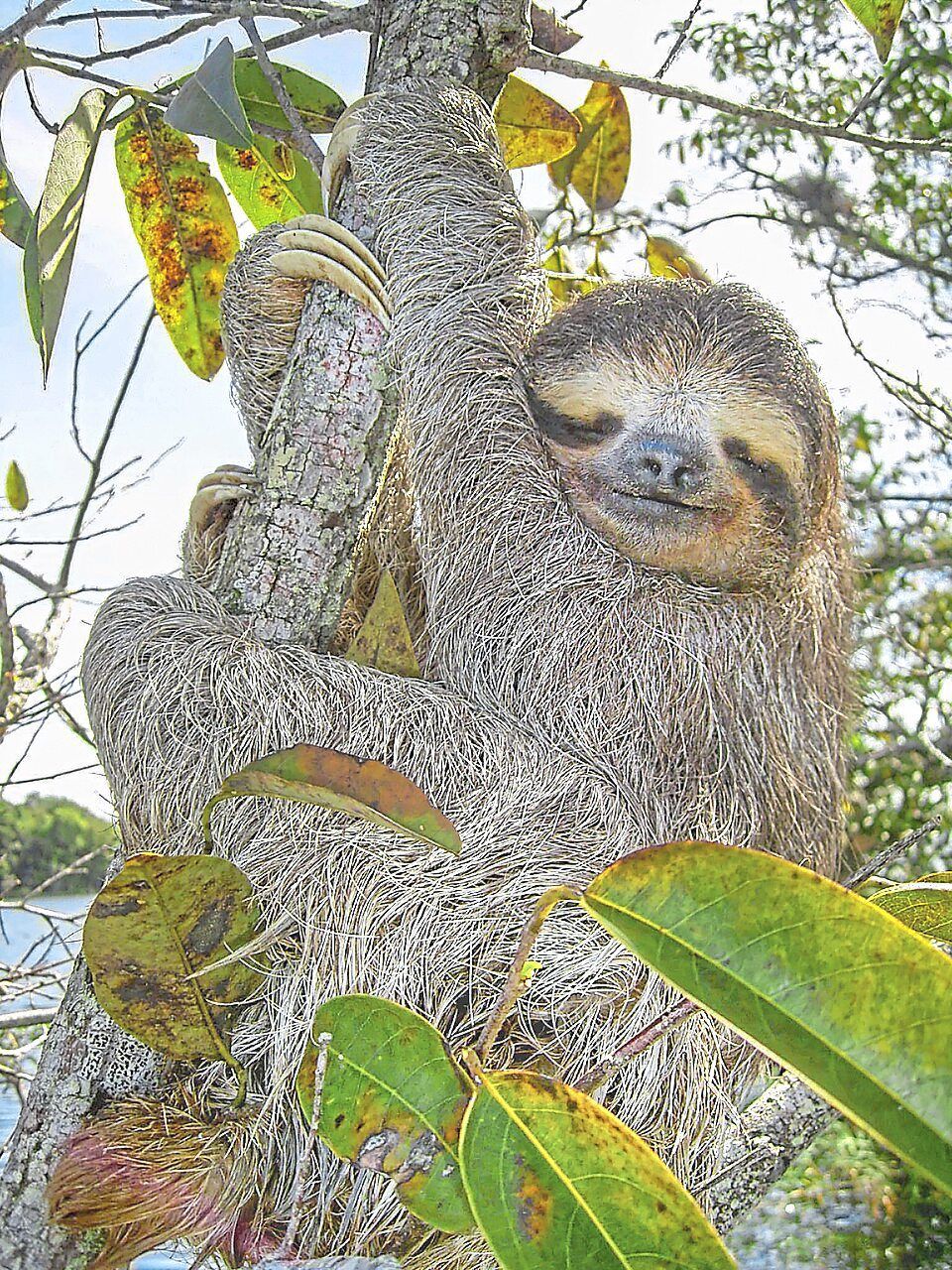
The complete genetic blueprint of the sloth may offer humanity a roadmap to healthier ageing and disease prevention, according to a landmark study that has examined the tree-dweller's DNA for clues about its famously sluggish metabolism. International researchers have identified unusual genetic sequences known as jumping genes that have remained active in sloths for roughly 30 million years, a rarity among mammals where such DNA elements typically become dormant over evolutionary time. This discovery opens a new avenue of investigation into how organisms maintain vitality despite operating on minimal energy reserves—a capability that could prove invaluable for understanding human health conditions and even preparing humans for extended space missions.
The research consortium, drawing expertise from the Wellcome Sanger Institute, the Leibniz Institute for Zoo and Wildlife Research (IZW), the Hospital Sirio Libanes and collaborating institutions, undertook the painstaking work of extracting and sequencing sloth DNA at the Max-Planck Institute for Molecular Cell Biology & Genetics in Germany. Scientists obtained tissue samples from a captive sloth and then employed comparative genomics—a technique that measures genetic differences across species—to systematically compare the sloth genome against those of related animals. The team selected anteaters and armadillos as comparison subjects, since all three species belong to Xenarthra, the singular group of placental mammals that originated exclusively in South America. By isolating what makes sloths genetically distinct, the researchers could pinpoint which evolutionary innovations underpin their extraordinary biology.
The analysis revealed that sloth cells harbour multiple copies of active transposable elements, more commonly termed jumping genes or transposons. These mobile DNA sequences possess a remarkable ability to relocate within the genome, copying themselves to new positions in ways that shape how cells function. Most mammals, including humans, retain some of these transposable elements inherited from distant ancestors, but they have become silenced through millions of years of evolution. Sloths, by contrast, maintain a suite of these jumping genes in a functional state. Tracing this genetic heritage backwards through evolutionary history, researchers determined that these transposons first appeared in the most recent common ancestor shared by all modern sloth species approximately 30 million years ago. What is striking is that rather than deteriorating or being discarded, these sequences have been carefully maintained as the sloth lineage developed and diversified.
The significance of this finding becomes apparent when scientists examine where these jumping genes cluster within the sloth genome. A substantial proportion cluster around mitochondria-related genes and metabolic pathways—the cellular infrastructure that converts nutrients into usable energy. Mitochondria function as the powerhouse of cells, orchestrating the biochemical reactions that fuel everything organisms do, from movement to thought to healing. Sloths possess the slowest metabolism of any living mammal, a trait that permits them to survive on a diet of nutrient-poor leaves whilst maintaining perfectly normal health and longevity. The connection between sloth jumping genes and mitochondrial function suggests that these genetic elements have played a crucial role in sculpting an organism capable of thriving under extreme energy constraints. Rather than being evolutionary baggage, these DNA sequences appear to represent an elegant biological solution to surviving in a world of limited resources.
The implications for human medicine are substantial and multifaceted. Many serious illnesses—including type 2 diabetes, age-related neurological decline, neurodegenerative disorders such as Parkinson's disease, and progressive muscle loss—share a common underlying problem: cells struggle to produce or utilise energy efficiently. These diseases increase dramatically with age as our cellular machinery falters. A deeper understanding of how sloth cells manage energy production at such exceptionally low levels could illuminate new therapeutic approaches for these conditions. Dr Pedro Galante, a co-lead researcher at the Hospital Sirio Libanes in São Paulo, Brazil, emphasises that whilst much additional investigation is required, studying sloth cell lines in laboratory settings might provide a unique model for investigating how living systems adapt to persistently low-energy environments. This knowledge could eventually inform treatments for diabetes and age-related metabolic dysfunction, two conditions of pressing concern across Southeast Asia where rising living standards have coincided with epidemic levels of metabolic disease.
The research also hints at applications in critical care and medicine. Hospital patients suffering from severe illness, trauma, or those requiring organ transplants exist in precarious states where tissues and organs must be preserved outside the body for transplantation. Understanding how sloth cells maintain function despite minimal energy availability could revolutionise tissue preservation techniques, potentially extending the window for successful transplantation and saving lives. Similarly, the researchers note that their findings could inform medical approaches to long-duration space travel—a field where astronauts must consume limited resources whilst maintaining peak physical condition over months or years in microgravity environments. As space programmes globally plan extended missions to the Moon and Mars, insights into metabolic efficiency become strategically valuable.
Dr Marcela Uliano-Silva, senior bioinformatician and co-lead author at the Wellcome Sanger Institute, frames this discovery as part of a larger scientific philosophy: evolution itself has conducted billions of experiments across millions of species, each solving survival problems in ingenious ways. By studying animals with unusual adaptations, scientists can uncover biological mechanisms that the human lineage never required or developed. The sloth, moving leisurely through rainforest canopies, has evolved solutions to metabolic challenges that modern humans facing sedentary lifestyles and metabolic disorders might yet learn from. Genomics provides the tools to read these evolutionary experiments written in DNA, translating them into knowledge applicable to human health.
Dr Camila Mazzoni, head of evolutionary and conservation genomics at the IZW in Berlin, adds another dimension to the discovery by suggesting that sloths may have evolved genetic backup systems. When the primary machinery for energy production operates at minimal capacity, cells theoretically become more vulnerable to malfunction. Yet sloths remain robust. This paradox suggests that their jumping genes may encode proteins that provide redundancy or compensation, allowing sloth cells to function reliably despite their metabolic constraints. Evolution, in this view, has not merely slowed sloths down—it has armed them with multiple genetic safeguards ensuring that their extreme adaptation does not render them fragile.
The broader significance of sequencing the sloth genome extends beyond the specific discoveries about jumping genes and metabolism. It represents a growing recognition that genetic diversity across the animal kingdom holds treasure for human medicine and biology. With rapid advances in sequencing technology making it increasingly feasible and affordable to catalogue the genomes of diverse species, researchers can systematically mine this biological archive for insights applicable to human health. For Malaysian and Southeast Asian readers, this research underscores the value of biodiversity conservation not merely for environmental reasons but for its potential contribution to human welfare. The species that inhabit our region—from the primates of Borneo's rainforests to the unique mammals of Southeast Asia's jungles—may harbour genetic solutions to the health challenges facing our ageing populations and developing economies.

