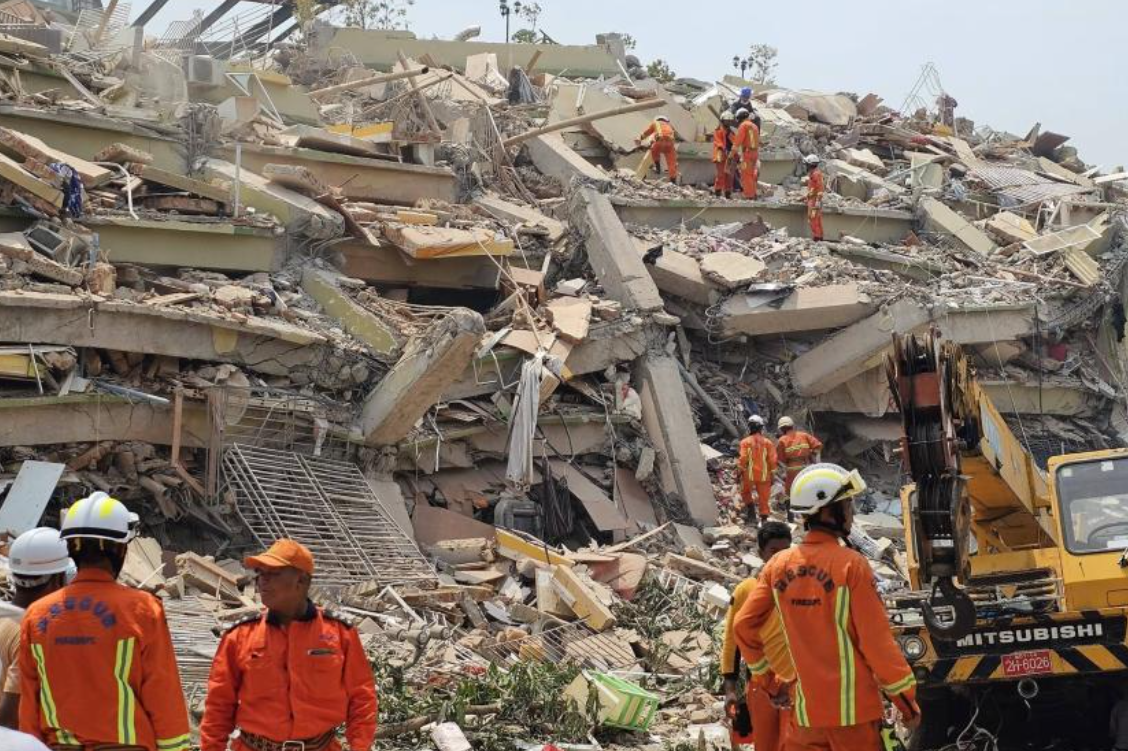
A Myanmar court has handed down a five-year prison sentence with hard labour to U Naing Htun Lin, owner of Sky Villa Condominium, following the catastrophic collapse of the 11-storey building during the Mandalay earthquake. The Aungmyaythazan Township Court delivered the verdict on June 23 under Section 304-A of the Penal Code, which addresses cases of death caused by negligence. The incident remains among the deadliest building failures attributed to the natural disaster, with recovery efforts at the site between 21st and 22nd Streets on 60th Street in Aungmyaythazan Township yielding more than 200 bodies.
The legal proceedings began when the No. (1) Area Police Station in Aungmyaythazan Township initially filed charges against Lin on February 10 this year. At that stage, the township court granted him bail, permitting him to remain free during the trial phase. However, the judicial landscape shifted dramatically on March 17 when the court revoked his bail status. This reversal resulted in Lin being remanded into custody, where he remained for the duration of the trial leading to his conviction and sentencing.
U Zaw Moe Aung, a staff officer from the Special Investigation Department, served as the plaintiff driving the criminal case forward through the judicial system. The investigation and subsequent prosecution centred on establishing negligence in the construction or maintenance of the building that precipitated its catastrophic failure. According to court officials, the Aungmyaythazan District Court has now requested the complete case file for judicial review under Criminal Revision Case No. 39Ka/2026, with documentation being transferred for this appellate examination.
The sentencing has not concluded the legal dispute, as both the prosecution and the defence are actively pursuing appeals and revision proceedings contesting the verdict. This suggests significant disagreement exists regarding either the culpability determination or the appropriateness of the five-year sentence imposed. The ongoing appellate processes indicate the case remains contentious within Myanmar's judicial framework, with further court decisions likely to unfold in coming months.
The Sky Villa condominium held particular significance as one of the structures built by NTL Construction Company, which was owned and managed by U Naing Htun Lin himself. This direct ownership and construction involvement placed Lin at the centre of accountability questions surrounding why this specific building failed so catastrophically compared to other structures that withstood the earthquake. The collapse raised fundamental questions about construction standards, structural integrity, and compliance with building codes in Myanmar's construction industry.
In the aftermath of the disaster, Lin's family and associates organised a series of commemorative ceremonies at a monastery pavilion on 19th Street in Mandalay. Daw Thet Thet Khine, Lin's wife and managing director of NTL Construction Company, participated prominently in these events. The ceremonies served as a public acknowledgement of responsibility, during which the group formally apologised to families of victims who perished in the collapse. These gestures suggested an attempt at reconciliation and acknowledgement of wrongdoing, though legal liability remained a separate matter for the courts.
Compensation payments emerged as another dimension of accountability pursued by Lin's family following the tragedy. Each family that lost a member in the Sky Villa collapse received 10 million kyats from the group, representing a material acknowledgement of the loss and suffering inflicted. Across more than 200 deceased individuals, these payments constituted a substantial financial commitment, though monetary compensation remains distinct from criminal culpability and judicial punishment.
The case carries significance beyond Myanmar's borders, particularly for Southeast Asian nations grappling with rapid urbanisation and construction oversight challenges. Building collapses resulting from inadequate structural integrity or negligent construction practices represent a persistent risk in developing economies where regulatory frameworks may lack rigour or enforcement mechanisms. The conviction of a developer-owner sends a message that criminal accountability can attach to those responsible for structures that fail and cause mass casualties, even in jurisdictions where enforcement has historically been inconsistent.
For Malaysia, the case offers relevant lessons regarding building code enforcement and developer accountability. While Malaysian construction standards and regulatory oversight are substantially more developed than in Myanmar, the principle of holding developers and owners criminally responsible for catastrophic failures remains applicable. Malaysian authorities and construction industry stakeholders can observe how Myanmar's courts navigate questions of negligence liability in building collapses, particularly regarding what standard of care applies to developers and what threshold of causation connects construction decisions to loss of life.
The earthquake that triggered Sky Villa's collapse exposed vulnerabilities in Mandalay's building stock and construction practices more broadly. The concentration of casualties in particular structures suggested significant variation in how different buildings were designed, constructed, and maintained. This variation underscores the importance of consistent, enforced building standards and regular structural assessments, particularly in earthquake-prone regions. The disparities in building performance during seismic events often reveal deficiencies in construction quality, material sourcing, or design implementation that can be addressed through regulatory improvement.
Lin's five-year sentence represents a relatively modest penalty in criminal law terms, particularly when measured against the scale of loss involved. This modest sentencing may reflect either the judiciary's assessment of Lin's degree of culpability relative to other contributing factors, or it may suggest limitations in how Myanmar's legal system processes cases involving mass casualties from structural failures. The length and nature of the sentence will likely feature prominently in the pending appeals and revision proceedings, with defence counsel potentially arguing the sentence is excessive and prosecution potentially contending it is insufficient given the death toll.
The resolution of this case through the appellate processes will establish precedent within Myanmar's legal system regarding developer accountability for building failures. As Myanmar continues reconstruction efforts following the earthquake and contemplates strengthened building codes, the judicial outcomes in cases like Sky Villa's collapse will influence how the construction industry responds to regulatory pressures and how developers weigh investments in structural safety against other business considerations.

