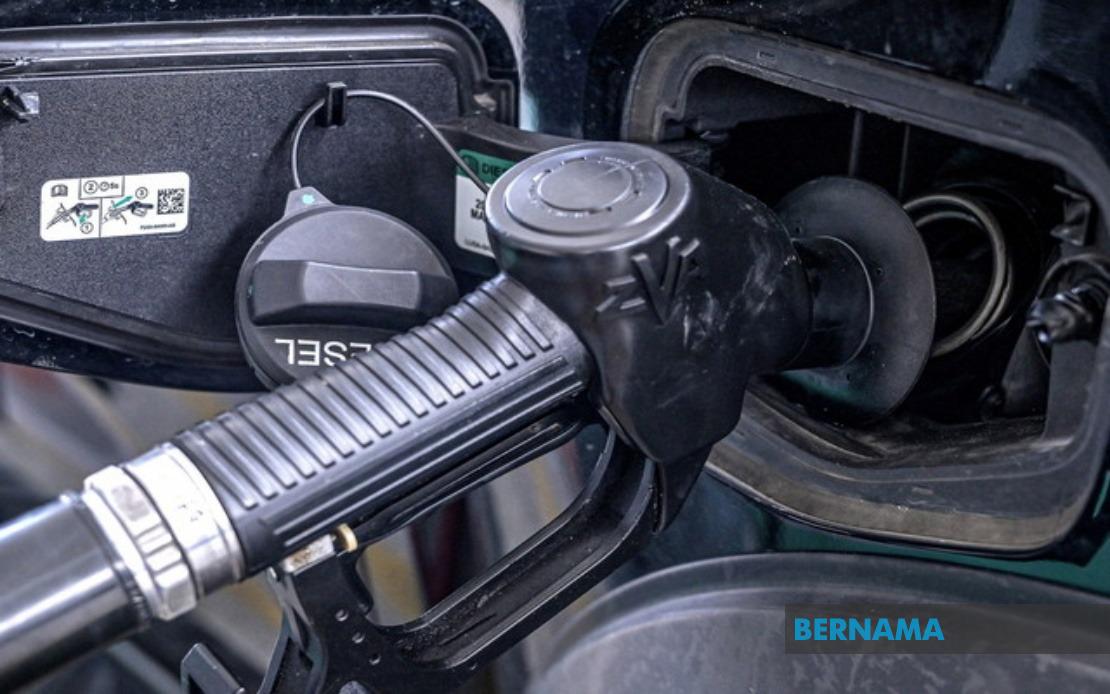
The Malaysian government has initiated a new phase of its Subsidised Diesel Control System (SKDS) targeting small enterprise operators, with applications commencing from today. Domestic Trade and Cost of Living Minister Datuk Armizan Mohd Ali announced the expansion, which specifically covers business-owned vehicles including jeeps and pickup trucks registered to micro and small enterprises. This marks a strategic broadening of the subsidy scheme, which previously focused on public transportation and commercial goods distribution sectors.
Companies and sole proprietors seeking to benefit from the programme must first ensure their vehicles meet stringent registration requirements. The vehicles in question must be formally classified as business vehicles under the Company Private Use (AE) category within the Road Transport Department's (JPJ) MySikap system. This categorisation distinguishes commercial-use vehicles from private automobiles and forms the foundation for determining eligibility. Without this proper classification, applicants cannot proceed regardless of their business standing.
The ownership structure of the business itself carries equal importance in the qualification process. Eligible entities must be registered either as sole proprietorships or partnerships with the Companies Commission of Malaysia (SSM), or with relevant local authorities in the East Malaysian states of Sabah and Sarawak. This requirement deliberately targets informal and formalised small-scale operations rather than larger corporate structures, aligning the subsidy scheme with the government's broader small and medium enterprise (SME) development agenda.
Approved applicants will gain access to subsidised diesel beginning July 15, contingent upon receiving approval and obtaining a fleet card. The fleet card system enables the government to track fuel purchases and maintain control over subsidy distribution, preventing misuse and ensuring funds reach intended beneficiaries. This infrastructure distinguishes the SKDS from blanket subsidy approaches and represents an effort to marry assistance with accountability.
The government has deliberately positioned this expansion to complement earlier phases of the SKDS rollout. Public land transport operators, including bus companies and taxi services, already participate in the subsidy framework. Similarly, the consumer goods transport sector—encompassing logistics and distribution businesses—had previously gained access to subsidised diesel. By now incorporating private vehicle users from micro and small businesses, the administration seeks to achieve more comprehensive coverage across the transport ecosystem.
Prospective applicants can lodge their requests through the MySubsidi portal, a centralised digital platform designed to streamline the application process. The online mechanism reduces bureaucratic friction and allows business owners from Peninsular Malaysia, Sabah, and Sarawak to submit documentation without physical office visits. The government has encouraged early applications, suggesting that processing may face capacity constraints or that later submissions could miss beneficial implementation timelines.
For Malaysian small business owners operating in sectors reliant on regular transportation—including delivery services, trading operations, and service-based enterprises—the SKDS expansion carries significant cost implications. Diesel represents a substantial operational expense for many micro-enterprises, particularly those in rural areas where fuel costs may be compounded by limited competition and distribution logistics. Even modest subsidy rates can meaningfully improve profit margins and business sustainability for operators working with minimal capital buffers.
The targeting of sole proprietorships and partnerships reflects policy recognition that Malaysia's economy depends heavily on informal and semi-formal business structures. While large corporations can absorb fuel cost volatility through diversified operations and financial reserves, small business owners often operate with tight cash flow cycles. A sustained fuel price shock can threaten viability. The SKDS mechanism attempts to stabilise operating costs for this constituency, potentially reducing the economic incentive for informal businesses to formalise or expand.
Regional competitiveness considerations also underpin the subsidy approach. Southeast Asian neighbours employ various mechanisms to support transport operators and small business sectors. Malaysia's SKDS positions domestic enterprises competitively against regional counterparts, particularly for businesses engaged in cross-border trading or regional logistics. The subsidy effectively lowers operational costs relative to competitors in countries without equivalent support mechanisms.
The mechanics of the fleet card system merit attention from implementation and fraud-prevention perspectives. By tying diesel access to registered vehicles and approved operators, authorities can generate real-time consumption data and identify anomalous purchasing patterns. This approach contrasts with indirect subsidies or price controls, which lack granular visibility. However, effective monitoring requires integration across multiple government systems—JPJ vehicle records, SSM business registrations, and fuel retail networks—creating coordination dependencies that can affect programme efficiency.
Business owners considering applications should verify their current vehicle registrations and organisational status before submitting. Misalignments between JPJ classifications and SSM records, or failures to update registrations after business structure changes, frequently cause application delays or rejections. Given the July 15 effective date for subsidy activation, addressing administrative prerequisites promptly maximises the window for uninterrupted benefit access.
The expansion demonstrates evolving government thinking regarding targeted versus universal subsidy approaches. Rather than subsidising diesel for all consumers, Malaysia concentrates support on economically strategic sectors and business categories. This selectivity preserves fiscal resources while theoretically achieving greater developmental impact per ringgit spent. Whether the targeting proves sufficiently precise and whether implementation execution matches policy intent will determine the scheme's ultimate effectiveness in strengthening Malaysia's small business ecosystem.

