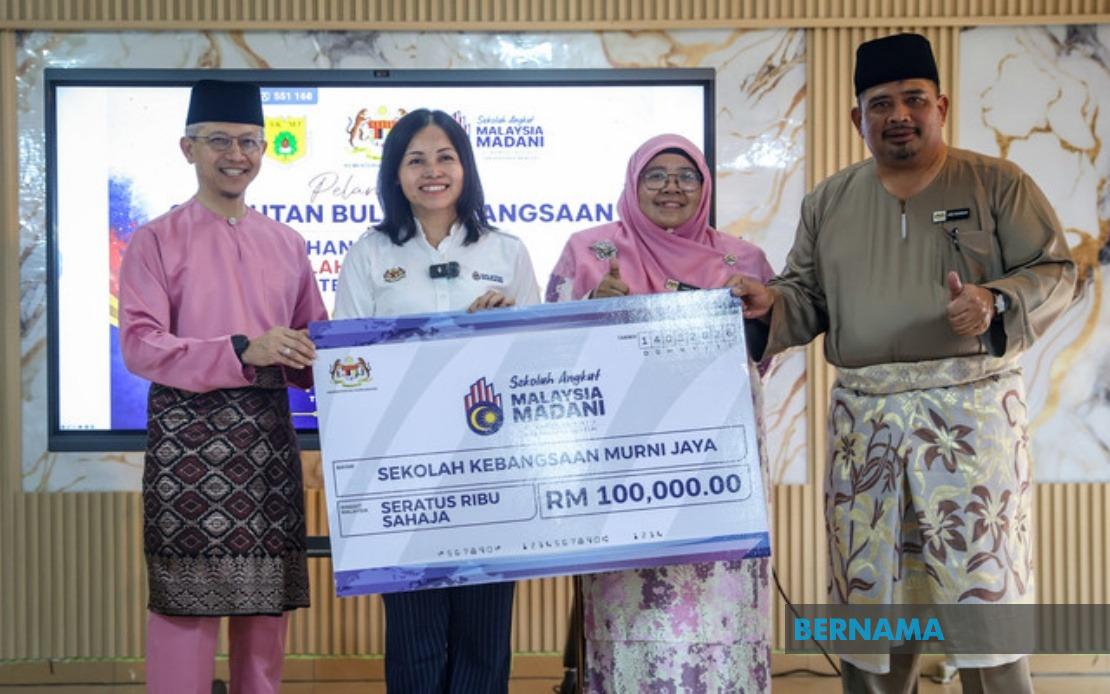
SK Murni Jaya in Kulai has been awarded RM100,000 through the Ministry of Communications' MADANI Adopted School programme, marking a significant investment in educational infrastructure for the institution. Deputy Communications Minister Teo Nie Ching presented the grant during a funding handover ceremony held at the school in Layang-Layang, with work on facility upgrades expected to reach completion by October this year.
The financial allocation represents a comprehensive approach to modernising the school's physical and technological environments. Four new school signboards will enhance campus visibility and identity, while two Smartboards designated for the hall and resource centre will introduce interactive learning capabilities to larger gatherings and research activities. The ministry has also committed to upgrading the school's lighting infrastructure and beautifying the main hall, improvements that directly affect the daily experience of students and staff occupying these shared spaces.
Digital infrastructure forms a central pillar of the investment strategy. Ten iPads earmarked for the computer laboratory will expand access to modern educational technology, enabling students to engage with contemporary digital tools essential for academic development. Complementing this technological push, a Robot Sumo set has been designated specifically for STEM and vocational and technical education activities, reflecting Malaysia's broader national emphasis on building competencies in science, technology, engineering and mathematics fields.
Audio-visual capabilities receive dedicated attention through the installation of a new public address system, while climate control improvements through two additional air-conditioning units will enhance classroom comfort and learning conditions. These investments acknowledge that the physical learning environment substantially influences student concentration and educational outcomes. The canteen facilities have not been overlooked, with an additional RM20,000 allocated to provide 19 new tables and chairs, reflecting recognition that dining spaces serve as important social and nutritional hubs within school communities.
Deputy Minister Teo emphasised strict implementation timelines aligned with Ministry of Finance guidelines. SK Murni Jaya's October completion deadline provides a focused target for project delivery, while other schools participating in the MADANI Adopted School scheme must ensure full implementation of their allocated funding throughout the calendar year. This structured approach aims to prevent budget carry-over and ensure that resources translate into tangible improvements benefiting students promptly.
The MADANI Adopted School programme reflects the communications ministry's strategic investment in educational advancement as a foundation for national development. By directing ministry-specific funding toward schooling infrastructure, the government strengthens the connection between communications policy and human capital formation. Digital literacy and technological proficiency have become prerequisites for economic participation in Malaysia's increasingly technology-driven sectors, making such investments particularly relevant for institutions serving communities in growing urban centres like Kulai.
For SK Murni Jaya specifically, the infusion of resources addresses immediate operational needs while positioning the institution for enhanced competitive standing among local schools. Modern Smartboards and digital devices attract educationally-conscious families, while investments in environmental amenities and safety systems—such as improved lighting and air-conditioning—demonstrate institutional commitment to student wellbeing. The Robot Sumo equipment signals alignment with national skills development priorities, enabling students to develop problem-solving capabilities applicable to emerging industries.
The timing of such allocations carries broader significance for Malaysian education policy. As schools nationwide compete for resources and pupils, strategic injections of ministry funding create visible improvements that extend beyond immediate beneficiaries. News of successful infrastructure upgrades at SK Murni Jaya may encourage other educational institutions and communities to engage with government support mechanisms, while demonstrating efficient deployment of public funding to improve teaching and learning environments.
Within the Southeast Asian context, Malaysia's systematic approach to educational facility upgrading reflects regional trends toward technology-integrated learning and enhanced school amenities. Neighbouring countries pursuing similar modernisation pathways face comparable pressures to balance heritage preservation with contemporary educational needs. SK Murni Jaya's experience offers a model for how targeted ministry funding can address these tensions while maintaining focus on pedagogical outcomes and student experience.
The MADANI Adopted School initiative positions participating institutions as showcases for effective public-private collaboration in education. Through such programmes, schools gain access to capital funding that individual institutional budgets typically cannot accommodate, democratising access to modern educational infrastructure across socioeconomic strata. For communities in areas like Kulai experiencing rapid urbanisation, such interventions help ensure that educational quality keeps pace with demographic expansion and economic development.
Implementation success will ultimately determine programme effectiveness. Project completion by October will provide early evidence of execution capability, while the broader rollout across other MADANI Adopted Schools throughout the year will demonstrate systemic capacity for translating budget allocations into infrastructure improvements. Monitoring outcomes will inform future iterations of the programme and guide resource allocation decisions for subsequent funding cycles.

