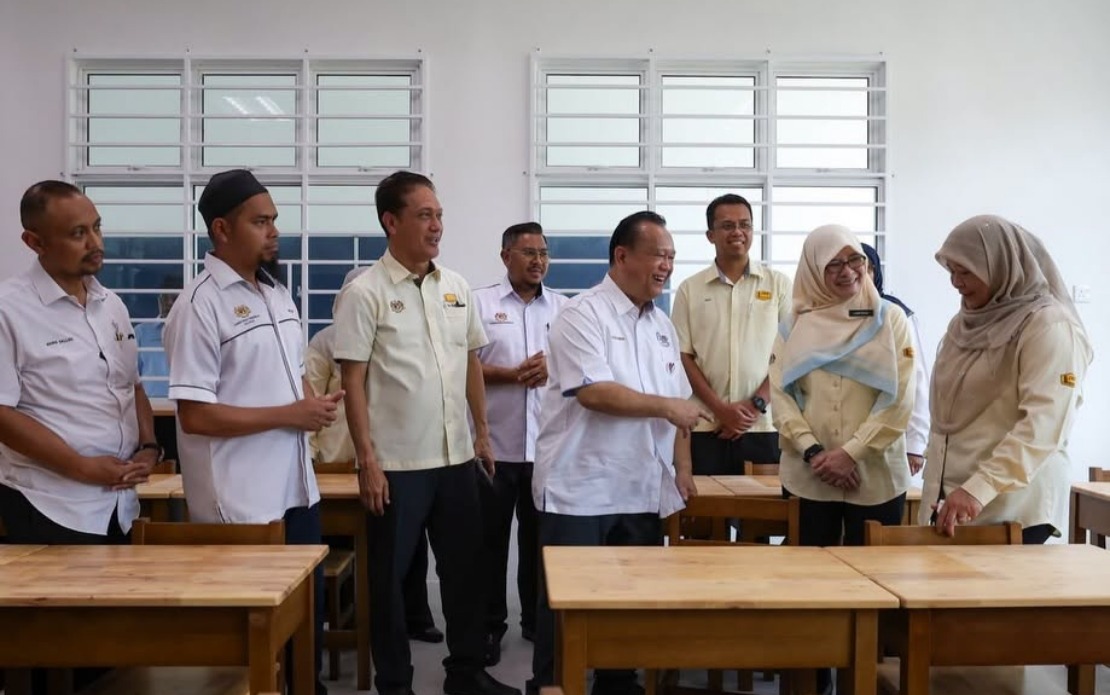
A major infrastructure project at SK FELDA Kota Gelanggi 1 in Jerantut has set a benchmark for efficient government construction delivery after completing its RM7.998 million rebuild nearly a year ahead of the original timeline. Works Minister Datuk Seri Alexander Nanta Linggi highlighted the achievement during a handover ceremony, noting that the project finished on June 26 when it was not scheduled for completion until May 2, 2027—representing an impressive acceleration of over 300 days with no request for time extension.
The accelerated completion reflects a broader push within Malaysia's public works sector to improve project delivery standards and demonstrate fiscal responsibility. When groundwork began on January 13 of the previous year, the construction schedule appeared typical for a renovation of this scope and complexity. However, the contractor's performance and coordination with government authorities resulted in what Nanta described as "very good achievement," signalling that major building projects need not habitually overrun their deadlines.
The reconstruction programme involved comprehensive physical expansion and modernisation of the school's infrastructure. A new academic block was constructed containing three additional classrooms, a dedicated science laboratory, and a health room—addressing immediate spatial constraints that had limited the school's educational capacity. Complementing these general facilities, a specialised block was built to house the Sekolah Kebangsaan's Special Education Integration Programme (PPKI), representing a significant commitment to inclusive education within rural Pahang.
The PPKI block addresses a critical educational need for vulnerable student populations. The facility was specifically engineered with accessibility features and resources tailored for pupils with special educational needs, benefiting approximately 17 students currently enrolled in the programme. This component underscores the government's intent to move beyond basic infrastructure improvement toward creating learning environments that accommodate diverse student abilities and ensure no child is marginalised by inadequate facilities.
Nanta used the occasion to reinforce accountability standards across Malaysia's construction sector, emphasising that contractors must treat the defect liability period—typically spanning months after handover—as a binding commitment rather than a formality. He instructed contractors present to address all structural or operational complaints swiftly and comprehensively, preventing minor issues from accumulating into larger maintenance problems. This supervisory approach reflects international best practices wherein defect management during the post-handover window directly determines infrastructure longevity.
The Public Works Department received corresponding directives to maintain rigorous post-handover oversight at the school and similar facilities across Pahang. Nanta stressed that sustained monitoring would verify that all structures remain safe, remain in serviceable condition, and continue meeting the technical standards specified in original project briefs. This reflects recognition that completion ceremonies represent midway points in facility lifecycles rather than final achievement milestones.
The Jerantut project arrives amid broader infrastructure activity across Pahang state involving rehabilitation of other deteriorating school buildings. Nanta expressed optimism that additional ongoing reconstruction programmes throughout the state could replicate the Kota Gelanggi 1 success, suggesting that earlier-than-planned completion may become standard rather than exceptional. This aspirational framing implies that current projects elsewhere in Pahang are tracking ahead of baseline timelines, potentially indicating systematic improvements in coordination and resource allocation.
For rural communities in Pahang, timely infrastructure completion carries particular significance. Rural schools frequently operate with constrained teaching spaces and outdated facilities, directly constraining pedagogical quality and student outcomes. The completion of the Kota Gelanggi 1 project ahead of schedule means affected students gain access to improved environments sooner, potentially translating into measurable academic gains within the current academic cohort rather than delayed benefits.
The project's success also carries implications for how federal agencies approach infrastructure partnerships with state governments and contractors. Demonstrating that RM7.998 million projects can execute without cost overruns or timeline slippage may encourage more ambitious capital investment schedules, provided similar disciplinary frameworks govern subsequent undertakings. The model of holding contractors accountable to firm timelines while providing adequate resources presents a counter-narrative to Malaysia's historical experience with infrastructure delays.
For Southeast Asia more broadly, efficient public school reconstruction represents a policy priority as regional governments confront ageing educational infrastructure. Malaysia's demonstration that significant facilities can be delivered ahead of schedule without compromising quality standards offers a replicable template for neighbouring nations facing similar challenges. The integration of inclusive education provisions—specifically the PPKI facilities—further positions the project as a holistic approach to educational infrastructure that balances capacity expansion with accessibility commitments.
Moving forward, sustained attention to post-delivery maintenance and defect rectification will ultimately determine whether the Kota Gelanggi 1 project represents enduring value or merely temporary satisfaction. Nanta's emphasis on continued monitoring suggests awareness that construction completion and facility durability remain distinct achievements. If the school's facilities remain in serviceable condition over subsequent years with minimal emergency repairs, the project will retrospectively validate the government's confidence in accelerated timelines and serve as a genuine model for replication across Malaysia's substantial portfolio of school infrastructure requiring modernisation.

