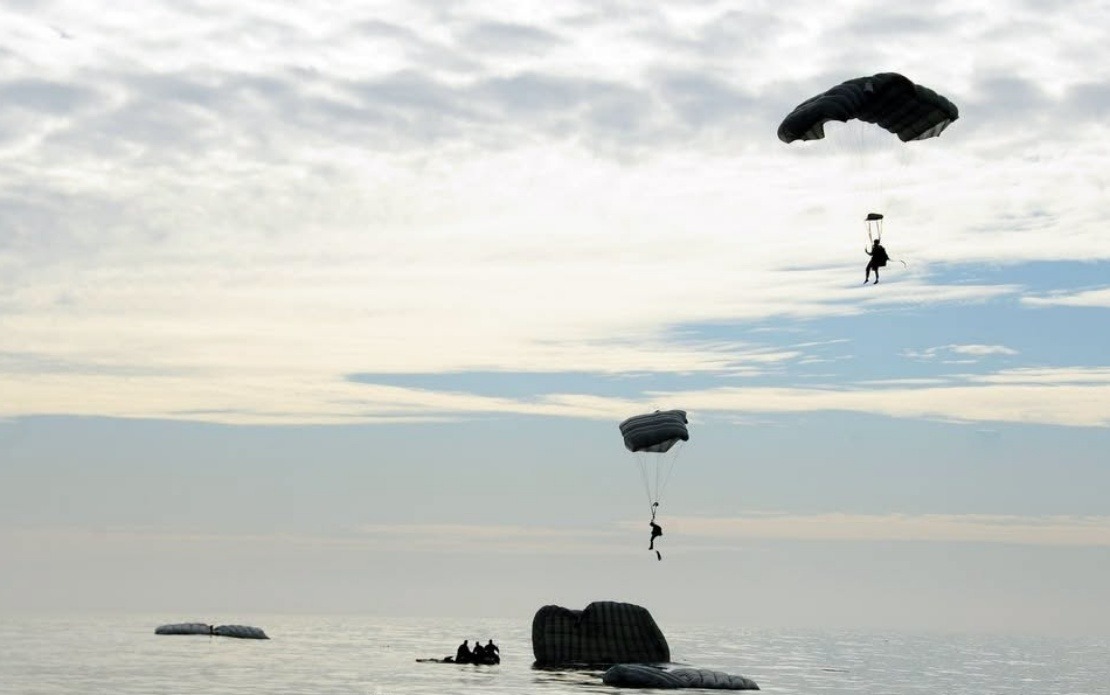
The Royal Malaysian Navy successfully recovered six Special Warfare Forces (PASKAL) personnel who had drifted at sea after becoming separated from their intended landing zone during a free-fall parachuting exercise in the South China Sea. The incident occurred during what the RMN described as a routine training operation, with all personnel retrieved safely by an RMN vessel after being located in the water.
According to the Navy's account, the exercise went awry when meteorological conditions deteriorated unexpectedly. The sudden shift in weather patterns significantly compromised visibility for the parachutists, making it impossible for them to locate and reach their designated drop zone. Such environmental challenges are not uncommon in Southeast Asian waters, where weather systems can develop rapidly and dramatically alter operational conditions within brief timeframes.
The RMN's swift response in locating and extracting the personnel underscores the importance of maintaining robust search and rescue capabilities alongside offensive and defensive military readiness. The recovery operation itself demonstrates the coordination and proficiency embedded within Malaysia's maritime defence structure, capabilities that are essential given the nation's extensive coastlines and maritime responsibilities across multiple sea zones.
Rather than treating the incident as a failure, the Navy reframed it as validation of PASKAL's training methodology. The unit's motto, Sentiasa yang Terbaik (Always the Best), reflects a philosophy centred on continuous improvement and preparation for unpredictable operational scenarios. The RMN statement characterised the personnel's ability to survive the unexpected situation and await recovery as evidence that rigorous, scenario-based training produces servicemen equipped to handle genuine emergencies.
PASKAL, one of Southeast Asia's most specialised maritime commando units, conducts training regimens deliberately designed to push personnel beyond conventional military standards. Free-fall parachuting exercises, particularly those conducted over maritime environments, represent some of the most challenging and hazardous training activities undertaken by military forces. The open-water component introduces additional survival elements beyond those required for land-based operations, necessitating expertise in water navigation, buoyancy management, and extended survival protocols.
The incident reflects broader realities facing military training operations in the region. While technological advances have improved situational awareness and safety margins, environmental factors remain difficult to predict with absolute certainty. Weather systems across the South China Sea and surrounding areas can shift rapidly, creating conditions that even experienced instructors cannot fully anticipate. This unpredictability makes rigorous training and personnel resilience invaluable assets.
From an institutional perspective, the RMN's handling of the situation—both operationally and in communications—suggests a military organisation confident in its capabilities and transparent about incidents that do not result in tragic outcomes. Malaysian defence authorities have generally adopted more forthcoming approaches to discussing training accidents compared with some regional counterparts, reflecting broader institutional maturity.
The recovery operation also indirectly highlights the RMN's surveillance and monitoring infrastructure across Malaysian waters. The ability to locate and retrieve personnel within what appears to have been a reasonable timeframe indicates functional systems for tracking exercise participants and responding to deviations from planned operations. Such capabilities are essential for a nation managing maritime security responsibilities across one of the world's busiest and most strategically significant waterways.
Looking forward, incidents like this typically trigger review cycles within military units. While the RMN has not detailed specific operational adjustments resulting from this exercise, such episodes commonly lead to refinements in weather monitoring protocols, communication procedures, contingency planning, and safety equipment specifications. These iterative improvements constitute the substance of professional military evolution.
The incident also carries implications for understanding Malaysia's military readiness more broadly. PASKAL's status as a world-class special operations unit depends partly on maintaining challenging training standards that occasionally produce uncommon situations. The balance between creating realistic, demanding training conditions and managing associated risks remains a perennial challenge for all advanced military organisations. Malaysia's ability to maintain this equilibrium while preserving personnel welfare reflects institutional capacity that supports the nation's broader defence interests.
For Malaysian readers and Southeast Asian observers, the episode demonstrates that even well-equipped, highly trained military forces operate within environmental constraints. The incident normalises the reality that sophisticated training can produce unexpected complications, and that institutional responses to such complications reveal organisational quality. The RMN's successful recovery operation, combined with its measured public communication, suggests an institution oriented toward transparency and professional standards that contribute to public confidence in national defence capabilities.

