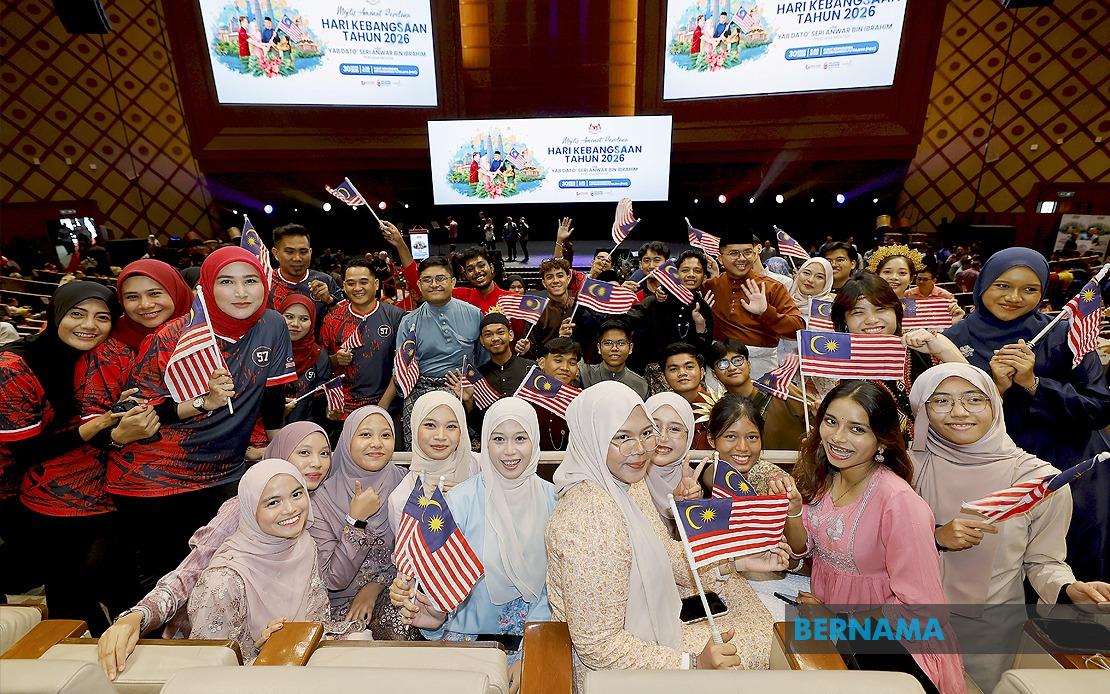
Prime Minister Datuk Seri Anwar Ibrahim unveiled six significant government initiatives during his National Day address in Putrajaya on August 30, with measures designed to reach across multiple layers of Malaysian society. The announcements span fuel subsidies, artificial intelligence accessibility, education funding, business support and microfinance expansion, reflecting a deliberate effort to address the needs of different demographic groups from the M40 middle class to aspiring entrepreneurs.
Among the most immediate measures is the restoration of the Budi MADANI RON95 subsidy programme allocation, which returns the monthly eligibility threshold to 300 litres from the previous 200 litres. For regular commuters and those dependent on vehicles for daily work, this adjustment translates into tangible savings at the pump. Mohd Aliff Rino, a 26-year-old company secretary working in the private sector, welcomed the move as particularly valuable for personal vehicle users who can now maintain their travel patterns without facing additional strain on household budgets. The restoration addresses longstanding feedback from the motoring public about the adequacy of fuel allowances in an economy where vehicular transport remains essential for most workers.
The government also announced a parallel increase to the Budi Diesel programme, raising the monthly quota from 300 litres to 400 litres. This expansion benefits commercial operators, smallholder farmers, and transport workers who depend on diesel vehicles for their livelihoods. The dual adjustment to both fuel subsidy programmes demonstrates recognition that energy costs ripple through multiple segments of the economy, affecting not only individual drivers but also the operational expenses of small businesses and agricultural producers.
A significant digital initiative targets the youth demographic through an artificial intelligence accessibility programme. The government will provide free three-month subscriptions to three AI applications for 100,000 young people aged 18 to 30 who complete training modules under the AI for the People initiative. This forward-looking measure addresses the growing importance of AI literacy in contemporary employment markets. Nur Liyana, a 24-year-old accounts assistant in the private sector, noted the relevance of this intervention given how AI tools have become integral to workplace productivity across professions. By democratizing access to these technologies during a critical career development phase, the programme aims to ensure younger Malaysians develop competencies that will be essential across most career paths.
Education infrastructure receives substantial new investment through a 50 per cent increase in school maintenance allocations for 2027, bringing the total to RM1.5 billion. This expansion addresses the deferred maintenance challenges plaguing many Malaysian schools, particularly in less affluent regions. Better-maintained facilities translate into improved learning environments and reduced operational disruptions for students and educators alike. The commitment demonstrates governmental recognition that quality infrastructure forms the foundation for educational outcomes.
Small business operators and informal sector workers benefit from multiple targeted interventions. The RM200 million Geran Sejahtera MADANI programme specifically assists hawkers, night market traders, and mothers running home-based businesses, a category of economic contributors often overlooked in mainstream business support schemes. This grant programme acknowledges the substantial contribution of informal economy workers to livelihoods and community vitality, particularly in urban and semi-urban areas where such activities provide essential services and employment.
Microfinance expansion represents another crucial support lever for aspiring entrepreneurs and small business owners. The government will increase microfinancing facilities by RM1 billion, bringing total 2026 funding to RM6 billion. For individuals lacking access to conventional banking credit, microfinance pathways enable business establishment and expansion. This injection of capital directly supports the bottom layers of the entrepreneurial ecosystem where innovation often begins and employment growth frequently occurs. Iqbal Hakimi Kaharudin, a 24-year-old procurement professional, recognized how fuel subsidy improvements combined with enhanced financing options create a more supportive operating environment for small business operators.
RegulatoryAdjustments embedded within the announcements further ease operational burdens on smaller enterprises. The e-Invoice exemption threshold has been raised from RM1 million to RM3 million in annual turnover, reducing compliance costs for growing companies. This change reflects pragmatic recognition that excessive regulatory demands can stifle entrepreneurial growth at precisely the stages when businesses require maximum operational flexibility. By allowing more companies to defer compliance with complex digital invoicing requirements, the measure preserves cash flow and administrative capacity that smaller organizations need for core operations.
The breadth of the six measures suggests a deliberate policy approach addressing economic challenges across income strata and business categories. Rather than concentrating support on a single demographic, the initiatives create interlocking support systems. Middle-class vehicle users benefit from fuel subsidies; young people gain skills through AI exposure; students learn in better-maintained facilities; informal economy workers receive grants; entrepreneurs access expanded microfinance; and small business operators face reduced regulatory burden. This multi-layered approach acknowledges that economic resilience depends upon sustaining purchasing power and opportunity across all segments simultaneously.
For Malaysian readers, these measures carry immediate household-budget implications while signaling governmental priorities regarding digital readiness, educational infrastructure and inclusive economic participation. The announcement timeline, with some measures taking effect in 2026 and 2027, also suggests medium-term fiscal planning that extends beyond immediate electoral cycles. Whether the funding mechanisms prove sustainable and whether the measures achieve their intended impact across all target groups will become clearer through implementation monitoring and evaluation in coming months.

