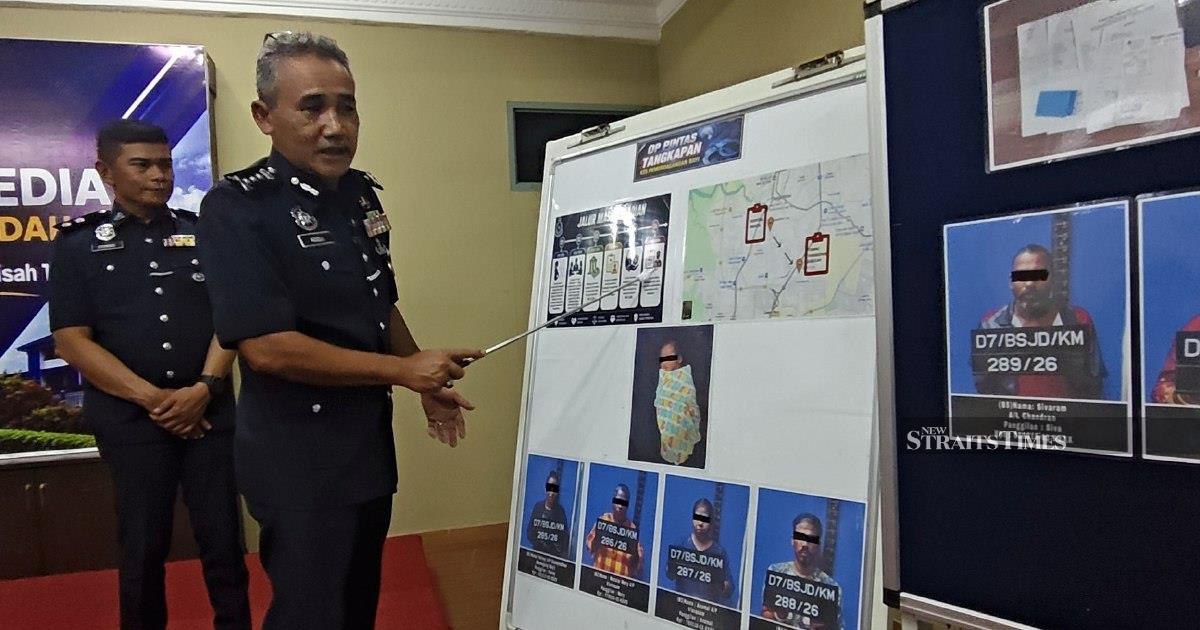
Police in Kedah have arrested six individuals suspected of involvement in baby trafficking, marking another significant law enforcement action against human trafficking networks in Malaysia. The arrests took place in the Kuala Muda district, with detainees including a woman who had delivered her infant just five days prior to her apprehension. The operation reflects ongoing efforts by Malaysian authorities to dismantle illicit networks that exploit vulnerable populations, particularly mothers and newborns.
The inclusion of a newly postpartum mother among those detained raises serious questions about the coercive circumstances surrounding the suspected trafficking ring. Cases involving recent mothers often point to exploitation of financially desperate women or those lacking adequate social support systems. Such patterns have been documented in previous trafficking investigations across Malaysia, where vulnerable mothers are sometimes manipulated or coerced into surrendering newborns through promises of financial assistance or under false pretences regarding adoption processes.
The Kuala Muda locality has previously featured in law enforcement operations targeting trafficking syndicates. The district's position in northern Peninsular Malaysia, combined with its proximity to various transportation routes, has historically made it susceptible to organised criminal activities. The concentration of multiple arrests in a single district suggests authorities may have dismantled a coordinated operation rather than isolated incidents, pointing to a more systematic trafficking infrastructure.
Baby trafficking remains a persistent challenge across Southeast Asia, with Malaysia serving as both a source and destination for illicit adoption and child exploitation networks. The vulnerability of newborns and the desperation of economically disadvantaged mothers create conditions that traffickers exploit. International organisations monitoring human trafficking have identified Malaysia as requiring sustained attention, particularly regarding protections for infants and young children who cannot advocate for themselves.
The detention of six individuals simultaneously indicates that police investigation yielded sufficient evidence to justify comprehensive arrests across the suspected network. Such coordinated action typically follows extensive surveillance and intelligence gathering, suggesting authorities possessed credible information about the trafficking operation's structure and participants. The success of such operations depends on information sharing between police units and coordination with other agencies monitoring vulnerable populations.
Maternal vulnerability factors play a crucial role in trafficking cases involving newborns. Women experiencing poverty, lacking family support, facing pressure from partners, or navigating undocumented status become targets for traffickers who promise financial relief or social services. Understanding these circumstances is essential for developing effective prevention strategies that address root causes rather than focusing solely on enforcement against perpetrators.
The investigation process will likely examine financial transactions, communications between suspects, and any documentation related to the alleged trafficking. Malaysian police have increasingly sophisticated tools for tracking such networks, though criminal organisations continue adapting their methods. Forensic analysis of digital evidence and financial records typically forms the backbone of prosecutions in trafficking cases, complementing witness testimony and physical evidence.
This incident underscores the importance of strengthened social safety nets for vulnerable mothers and awareness campaigns regarding trafficking risks. Healthcare workers, midwives, and maternal health providers occupy critical positions for identifying women at risk and connecting them with legitimate support services. Several states in Malaysia have enhanced coordination between health and welfare departments specifically to address trafficking prevention through better monitoring of high-risk pregnancies and postpartum periods.
International cooperation remains vital for addressing baby trafficking given the cross-border nature of many operations. Networks often involve coordination between multiple countries, with arrangements for transporting infants, falsifying documentation, and arranging illicit adoptions or other forms of exploitation. Malaysia's role in ASEAN and participation in regional law enforcement frameworks enables information sharing that disrupts trafficking routes before perpetrators successfully exploit vulnerable newborns and mothers.
The prosecution phase of these cases requires specialised handling, as trafficking investigations differ substantially from conventional criminal investigations. Prosecutors must establish that trafficking occurred rather than merely irregular adoption arrangements, which demands evidence demonstrating coercion, deception, or exploitation. Successfully prosecuting traffickers serves both immediate justice purposes and deterrent functions, signalling that such networks face serious legal consequences.
Moving forward, authorities must balance enforcement efforts with victim support, recognising that arrested mothers may themselves be trafficking victims. Malaysian law recognises the possibility that trafficking victims forced into criminality deserve protection rather than punishment, though implementing this principle consistently remains challenging. Rehabilitation services for affected mothers and arrangements for infant welfare require coordination between police, social services, and healthcare providers.
The case illustrates how trafficking networks often intersect with poverty, insufficient social protection, and limited access to legitimate reproductive healthcare and adoption services. Addressing these systemic vulnerabilities through improved maternal support programs, accessible healthcare, and transparent adoption frameworks offers long-term prevention possibilities beyond enforcement alone.

