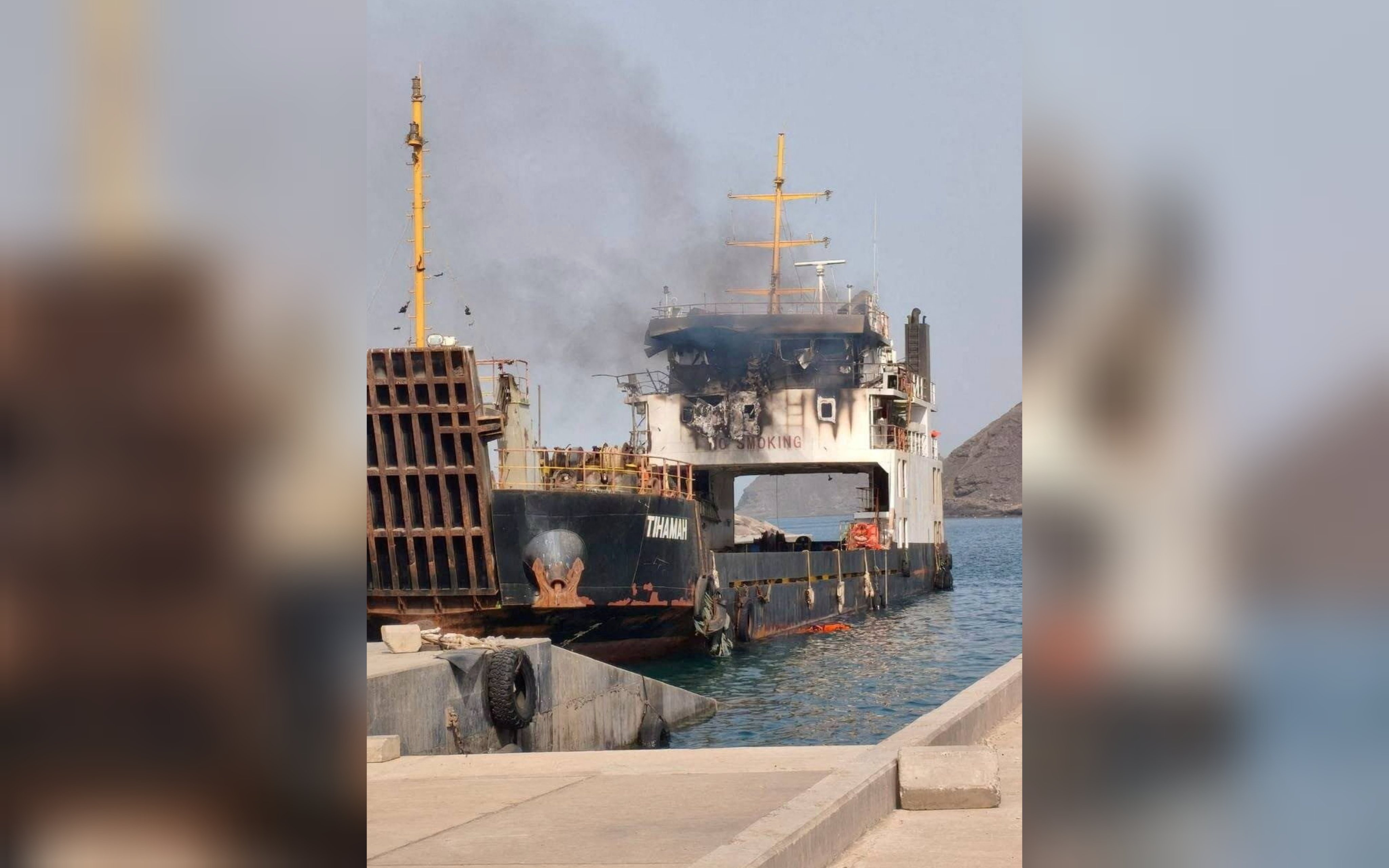
A devastating strike on a commercial cargo vessel has intensified concerns about maritime security in one of the world's most critical shipping corridors. Yemen's Houthis fired ballistic missiles at the Yemeni-flagged ship Tihamah as it navigated the Bab al-Mandeb Strait on Tuesday, killing six people and injuring ten others, according to Yemen's Coast Guard. The incident underscores the ongoing threat posed by the militant group to international commerce and humanitarian operations in the region, with implications that extend far beyond Yemen's borders into global supply chains and Southeast Asian trade routes.
The assault claimed multiple lives across different nationalities and military ranks. Four of the deceased were crew members—three Pakistani nationals and one Indonesian—while two additional casualties belonged to Yemen's armed forces 2nd Naval Brigade. Beyond the fatalities, seven crew members sustained injuries, alongside two coast guard personnel and one brigade member. In a ray of hope amid the violence, rescue operations managed to retrieve eleven sailors of Pakistani and Indonesian origin from the stricken vessel, though the Coast Guard's statement suggests the evacuation faced significant obstacles. The multinational composition of the crew highlights how regional conflicts directly impact workers from across Asia, creating humanitarian concerns for labour-sending nations including Pakistan and Indonesia.
The intensity of the assault reflects a deliberate military campaign rather than an isolated incident. Yemen's Transportation Ministry reported that Houthi forces unleashed three separate ballistic missile strikes against the Tihamah, with each impact setting portions of the vessel ablaze and causing substantial structural damage. The ministry's account reveals a particularly troubling dimension: as rescue teams scrambled to reach survivors in distress, the Houthis fired an additional missile explicitly aimed at disrupting the humanitarian effort. This tactic—deliberately targeting rescue operations—represents a dangerous escalation that compounds the human cost and demonstrates strategic intent to maximise casualties rather than achieve narrowly defined military objectives.
The choice of target carries significant symbolic and practical weight. The Tihamah was transporting food supplies, essential cargo destined for civilian populations struggling with acute food insecurity. Yemen's Transportation Ministry characterised the attack as a deliberate component of an escalating campaign targeting not only vessels but also ports and civilian infrastructure across government-controlled territories. By striking at food supply chains, the Houthis are weaponising hunger, creating artificial scarcity in regions where millions already face malnutrition and famine conditions. This strategy inflicts suffering on ordinary Yemenis while destabilising the fragile humanitarian equilibrium that international organisations work to maintain.
Yemen's government has formally condemned the assault as a terrorist crime, language reflecting the gravity with which officials view these recurring incidents. The characterisation goes beyond military rhetoric—it signals an intentional effort to delegitimise Houthi operations on the international stage and secure broader condemnation from the global community. The ministry explicitly warned that such attacks pose direct threats to food security for millions of Yemenis across both government-held and Houthi-controlled territories, a paradox that underscores how factional conflict ultimately harms the civilian population the Houthis claim to represent. The irony is particularly sharp given that food scarcity affects Houthi-controlled areas as severely as government territories.
The Bab al-Mandeb Strait occupies critical strategic importance in global maritime commerce. As the gateway between the Red Sea and the Indian Ocean, sitting opposite the Strait of Hormuz on the Arabian Peninsula, it functions as a vital artery for international trade flowing between Europe, the Middle East, and Asia. Disruptions to shipping through this corridor send ripples across global supply chains and increase insurance costs, fuel surcharges, and delivery times. For Malaysia and other Southeast Asian economies dependent on maritime trade, attacks in these waterways increase operational costs and create unpredictability in logistics planning. Shipping companies must now factor in heightened risks when routing cargo through the Red Sea, potentially rerouting vessels around Africa—a significantly longer and more expensive alternative.
The Houthi attacks represent a broader pattern of escalation that has characterised recent months. The Transportation Ministry's reference to an escalating campaign suggests these are not random strikes but components of coordinated strategy. Previous incidents have targeted various commercial vessels, with Houthi forces sometimes claiming attacks on ships they deem connected to Israeli or Western interests, while other strikes appear designed simply to disrupt shipping and create economic pressure. This unpredictability complicates maritime operations and makes waters around Yemen increasingly hazardous for commercial operators.
As of the time of reporting, the Houthi movement had not issued official commentary regarding this particular attack, maintaining a pattern observed in various previous incidents. This silence contrasts with instances where the group has explicitly claimed responsibility, suggesting either deliberate ambiguity about their involvement or coordination with other actors. The absence of acknowledgment does not diminish Yemen's government's confidence in attributing the assault to Houthis, based on the ballistic missile technology employed and tactical patterns consistent with known Houthi operations.
The humanitarian dimension of this attack extends beyond the immediate casualties to encompass broader food security implications. Yemen faces one of the world's most severe humanitarian crises, with the United Nations estimating that over 20 million people require humanitarian assistance. Food supplies represent life-sustaining cargo, and disruptions to shipping directly translate into hunger for vulnerable populations. By targeting food-carrying vessels, the Houthis effectively weaponise maritime commerce itself, turning supply chains into conflict zones and weaponising civilian suffering as a negotiating tool.
For Malaysia and regional stakeholders, this incident demonstrates how instability in the Middle East directly impacts Southeast Asian interests. Malaysian shipping companies operate vessels through the Red Sea regularly, and incidents like these raise insurance premiums, necessitate route modifications, and create operational unpredictability. The attack on a multinational crew including Indonesian and Pakistani sailors reflects how regional conflicts transcend national boundaries and affect workers from across Asia. Labour-sending countries must grapple with safety concerns for their nationals working aboard vessels operating in conflict zones.
The broader context reveals a deteriorating security environment that shows no signs of stabilisation. Despite various ceasefire attempts and international mediation efforts, the underlying conflict between Yemen's government and Houthi forces persists, with maritime commerce caught in the crossfire. International shipping organisations have urged enhanced security measures and greater international coordination to protect vessels transiting these vital waterways. For Malaysia's maritime industry and broader ASEAN shipping interests, the lesson is clear: Red Sea instability poses direct economic and safety implications that warrant serious strategic attention.

