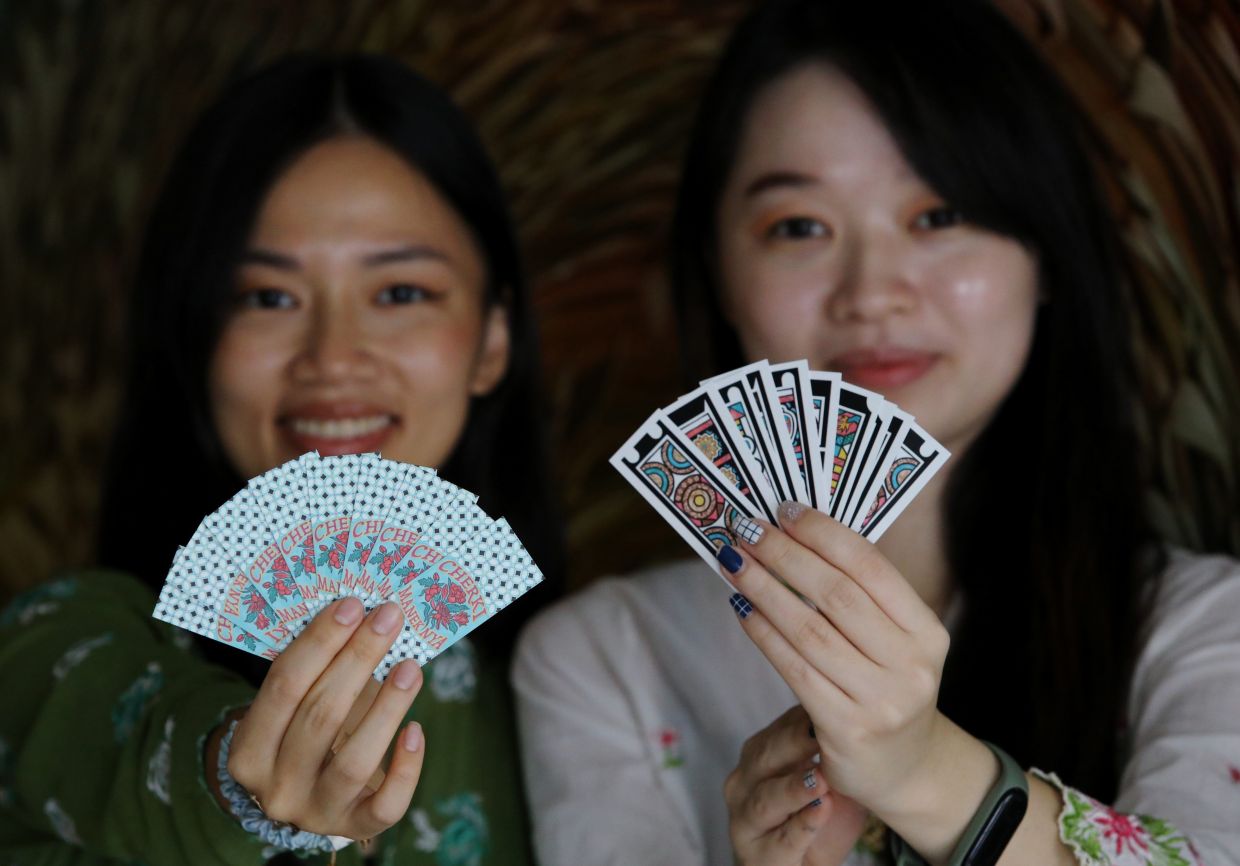
Two Melaka-born sisters are attempting to rescue a piece of Peranakan cultural heritage from obscurity by reimagining Cherki, a centuries-old card game that has largely vanished from the community's collective memory. Lee Swee Lin, 32, and her younger sister Lee Swee May, 31, have transformed the traditionally austere black-and-white cards into visually striking decks that marry contemporary design sensibilities with authentic Peranakan motifs and symbols, creating what they hope will appeal to digital-age audiences without compromising cultural authenticity.
The initiative represents a broader effort within the Peranakan community to preserve traditions as younger members drift away from cultural practices increasingly seen as outdated or incompatible with modern lifestyles. While Peranakan heritage is widely recognised through its distinctive beaded slippers, kebaya garments, ornamental tiles and distinctive cuisine – delicacies like ayam buah keluak and Nyonya laksa remain celebrated – many aspects of the culture, including traditional games and pastimes, have slipped into historical obscurity. The Lees' pivot toward Cherki reflects their conviction that overlooked elements of their heritage warrant revival and recontextualisation for contemporary audiences.
The sisters, who operate a Kuala Lumpur-based business producing handcrafted Peranakan beaded footwear and decorative items, drew direct inspiration from their paternal grandmother Deo Yeok Kim, who passed away recently. Growing up in their grandmother's Melaka household, both women absorbed Peranakan traditions through daily immersion – observing her meticulous adherence to cultural practices, listening to stories recounted in Peranakan dialects, and learning family recipes and beading techniques passed through generations. Swee Lin attributes much of what she understands about her cultural identity to these formative years spent watching her grandmother actively live her heritage rather than merely discussing it.
Cherki itself represents a significant component of Peranakan recreational culture, though one largely forgotten by contemporary practitioners. The game employs two decks totalling 60 cards featuring 30 distinct patterns, traditionally organised into three suits – coins, strings and myriads – with numerical values ranging from one to nine, supplemented by three special cards historically known as white flower, red flower and old thousand. Gameplay mechanics bear similarities to mahjong, and historical evidence suggests the game's origins trace to China, with Tang Dynasty records from the 9th century documenting a comparable "leaf game." Trading routes facilitated the game's spread across Asia and eventually to Europe by the 14th century, where it became incorporated into various regional playing card traditions.
The card game, also known by alternative names including Ceki, Chi Kee or Koa depending on regional variation, enjoyed particular popularity throughout Singapore, Malaysia, Indonesia and Thailand, yet has nearly disappeared as younger generations pursue entertainment alternatives. The Malay designation "daun ceki," translating to "leaf cards," was subsequently adopted by Peranakan communities who integrated the game into their domestic social culture. However, as Swee Lin observes, many individuals within her generation and even her mother's era cannot competently play the game, representing a stark cultural erosion within a single or two generations.
This generational disconnect reflects broader sociological shifts affecting diaspora communities worldwide. A 2022 academic study examining "Comparative of Cultural Material Study Between Baba Nyonya Original Descendants and Baba Nyonya New Descendants in Malacca" documented how younger Peranakan members encounter increasing distance from ancestral traditions as exposure to global pop culture, digital entertainment platforms and modern career demands compete for their attention and time. The research emphasised the critical importance of proactive cultural education initiatives to counteract these forces, as passive transmission methods – relying on grandparent-to-grandchild knowledge transfer – have become insufficient to maintain cultural continuity.
Lee Yuen Thien, deputy president of Persatuan Peranakan Baba Nyonya Malaysia (PPBNM), corroborates this analysis, attributing cultural disconnection among younger members to competing life priorities. While the association currently maintains approximately 3,000 registered members, he estimates the broader Peranakan population in Malaysia ranges between 10,000 and 15,000 individuals. Many younger Peranakans prioritise career advancement and financial security over participation in cultural activities they perceive as peripheral to contemporary success metrics. Additionally, migration patterns away from ancestral strongholds in Melaka and Penang, coupled with increasing rates of mixed marriages and changing household compositions, have disrupted traditional mechanisms through which cultural knowledge historically flowed across generational lines.
Tan, manager of the Baba & Nyonya Heritage Museum Melaka, advocates for cultural evolution rather than static preservation, suggesting that heritage traditions must adapt to remain relevant whilst maintaining essential cultural authenticity. He argues that deliberate awareness-building initiatives targeting younger generations can stimulate renewed interest in ancestral roots, potentially securing the long-term viability of Peranakan cultural practices. This philosophy directly informs the sisters' approach to Cherki redesign – preserving foundational game structure and symbolism whilst employing contemporary visual language to maximise accessibility and aesthetic appeal.
Swee May and Swee Lin commenced their Cherki project in 2024, collaborating with a small design team to conceptualise their interpretation. Utilising digital design applications including Procreate and Adobe Illustrator, they introduced vibrant colour palettes and contemporary illustration styles whilst scrupulously maintaining the game's traditional card arrangement and symbolic vocabulary. The redesigned deck retains the three traditional suits but expands the pattern repetition from two to four, offering enhanced gameplay flexibility. Significantly, they renamed the special cards to reflect authentic Peranakan cultural elements – replacing "white flower, red flower and old thousand" with "butterfly, dragon and phoenix" – choices rich with symbolic meaning within Chinese and Peranakan cosmologies.
Each numbered card incorporates specific Peranakan cultural symbols that educate players whilst they engage in gameplay. The deck features representations of kantan, a fragrant flower integral to Nyonya cooking traditions; chupu, the porcelain serving vessels historically used to present dishes at festive occasions; kerongsang, the decorative clasp securing the kebaya garment; and gelang, the bracelets traditionally worn by Nyonya women. These visual choices transform cards from mere game components into cultural education instruments, allowing younger players unfamiliar with traditional practices to absorb knowledge organically through recreational engagement.
The sisters deliberately prioritised accessibility without sacrificing authenticity, recognising that contemporary players accustomed to sleek digital interfaces and visually sophisticated entertainment might dismiss a game presented as strictly historical artefact. By producing cards that feel contemporary and visually compelling, they positioned Cherki as a game worth selecting for social gatherings rather than confining it to museums or academic discussion. Simultaneously, they developed clearer instructional materials to eliminate barriers for new players, understanding that steep learning curves deter adoption among audiences with limited exposure to traditional games.
Swee May emphasises that their objective involved creating a game that people genuinely want to play with friends today, rather than preserving something destined for historical archives. The visual vibrancy and contemporary illustrations serve the practical purpose of generating immediate appeal, whilst the retention of traditional Peranakan patterns and symbols ensures that younger players engaging with Cherki develop actual familiarity with their cultural heritage beyond superficial aesthetics. This carefully calibrated balance between innovation and preservation represents a sophisticated approach to heritage revitalisation, acknowledging that cultural practices survive not through forceful imposition but through genuine enthusiasm and voluntary participation.

