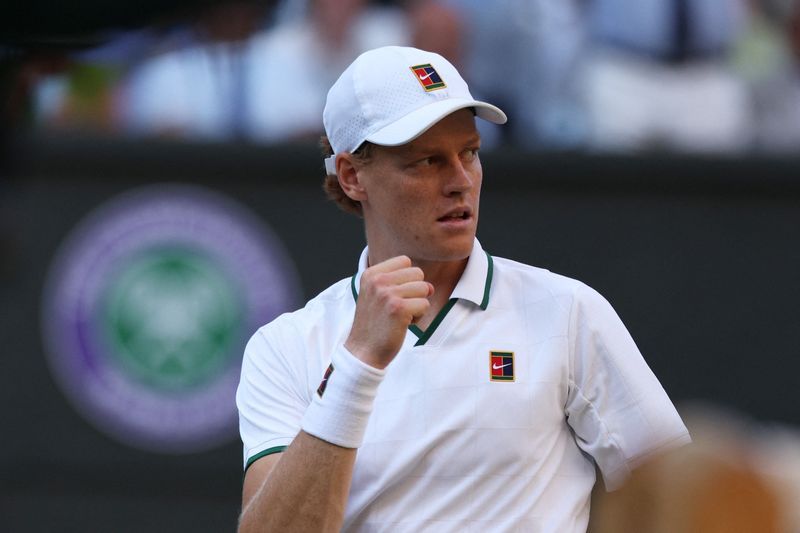
Jannik Sinner delivered a masterclass in composure under pressure at the All England Club on Sunday, grinding out a 6-7(7) 7-6(2) 6-3 6-4 victory over a spirited Alexander Zverev to retain his Wimbledon singles crown. The Italian top seed's triumph marks his fifth Grand Slam title and elevates him into rarefied air as only the tenth man in the professional era to successfully defend the historic championship. At 24, Sinner has established himself as a dominant force in tennis, yet his performance against a resurgent Zverev demonstrated that even champions must dig deep when facing formidable opposition on sport's most revered grass court.
Zverev arrived at the final on the crest of a wave following his maiden Grand Slam victory at Roland Garros just weeks earlier, carrying momentum and self-belief into his first Wimbledon championship match. The second-seeded German, 29, mounted a genuine title challenge and came within touching distance of creating history as the first German man to claim the Wimbledon crown since Michael Stich's triumph in 1991. His opening set display suggested the upset might materialise, with controlled serving and exceptional forehand striking keeping Sinner at arm's length through an absorbing first hour of tennis.
The opening set encapsulated the match's character: a tightly contested battle where opportunities proved scarce and the margin between winning and losing often came down to centimetres rather than outright dominance. Sinner squandered a crucial break point at 4-3 on Zverev's serve when he uncharacteristically framed a forehand wide, a lapse that would haunt him momentarily but ultimately cost him dearly. The tiebreak proved a microcosm of the entire encounter, with both men pushing to the absolute limit before Zverev's nerve held firm. The German forced set point first, only for Sinner to recover at the net following a rare drop shot attempt. Zverev then saved his own set point with an ace before finally sealing the opener with a crisp forehand winner, ending Sinner's remarkable run of 14 consecutive sets won against his opponent.
The psychological impact of losing that opening set might have derailed a lesser competitor, yet Sinner's response revealed the steel underpinning his ascent to world tennis's summit. Frustration flickered across his features as Zverev's serve remained impenetrable throughout the early stages of the second set, the German's delivery proving particularly robust. However, Sinner's capacity to elevate his game in pivotal moments emerged once again. In the second tiebreak, he manufactured his own intensity, turning up the intensity with accelerated shot-making and aggressive returns that overwhelmed Zverev's resistance and levelled the match at one set apiece.
As the contest progressed into its third and fourth hours, the quality of tennis fluctuated but the intensity never wavered. Both competitors unleashed thunderous serves and struck the ball with considerable venom from the baseline, creating a spectacle that justified the occasion. The turning point arrived at a critical juncture in the third set when, with Zverev holding his first genuine break point opportunity after two hours and 42 minutes of play, he miscalculated the geometry of Sinner's expertly struck drop shot. Attempting to change direction sharply behind the baseline, Zverev lost his footing and tumbled awkwardly on the dusty turf. Whilst the German insisted he was fine, the tumble visibly rattled him both physically and mentally.
Sinner, displaying impressive sportsmanship, walked around to check on his opponent's wellbeing before continuing play. What followed proved decisive. The Italian held serve before breaking through Zverev's defence for the first time in the match, and the German's subsequent inability to track the play with his usual mobility suggested the fall had genuinely affected his performance. The frustration boiling within Zverev manifested in an angry racket toss across the grass, a rare display of emotion from the normally composed German that underscored his mounting desperation.
The fourth set saw Zverev attempt to recalibrate and stage a comeback, recovering some of his earlier composure. Yet Sinner remained locked in at precisely the moment it mattered most, breaking serve once more to establish a commanding 4-3 lead. The final service game produced some of the match's most compelling rallies, with both men unleashing their most potent weaponry in a fitting crescendo to three hours and 46 minutes of riveting tennis. Sinner ultimately prevailed, hoisting the pineapple-topped Challenge Cup aloft and claiming a place among the exclusive brotherhood of men who have won consecutive Wimbledon singles titles.
Sinner's back-to-back championship victories at the All England Club represent the apex of a remarkable period that has seen him overcome significant adversity. Just a fortnight earlier, he had nearly suffered an embarrassing first-round exit against Miomir Kecmanovic at the French Open, where a second-round collapse had threatened to undermine his confidence. His revival across the grass season demonstrated not merely physical recovery but psychological resilience, culminating in a particularly impressive semi-final performance where he did not surrender a single service game. This consistency at the most critical moments has become his trademark, elevating him above a cluttered field of talented competitors.
Zverev's performance, while ultimately falling short, offered substantial consolation. Reaching his fourth Grand Slam final and delivering a genuine threat to a player as imposing as Sinner represented significant progress for the talented German. His breakthrough major victory in Paris, achieved after 40 previous attempts at the four championship events, had finally lifted a psychological burden. At Wimbledon, he not only competed at the highest level but demonstrated that his recent success was no flash in the pan. For a player who has endured considerable frustration throughout his career despite undisputed talent, the experience of contending seriously for tennis's greatest prizes promises a different trajectory ahead.
The broader context of this final extends beyond the two protagonists. Sinner's rapid ascent to the world's elite—from outsider to multiple Grand Slam champion within just months—reshapes the landscape of professional tennis. His Italian heritage carries particular significance, representing a remarkable achievement for a nation not typically associated with producing grass court champions. For Southeast Asian tennis enthusiasts and the broader region, Sinner's example demonstrates that sustained excellence, mental fortitude, and the capacity to improve continuously against the world's best competitors remain the essential ingredients for success at the highest level. His defence of the Wimbledon title cements his status as the leading player of this generation, even as rivals like Zverev continue to evolve and present fresh challenges to his dominance.

